You jump the 12V, the car comes back, you drive it for a day or two, and it dies again. A second failure is the 12V telling you it has given up, not that you had bad luck. In this climate, a 12V that has died once tends to die again within a week or two. The right move is replacement, not another jump.
The short answer
A second 12V failure inside a few weeks usually means the battery has lost capacity past the point where a jump is a fix. The plates have sulfated, the case is swelling, or the cells are shorted. Replace the 12V before it strands you a third time, and have the charging system checked while it is in.
Why a 12V dies twice
A healthy 12V that has been jumped can usually last another year or two of normal use. A 12V that dies again within days or weeks has crossed a threshold. Several things are happening at once.
The plates have sulfated
A lead-acid 12V that has sat below 12 volts for more than a few days builds lead sulfate crystals on the plates. The crystals do not dissolve when the battery is recharged. They reduce the surface area available for the chemical reaction and lower the battery’s capacity. A heavily sulfated 12V will accept a charge, show 12 volts on a multimeter, and still fail under the load the car’s body control module demands.
The case is swelling
Heat and overcharging can swell the case of a lead-acid 12V. A swollen case means the internal plates have warped or shorted. The battery may still take a charge for a few days, but capacity drops fast.
The cells are shorted
A shorted cell drops the resting voltage of the entire battery from 12.6 to 10 or 11 volts. The car can still wake for a few starts on the remaining cells, then go flat again. A battery test at a shop confirms the diagnosis.
A parasitic drain is pulling the battery down
If the new 12V also dies within days, the car has a parasitic drain that is pulling the battery below its threshold while the car sits. Common culprits are aftermarket dash cams, OBD-II dongles, or a stuck relay in the body control module. A shop measures the parasitic draw and finds the source.
Why this happens in South Florida
Heat is the multiplier. Lead-acid batteries lose about half their calendar life for each 15F above 77F. A Miami summer pushes ambient temperatures to 90F or higher for months. A 12V that would have survived a year of mild-climate driving dies in weeks here.
The pattern that repeats in this metro: a car sits at MIA for two weeks, the 12V drains to a low voltage, the owner returns and jumps it, drives for a few days, and the 12V dies again. The first jump did not cause the failure. The age and the heat did.
What to do after the second failure
Replace the 12V before it strands you a third time. A mobile operator can do the swap at your location, or you can drive the car to a service center once the jump wakes it. Either way, the work is the same.
Test the charging system while the 12V is out
A 12V that keeps dying can be a symptom of a failing DC-to-DC converter. The converter is what charges the 12V from the high-voltage pack while the car is awake. If it is failing, the new 12V will also die. A multimeter check at the 12V terminals with the car awake should show 13.5 to 14.5 volts. Lower than that and the converter is suspect.
Look for parasitic draw
If the new 12V also dies within a week, the car has a parasitic drain. A shop measures it by putting an ammeter in series with the 12V negative terminal and watching the current draw with the car asleep. Normal is under 50 milliamps. Higher than that and a module is staying awake when it should sleep.
Check for accessory drain
Aftermarket accessories are the most common cause. A dash cam hardwired to a constant 12V source, an OBD-II dongle that does not sleep, an aftermarket alarm. Pull them, see if the new 12V holds.
What a mobile operator does
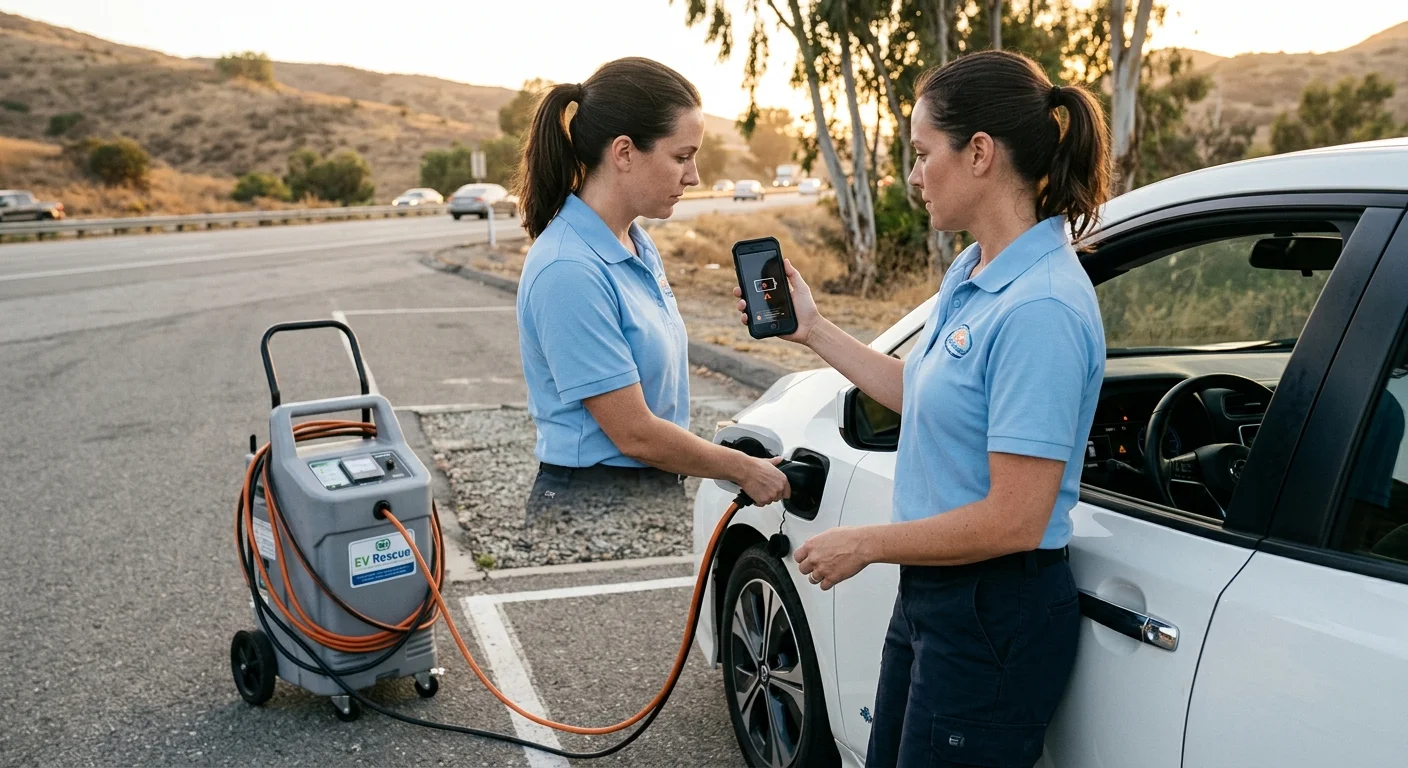
A mobile operator comes to the car with the right tools. For a second-failure call:
- Confirm the 12V is the cause with a multimeter.
- If the 12V has recoverable capacity, jump it and drive to a shop for replacement.
- If the 12V is dead beyond recovery and the model is common, replace it on the spot.
- Check the charging system voltage with the car awake.
- Quote you before starting and bill you directly.
Charge Pro MIA’s number reaches a local operator who quotes you before any work starts.
When the second failure is not the 12V
Sometimes a second dead-EV event is not the 12V. Watch for:
- “Service High-Voltage System” messages on the dashboard.
- A loud click from under the car followed by silence.
- Visible damage under the car.
- A burning smell.
Any of those point at the high-voltage system and call for a tow, not another jump.
How to keep the next 12V alive
- Park in shade or a garage. Heat is the killer.
- Drive at least once a week. Short trips keep the 12V topped off.
- Replace on a calendar schedule. Two to three years for lead-acid in this climate.
- Unplug accessories for long sits.
- Watch for warning messages in the weeks before a failure.
Frequently asked questions
Why does my EV battery die after being jumped?
A lead-acid 12V that has been drained below its threshold for more than a few days sulfates internally. The battery may take a charge but cannot hold capacity under load. Replacement is the fix.
Can a 12V recover after a jump?
Sometimes, if the discharge was brief and the plates are not sulfated. A battery test at a shop tells you which case you have.
How long does a new EV 12V last in Miami?
Two to three years of calendar life for lead-acid in this climate. Lithium 12V packs last longer.
What is parasitic drain?
It is current drawn from the 12V while the car is parked. Normal is under 50 milliamps. Higher draw means a module is staying awake or an accessory is misbehaving.
When does a recurring dead EV call for a tow?
If the dashboard shows a high-voltage fault, the car has visible damage, or the 12V keeps dying because the DC-to-DC converter has failed, the next step is a flatbed to a service center.
When to call us
If your EV has died twice in this heat and you are about to call for a third jump, call us instead. A mobile operator meets the car, replaces the 12V on the spot for most models, and checks the charging system before they leave.
Call us at (786) 963-2995 to reach a local operator.