You’re out of charge on Florida’s Turnpike. The travel lane is the wrong place to sit. Get the car fully off the main-traveled part first. Then you can sort a charge or a 12V jump.
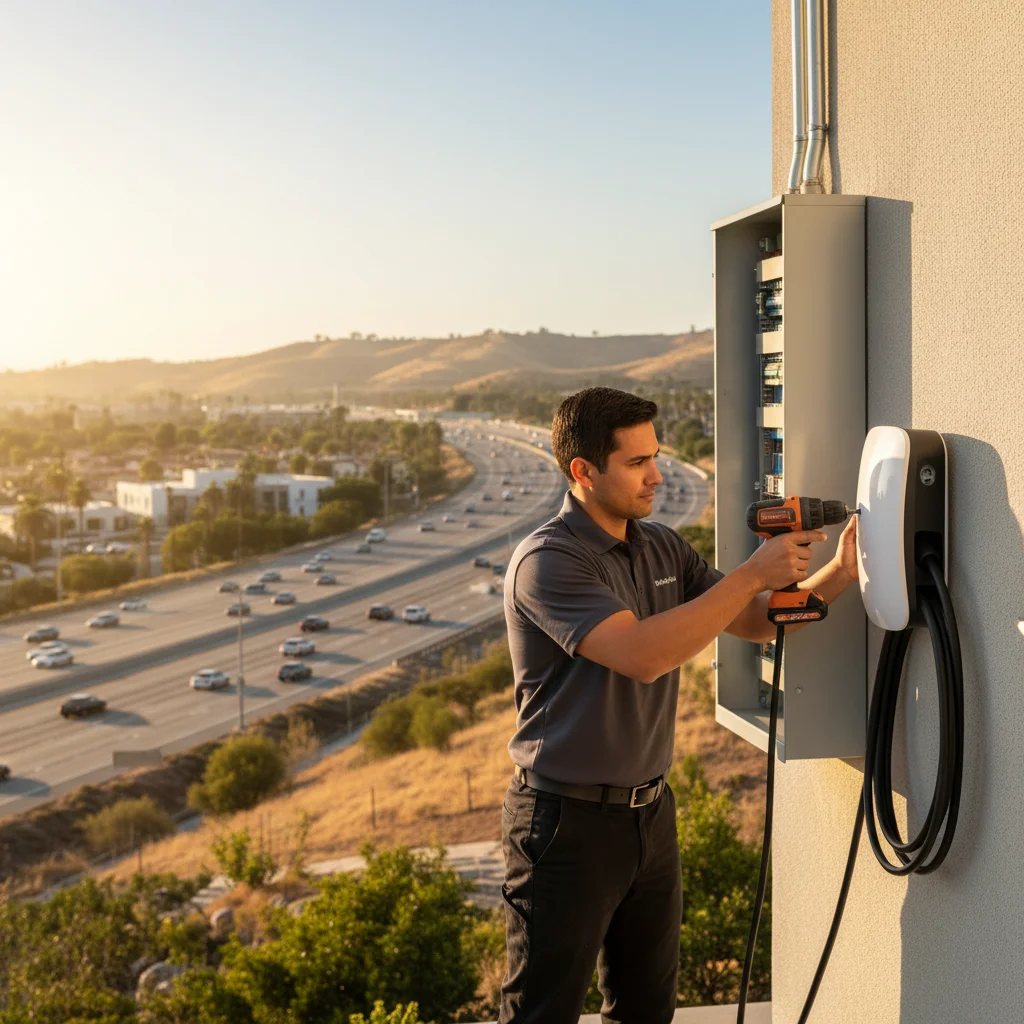
Get off the travel lane before you call anyone
Florida Statute 316.194 is the rule that applies on this road. Outside a municipality, you leave the vehicle off the main-traveled part where that’s practicable. You leave room for passing traffic. You also need a clear view from 200 feet each way.
316.194(2) is the exception, not a reason to stay in a live lane. It covers a genuinely disabled vehicle that cannot practicably be moved off the road. If the car still rolls, use the shoulder. Use the next paved refuge if the shoulder is tight. Don’t stop in a travel lane to think.
Florida Statute 316.1945 lists places where stopping is prohibited. A Turnpike shoulder isn’t a parking stall.
Hazards go on as soon as you’re stopped. If you can exit on the side away from traffic, do that. Stay near the car. Don’t walk the pavement looking for a better signal.
This spine is the Turnpike, the HEFT, and inland heat
Florida’s Turnpike Enterprise is part of FDOT. It runs the Turnpike mainline. It also runs the Homestead Extension, the HEFT, and the Sawgrass Expressway, SR-869.
There’s no cash booth to pull into. SunPass or toll-by-plate is how the road bills you. That doesn’t change what you do when the car dies. You still won’t find a manned plaza to wait in.
The inland spine isn’t a hill problem. South Florida is flat. Miami-Dade’s highest natural ground sits on the Atlantic Coastal Ridge. That’s roughly 23 to 24 feet. Broward’s Pine Island Ridge is about 29 feet. Range here is heat, air conditioning, and time in traffic. It’s not grade.
NWS Miami normals for 1991-2020 put July and August average highs at 91F. A normal year still sees about 64 days at or above 90F. Recurrent Auto studied about 30,000 EVs. It found about 5% range loss at 90F. Loss rose to about 17 to 18% at 100F. The first minutes of cabin cooling can take 3 to 5 kW. Holding that cool cabin takes about 1 kW. AAA’s 2019 SAE test found about a 17% range drop at 95F. That test ran with the AC on.
That’s how a Homestead-to-Broward run goes thin. Cabin cooling and dwell eat the buffer. Heat does that. Hills don’t.
Hurricane season runs from June 1 to November 30. Miami-Dade and Broward list Florida’s Turnpike as a northbound evacuation route, with I-95 and I-75. Emergency Shoulder Use can open on those routes. If you stall on an evac day, you’re in a live-lane problem first.
Who you actually reach from the shoulder
Dial *FHP, which is *347, from your phone. That short code reaches Florida Highway Patrol. It also reaches FDOT’s Road Ranger Service Patrol. Rangers jump-start vehicles, handle minor repairs, and change flats. They provide gas, diesel, and water. They also tow a disabled vehicle from the travel lanes to the nearest safe location. That patrol help is free of charge.
Their published materials don’t mention electric vehicles or EV charging. A dead EV still needs a 12V jump. It may also need a move off the travel lanes. Both of those are things Rangers already do. A 240V Level 2 top-up isn’t on that list. That’s the part a mobile operator handles. They do that after you’re out of the live lanes.
Florida 511 at FL511.com is FDOT’s official traffic feed in English and Spanish. It won’t send a charger.
Florida’s Turnpike and the Homestead Extension don’t publish their own disabled-vehicle rule. The Sawgrass Expressway doesn’t either. 95 Express, 595 Express, and the Greater Miami Expressway Agency roads don’t. GMX took over the old MDX roads in 2023. Don’t wait for a special Turnpike exception. *FHP is the official path.
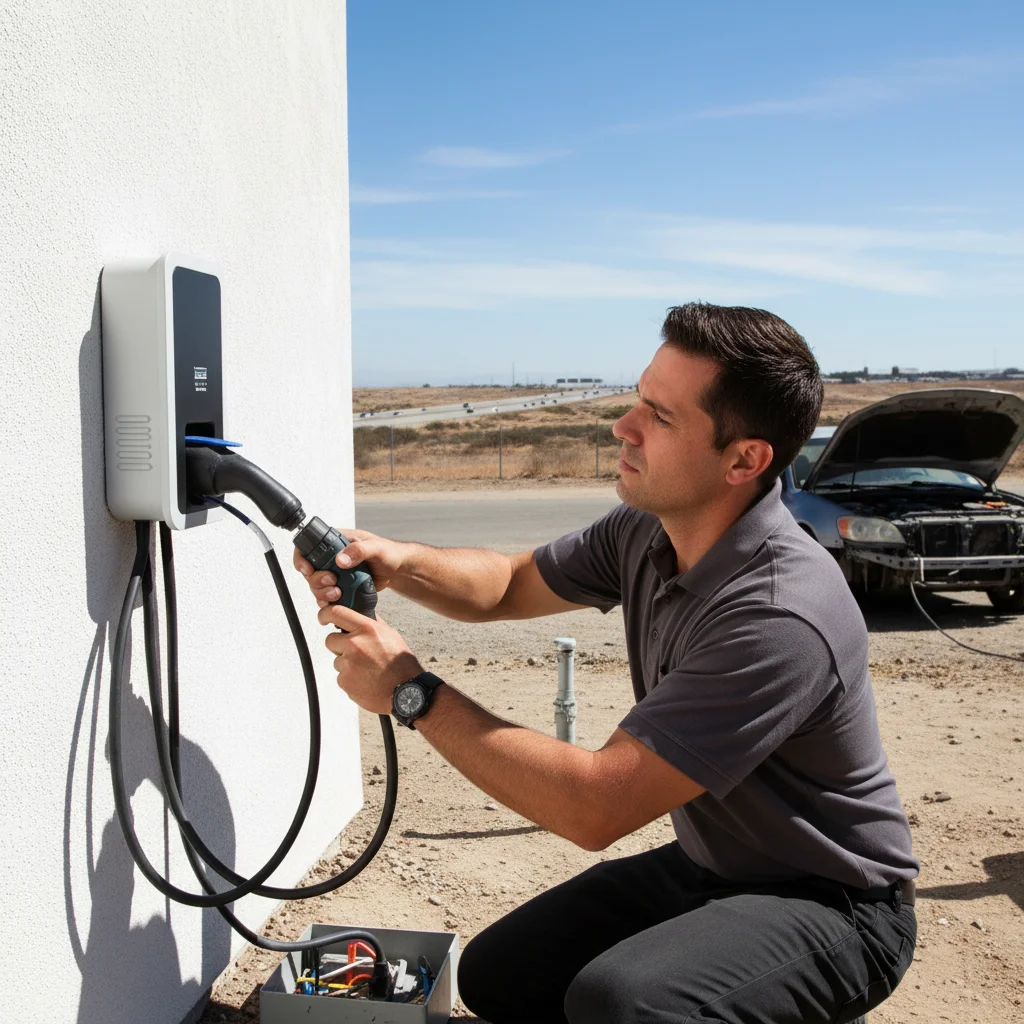
Empty pack, dead 12V, or both
An empty traction pack and a dead 12V look similar from the seat. They’re not the same job.
If the car still wakes, the screens work. If the gauge is at zero, you need energy in the high-voltage pack. A mobile operator brings a 240V Level 2 source to the car. Tesla cars take a native NACS plug. Other makes use a CCS or J1772 adapter. Typical charging time adds 10 to 20 miles of range. That takes 15 to 30 minutes of charging. That’s plug time, not travel time to you.
If the car is dark, locked, or won’t wake, start with the 12V. Heat here ages a lead-acid 12V fast. Battery University notes that every roughly 15F rise halves lead-acid life. It ages about twice as fast at 93F versus 77F. At 111F it ages about four times as fast. Heat damage doesn’t reverse. Operators in the network can jump or replace that 12V on site.
Charge Pro MIA is a referral line. It matches you with independent local mobile rescue operators. It doesn’t own trucks, employ technicians, or set a price. It doesn’t promise when someone arrives. The operator quotes you before starting and bills you directly.
The inland towns this road actually serves
The Homestead Extension is the south end of that inland spine. Homestead, Florida City, and Cutler Bay sit on that south reach. Homestead is a city. Florida City is a city. Cutler Bay is a city. Kendall, The Hammocks, and Kendale Lakes are census-designated places. They aren’t cities. They have no city hall to call.
Florida Power and Light serves essentially all of Miami-Dade. It also serves all of Broward. Homestead is the confirmed exception. Parts of Homestead sit on Homestead Public Services Energy. Other Homestead streets are still FPL. The street-by-street line is a city map. Don’t guess it from the Turnpike. Confirm with Homestead Public Services Energy at homesteadfl.gov. You can also call (305) 224-4800. No EV-specific program showed up on HPS Energy’s pages on September 18, 2026.
FPL’s public charging brand is FPL EVolution. FPL EVolution Home is the residential Level 2 install-and-maintain program. A home Level 2 install doesn’t help you on the HEFT tonight.
Florida had about 450,400 registered EVs in 2025. That’s from DOE AFDC vehicle-registration data. It’s a state figure. It’s not a county count. It isn’t a charger map. Station-level inventories couldn’t be confirmed from the AFDC API host. Don’t trust a dashboard guess about the next plaza. Get off the travel lane first. Then call for a charge or a 12V.
For drivers who live south of the HEFT, start with the Homestead EV charging page. If you usually drop off toward Cutler Bay, use EV roadside assistance in Cutler Bay. Florida City sits at the last mainland turn before the Keys Stretch. That’s Monroe County, outside this service area. That approach has its own write-up: ran out of charge in Florida City.
What to tell the operator, in order
Once you’re out of the travel lane, call for energy or a 12V.
Give the road by its real name. Northbound Homestead Extension, right shoulder, with a mile marker, is usable. Somewhere on the Turnpike isn’t. A mile marker, an exit name, or a nav pin is enough. The Sawgrass Expressway is a different Turnpike Enterprise road. If you’re on SR-869, say Sawgrass. Don’t say Turnpike when you mean the Palmetto, SR-826. Don’t say Turnpike when you mean the Dolphin, SR-836. Those roads sit with other agencies.
Give year, make, model, and color. A Tesla wants NACS. A Hyundai, Kia, Ford, Rivian, or Chevy may need CCS or J1772.
Give pack state in one sentence. The car is on and shows 2%. That’s a charge call. Nothing lights up, and the app is dead. That’s a 12V call first. If a Road Ranger or FHP unit is already with you, say that. The operator needs to know who is controlling the shoulder.
The out-of-charge recovery path is the one built for an empty pack. Mobile EV charging is the same idea in plainer words. A 240V source comes to you. EV roadside assistance covers Tesla and every major EV brand the operators handle. The statewide freeway steps, including 316.194, sit in your EV died on the freeway.
If a wrecker is already hooking you on private property later, that’s a different statute. Florida Statute 715.07 is the non-consent tow rule. A tow operator must stop and return the vehicle. That applies if you appear before it’s fully removed. You pay no more than one-half the posted tow rate in that case. Miami-Dade caps those rates in Code Section 30-476. Broward uses Code Section 20-176.22. Confirm the posted schedule with the yard before you pay. Don’t treat a Turnpike shoulder stop as a private-lot tow. That only applies if you’ve been moved onto private land.
After you can roll again
A Level 2 top-up is enough to leave the shoulder. It’s not a full pack. You still need a real charge stop once you’re on surface streets. Don’t immediately re-enter the Turnpike at 3% because the dash feels optimistic.
FPL also publishes EV storm guidance. Keep the pack between 50 and 80% through hurricane season. Unplug during the storm. Don’t charge or drive a flood-exposed EV until it’s inspected. NHTSA warns that residual salt in a flooded lithium pack can short later. That can happen days to weeks after the water. About 36 EVs flooded by Hurricane Ian in 2022 later caught fire. Park a flood-exposed EV at least 50 feet from a structure until it’s inspected.
None of that helps you if you’re still in a travel lane. The order never changes. Move off the main-traveled part. Call *FHP. Then get a charge or a 12V jump from an operator.
Charge Pro MIA connects stranded EV drivers with independent local mobile rescue operators across South Florida. Call (786) 963-2995 when you’re already off the travel lane. That’s the number for a local operator.