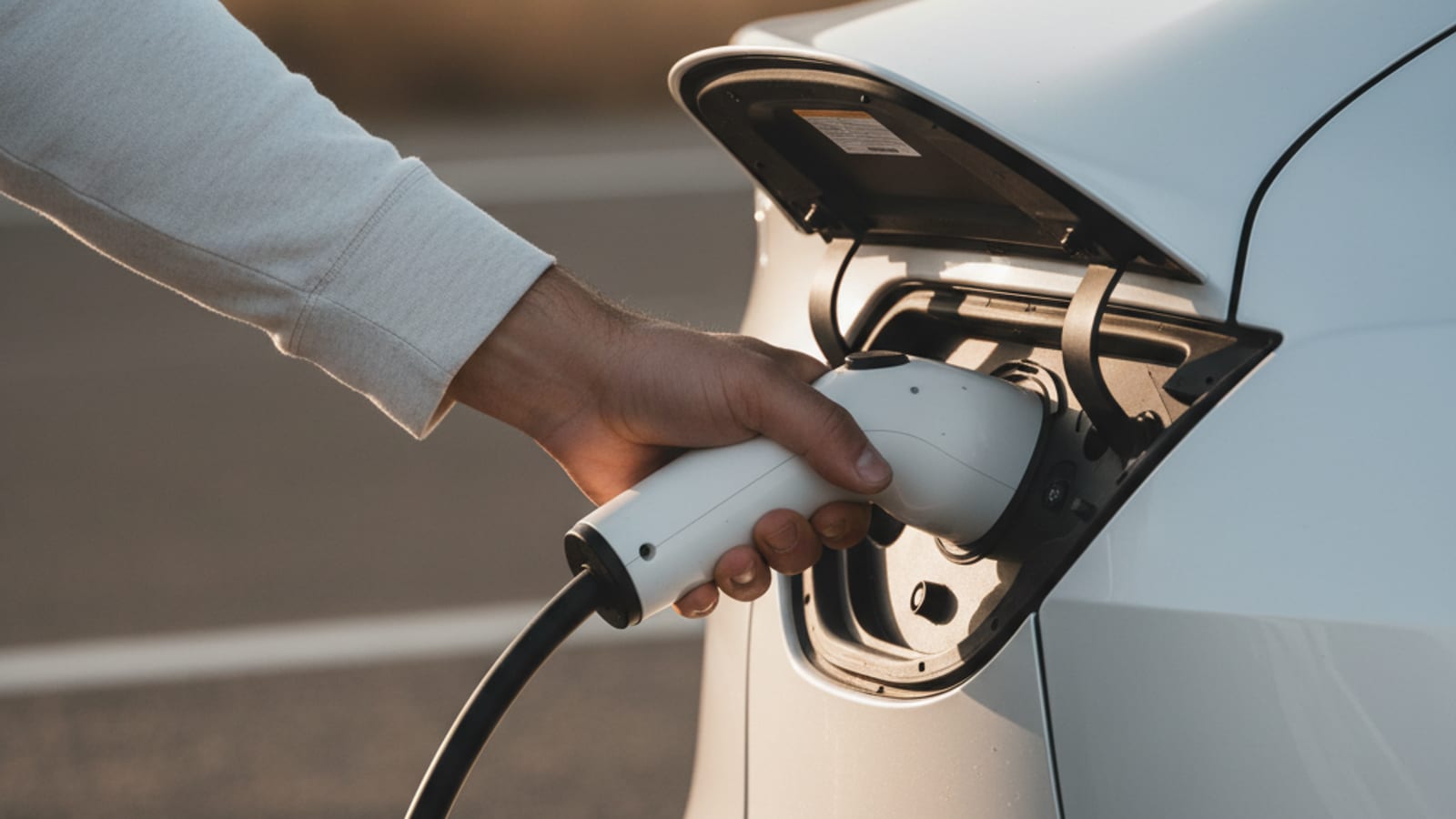
King tides and sunny-day flooding run September through November on Miami Beach, the Las Olas Isles in Fort Lauderdale, Hollywood, and other low coastal streets. A car that sat through a king tide may have water in the charge port. Here is what to do before you try to charge.
The short answer
A wet charge port needs to dry before it will accept a charge. Saltwater residue adds a corrosion risk that freshwater does not. Wipe the port, let it dry, and check the pins for corrosion before reconnecting. If the car was actually submerged or drove through standing saltwater, treat it as a flood-exposed EV and follow the official warning.
What king tides do to an EV charge port
King tides in South Florida run roughly three hours each, mainly September through November. They flood low-lying streets on Miami Beach, the Las Olas Isles in Fort Lauderdale, and Hollywood. Cars parked on those streets can sit with brackish water creeping up the body. The charge port, mounted low on the rear quarter panel or behind a door, takes the water first.
Freshwater exposure is less harmful than saltwater, but neither is great for an unsealed connector. The pins inside the port can corrode, the cable can short, and the car will refuse to charge as a precaution until the port is dry and verified.
What to do first
Do not plug in
A wet charge port is exactly the moment not to plug in. The pins may be wet. The handshake may fail. The car may set a charging fault that takes a service visit to clear.
Wipe the port gently
Use a clean, dry microfiber towel. Wipe the inside of the port and the area around it. Do not use compressed air or a heat gun; both can push water deeper or damage the seal.
Let it dry
Give the port a few hours to air-dry. If you can leave the car in the sun with the port area exposed, the heat speeds the drying. Do not apply external heat.
Check the pins for corrosion
Once the port is dry, look at the pins inside. White or green residue is corrosion. Black or brown is dirt that wipes off. Corrosion needs a service visit.
Try a charge at a known-working station
When the port is dry and clean, try a charge at a station you know works. If the car accepts the session, the port survived the king tide. If the session fails, the port needs a service visit.
When the car has been through standing saltwater
A car that drove through standing saltwater or sat in a king tide that reached the underbody is in a different category. The traction pack is sealed, but the underbody, the connectors, and the 12V can be compromised. The official NHTSA guidance is:
- Do not charge a flood-exposed EV until it has been inspected.
- Do not drive a flood-exposed EV until it has been inspected.
- Do not park a flood-exposed EV within 50 feet of a structure, because residual salt in a flooded lithium pack can short days or weeks later, causing fires.
About 36 EVs flooded by Hurricane Ian in 2022 later caught fire. The warning is real, not a marketing line.
A car that meets the flood-exposed criteria should be towed to a service center for inspection, not charged at home.
What to do if the port is corroded
A corroded port needs a service visit. The corrosion is on the pins, which a service center can clean or replace. A mobile operator can look at the port and confirm whether the issue is corrosion or a different fault.
The operator quotes you before starting and bills you directly.
How to keep king tides from ruining a port
- Avoid parking on low coastal streets during king tide forecasts. Miami Beach publishes tide tables; the Las Olas Isles flood on the same cycles.
- If you must park in a flood zone, choose a higher spot. Even a few inches of elevation help.
- After any king tide exposure, wipe the port and check the pins before charging.
- Carry a small microfiber towel in the car for the port area after a flood event.
What a mobile operator does
A mobile operator working the South Florida metro brings:
- A 240V Level 2 source with NACS, CCS, and J1772 connectors.
- A 12V jump pack.
- Tools for a stuck or wet charge port.
The operator can look at the port, dry it, and try a charge. If the port needs service, the operator can arrange a tow.
Frequently asked questions
Can I charge an EV with water in the port?
No. Wipe the port, let it dry, and check the pins before charging.
How long does it take for a wet charge port to dry?
A few hours in the sun with the port exposed. Faster in low humidity.
What does corrosion in the charge port look like?
White or green residue on the pins. A service visit is the next step.
Is a king tide the same as a pack that sat in floodwater?
A king tide that reaches the underbody or submerges the car counts as flood exposure. NHTSA warns against charging or driving a flood-exposed EV until it has been inspected.
What does a mobile operator charge for a port inspection?
The operator quotes you before starting. Charge Pro MIA does not set the rate.
When to call us
If your EV’s charge port is wet or corroded after a king tide anywhere in Miami-Dade or Broward, call us. A mobile operator meets the car with the right gear to inspect the port and try a charge. They quote you before starting and bill you directly.
Call us at (786) 963-2995 to reach a local operator.