A week in MIA’s Dolphin Garage won’t empty your pack. It can still leave the car silent. The 12-volt battery kept computers, locks, and wake systems alive in the heat. That’s the maintenance story here. An EV maintenance schedule in South Florida is short. Heat, salt air, and long sits still decide what fails first.
You can skip oil, spark plugs, and fuel filters. You can’t skip the small battery, the tires, or the cooling loops. Coastal condos, airport garages, and inland driveways all stress different parts. The City of Miami isn’t the same as Hialeah, Weston, or Hollywood. A schedule that ignores that will miss the failure that actually strands you.
Mileage isn’t the local clock
Most owner’s manuals still list miles, and those numbers still matter. They’re not the whole clock in this climate. NWS Miami normals put July and August highs at 91F. A typical year brings about 64 days at or above 90F. Miami-Dade and Broward are also almost perfectly flat. Miami-Dade’s Atlantic Coastal Ridge tops out around 23 to 24 feet. Broward’s Pine Island Ridge is about 29 feet. Range here isn’t a hill problem. It’s heat, air conditioning, and dwell.
Florida had about 450,400 registered EVs in 2025, per DOE AFDC figures. Plenty of those cars sit in older buildings. North Miami’s housing is 82.7% pre-1980, and Miami Springs is 89.5%. Hollywood sits at 74.7%, and Hialeah at 60.1%. A Level 2 wall box often isn’t installable there. The car then lives on public plugs and long garage sits. Parkland, Weston, and Doral skew much newer. Parkland is about 1.7% pre-1980. Weston is about 7.0%, and Doral about 5.5%. Home charging is common in that stock. The maintenance load follows the housing, not the badge on the trunk.
The City of Miami is only one of 34 municipalities in Miami-Dade County. Most of what people call Miami is another city, or unincorporated county. Hollywood, Florida is in Broward, and it isn’t a California name. South Beach is a neighborhood of Miami Beach, not its own city. Miami Beach is a separate city from Miami, reached only by causeway. Your schedule should follow that map. Coastal salt and garage dwell hit Miami Beach and Hollywood first. Inland heat and driveway charging shape Weston, Miramar, and Pembroke Pines.
Heat writes the first line
Park in a Brickell garage after a storm and the cabin is a kiln. Recurrent Auto’s study of about 30,000 EVs found about 5% range loss at 90F. At 100F the loss ran about 17 to 18%. The mechanism is the air conditioner. Cooling a 95-degree cabin can take 3 to 5 kW. Holding it cool takes about 1 kW. The first minutes are the expensive ones. AAA’s 2019 test found about a 17% range drop at 95F with AC on. That isn’t a Tesla number. It’s a climate number. There’s a separate guide on how to care for an EV battery in South Florida heat.
Keep the high-voltage pack in a sane window
Many manuals still want daily charging away from empty and away from full. FPL’s storm guidance is more specific for this region. Keep the pack between 50 and 80% through hurricane season. Unplug during the storm. Don’t charge a flood-exposed EV until it’s inspected. That’s published utility advice, not a shop pitch.
FPL serves essentially all of Miami-Dade and all of Broward. Homestead is the mapped exception. If you can install at home, ask FPL about EVolution Home. It’s their residential Level 2 program. FPL also publishes a residential Time-of-Use rate for charging. Confirm the current rate on FPL’s site before you enroll. No dollar figure belongs in a blog, because the tariff moves. Homestead Public Services Energy serves parts of that city. Other Homestead streets are still FPL. Confirm the provider at homesteadfl.gov or (305) 224-4800. No EV-specific program turned up on HPS Energy’s pages. That doesn’t prove none exists. It means you ask the utility, not a post.
Software updates still belong on the list. Battery management software arrives over the air on many models. Install them when they land. They’re the rare maintenance item you can do in a driveway.
Treat the 12-volt like a wear item
The high-voltage pack moves the car. The 12-volt wakes it. Locks, lights, computers, and contactors all drink from that small battery. If it dies, a full pack won’t save you. The car looks bricked, and it usually isn’t.
Lead-acid 12-volt batteries age about twice as fast at 93F as at 77F. They age about four times as fast at 111F. Every roughly 15F rise halves their life. Heat damage doesn’t reverse. South Florida’s sustained heat is why so many EVs refuse to wake after a sit. Lithium 12-volt packs in newer Teslas fail differently. They still fail after dwell.
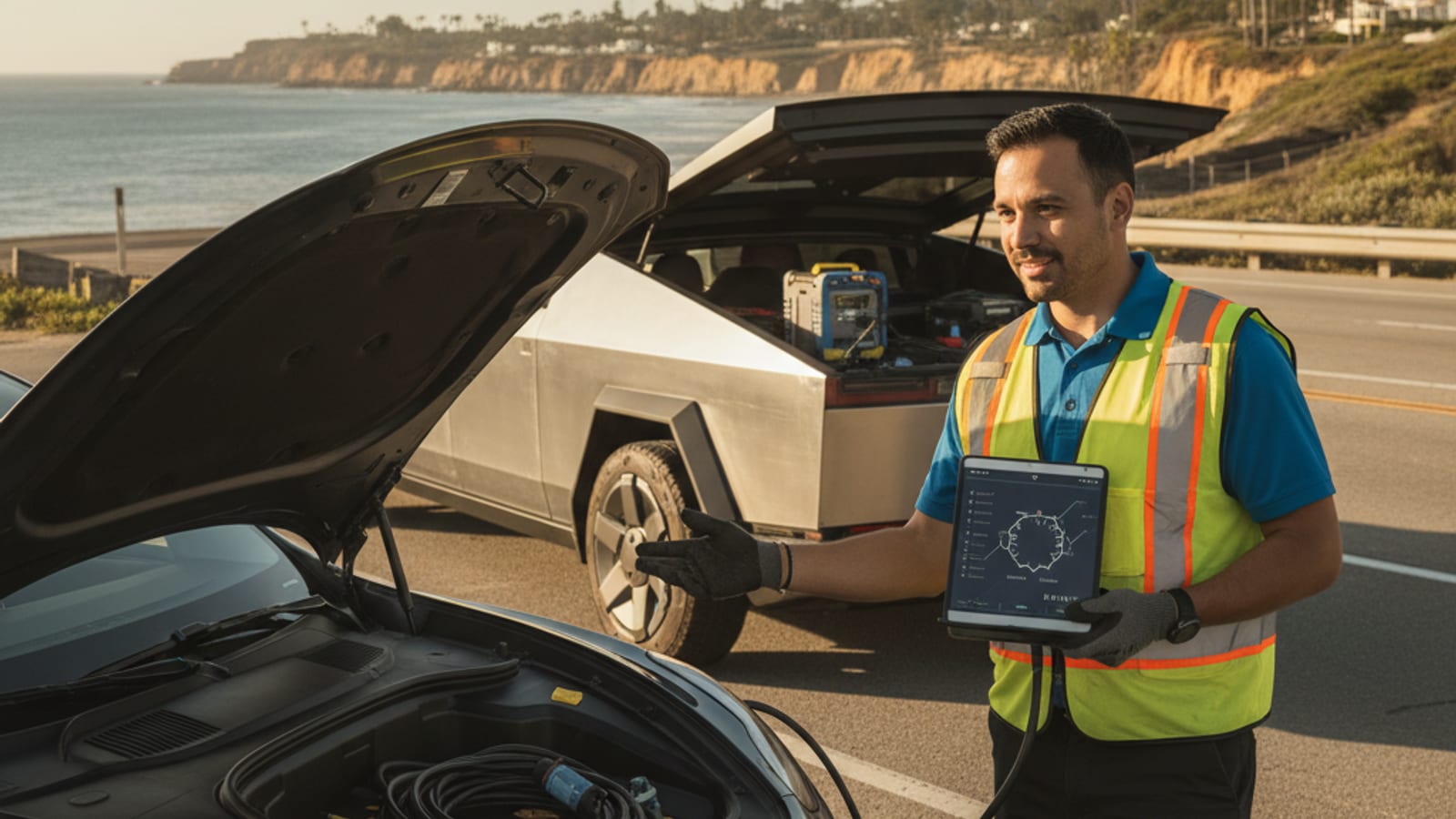
A week at MIA is the classic setup. So is a cruise week at PortMiami or Port Everglades. MIA’s public parking includes the Dolphin, Flamingo, and Ibis garages. The airport page says Ibis holds ChargePoint ports across its levels. Park 6 is the new long-term garage, opened in summer 2026, with EV charging on site. A plug in the structure still doesn’t protect the 12-volt if the car sits awake for a week. Motorist help in the garages is at (305) 876-7536. PortMiami’s county pages list northside and southside garages and Lot E. They don’t list EV charging at those facilities. Port Everglades lists the Heron and Palm garages and surface lots. They don’t list EV charging either. The car sits dark and hot. Systems sip the 12-volt the whole time. Tesla 12V failure after parking is the same mechanism in Tesla form.
The same sit happens at smaller fields. Miami Executive, Miami-Opa Locka Executive, Fort Lauderdale Executive, and North Perry in Pembroke Pines all leave cars parked in the heat. Have a shop load-test the 12-volt on a real interval. Don’t wait for a silent lot after a flight. If you’re already locked out, the operators we connect you with can jump a Tesla 12V on site. They handle other EV brands too. That’s a rescue, not a substitute for replacement.
Salt, tides, and the port you plug into
Coastal maintenance isn’t the inland list with ocean adjectives. Miami Beach, Surfside, and Hollywood take salt air every day. King tides run mainly September through November. They last about three hours. They show up on Miami Beach, the Las Olas Isles in Fort Lauderdale, and other low coastal streets. Summer storms stack on top of that. NWS Miami puts the usual window roughly 2pm to 6pm.
Look at the charge port after a wet week. Rinse debris. Dry the latch area. Don’t jam a wet connector home and hope. Water in the port after a king tide is its own problem. Corrosion is slow until it’s sudden.
NHTSA’s flood warning is stricter than a tide puddle. Residual salt in a flooded lithium pack can short days or weeks later. About 36 EVs flooded by Hurricane Ian in 2022 later caught fire. A flood-exposed EV shouldn’t sit within 50 feet of a structure. It shouldn’t be driven or charged until inspected. That’s a safety rule from NHTSA. It belongs on a South Florida calendar because hurricane season runs June 1 to November 30.
Paint, trim, and underbody hardware also take salt. That isn’t an EV-only job. Wash the car, including the wheel wells, if you live on the coastal strip. Inland Weston and Pembroke Pines still get heat. They get less daily salt. Split the schedule that way.
What you can actually skip
You can ignore oil-change reminders from a bay that hasn’t looked at the car. There’s no engine oil. There’s no spark plug. There’s no fuel filter. There’s no exhaust service hiding under an EV. Many EVs use a single-speed drive unit that may not want fluid for a long time. Don’t let someone sell a transmission flush without pointing to your manual.
Regenerative braking means pads last longer than they did on a gas car. That still isn’t a pass to skip brake fluid. Fluid absorbs water on its own clock. Most makers still want it changed on a years-based interval. Confirm yours in the book.
You can skip worrying about a grade penalty. These two counties don’t have one. Spend that attention on AC use, tire pressure in the heat, and the 12-volt after a sit. FPL EVolution is FPL’s public charging brand. Use the name when you search. Don’t treat any blog as a stall-by-stall map.
What still belongs on every EV calendar
The combustion list is gone. What remains is short, and it isn’t optional.
Tires, brakes, and cabin air
EVs are heavy, and torque hits immediately. Tires often wear faster than they did on a gas car. Rotation is usually the most frequent shop visit. Use the interval in your manual. Many brands cluster it with a tire inspection and a brake look. Regenerative braking saves pads. It doesn’t save seized calipers or wet brake fluid.
Cabin filters work harder here than the sticker suggests. You run AC for months. Pollen, dust, and coastal air load the filter. Swap it when the manual says, or sooner if the vents smell musty after a wet week. Wiper blades are a summer item. Afternoon storms on I-95, the Palmetto, and the Dolphin Expressway will tell you when they’re done.
Coolant, drive units, and the glovebox book
Battery and inverter loops use coolant. Some systems are sealed for a long time. Others need inspection or a change at higher mileage. A few drive units want gear fluid at long intervals. None of that is guesswork. EV maintenance by brand differs for Tesla, Rivian, Ford, Hyundai, and Chevy. Your owner’s manual wins every argument. Tesla’s public support pages list its own service items. Other makers put the same list in the app or the glovebox guide.
A wheel alignment still matters on heavy cars. So do bushings and ball joints. That’s true in Coral Gables campus traffic and on Doral’s warehouse grid. It’s also true on older North Miami streets. University of Miami’s main campus is in Coral Gables, not the City of Miami. FIU’s Modesto Maidique Campus sits in the Sweetwater and Tamiami area. Nova Southeastern’s main campus is in Davie. Those lots are hot, open, and full of cars that sit through class. That’s dwell. Treat it like airport parking on a smaller scale.
Key fob batteries die on their own clock. Keep a spare. A dead fob plus a weak 12-volt is how people get locked out of a full car.
Run the year, not a gas-car ritual
From January through May, buy a clean 12-volt test if the car sat through winter travel. Rotate the tires if the manual is due. Replace the cabin filter before the heavy AC months. Check coolant reservoirs while the hood is open. Put wiper blades on your radar before the afternoon storm pattern takes over.
Hurricane season starts June 1. Hold the pack in FPL’s 50 to 80% window when a storm is in play. Unplug for the storm itself. After king tides from September through November, inspect the charge port before you plug in. After any airport or cruise week, assume the 12-volt took a hit. Test it. Don’t wait for the next silent morning in a building garage.
Event weeks are dwell weeks. Hard Rock Stadium in Miami Gardens stacks Dolphins games, the Hurricanes, the Miami Open, and the F1 Miami Grand Prix. That race is in Miami Gardens, not Fort Lauderdale. loanDepot park in Little Havana does the same on Marlins nights. Kaseya Center downtown is the Heat. Homestead-Miami Speedway hosts NASCAR championship weekend. Cars sit in heat for hours. That usually isn’t a flat high-voltage pack. It’s the small battery, plus a cabin that needs a few kilowatts to cool when you return.
Kendall, Tamiami, and The Hammocks are census-designated places, not cities. They still have the same heat and the same 12-volt. Don’t wait for a city hall reminder that doesn’t exist.
In Parkland, Weston, and Doral, overnight charging is often in the driveway. The pack stays in a healthier window. The 12-volt still cooks in the heat. Tires still wear. In North Miami, Miami Springs, and much of Hialeah, overnight Level 2 often isn’t in the building. The car lives on mall and workplace plugs. Aventura Mall, Dadeland Mall in the Kendall area, Dolphin Mall near Doral, and Sawgrass Mills in Sunrise are the errand pattern. Plan a 12-volt test around travel and long sits, not around oil-change nostalgia.
Storm season is a service season
Hurricane season is June 1 to November 30. Miami-Dade evacuations use Storm Surge Planning Zones. Zone A includes Key Biscayne. Zone B includes Miami Beach and Brickell. Broward uses Plan A east of the Intracoastal for Category 1-2. Plan B runs east of US-1 for Category 3 and up. Northbound routes are I-95, Florida’s Turnpike, and I-75.
FPL tells EV owners to hold 50 to 80% through the season. Unplug when the storm arrives. Don’t charge or drive a flooded car until it’s inspected. FPL also deploys mobile EV charging trailers before planned outages and during storms. The Florida Division of Emergency Management has placed temporary chargers along the I-75 evacuation corridor. None of that replaces a shop visit. It’s why you shouldn’t enter June with a 12-volt you already distrust.
If you evacuate, remember the counties are flat. You won’t climb a mountain. You’ll run AC for hours. Recurrent Auto’s heat-loss figures are the planning tool. Leave margin in the pack. A full-enough guess isn’t a schedule.
Homestead and Cutler Bay sit on the south end of this pattern. Everglades National Park’s main entrance is on SR-9336 in Homestead. Shark Valley is on US-41, Tamiami Trail. Those are separate, non-connecting entrances. If you’re heading down the Homestead park road, you’re on a dead-end. Do the 12-volt and tire checks before that drive, not after.
When a skipped item leaves you on the shoulder
A maintenance miss here rarely looks like a blown engine. It looks like a car that won’t wake in a garage. Or a car that runs down after a hot AC run on the Palmetto. Florida Statute 316.194 says get off the main-traveled part when you can. A genuinely disabled vehicle gets an exemption if it can’t be moved. Dial *FHP (*347) for Florida Highway Patrol and Road Rangers. District 6 covers Miami-Dade on I-95, I-195, I-395, I-75, and SR-826, the Palmetto. District 4 covers Broward’s I-95 and stretches of I-595 and I-75. Road Rangers jump-start cars, fix minor problems, change tires, and tow a disabled vehicle out of the travel lanes. Their public materials don’t mention EV charging. A 12-volt jump is in their toolkit. A Level 2 top-up isn’t.
That top-up is what independent operators do. Charge Pro MIA is a referral line. We match you with local mobile rescue operators. We don’t own trucks, and we don’t set prices. The operator quotes you before work starts and bills you directly. The pros we send bring a 240V Level 2 source to the car. They use a native NACS plug, or a CCS or J1772 adapter for non-Tesla EVs. Charging time is typically 15 to 30 minutes for about 10 to 20 miles of range. That’s time on the plug, not a promise of when someone arrives. They can also jump or replace a dead 12-volt on site.
If the pack is empty, mobile EV charging is the call. If the car is silent with bars still showing, start with the 12-volt. For more on that failure, see what happens when an EV 12-volt dies in this climate.
If you need a match with a local operator, call (786) 963-2995. Confirm the quote before anyone starts. Then put the 12-volt, the tires, and the port back on a real calendar.