If your EV stalls in Coral Gables, start with the map. The University of Miami’s main campus is here. It’s not in the City of Miami. A visitor at the Shops at Merrick Park stalls in the Gables. A student in the university area does too. So does a homeowner on Old Cutler. Charge Pro MIA is a referral line. We connect you with independent local operators. They bring a 240V charge or a 12V jump to the car.
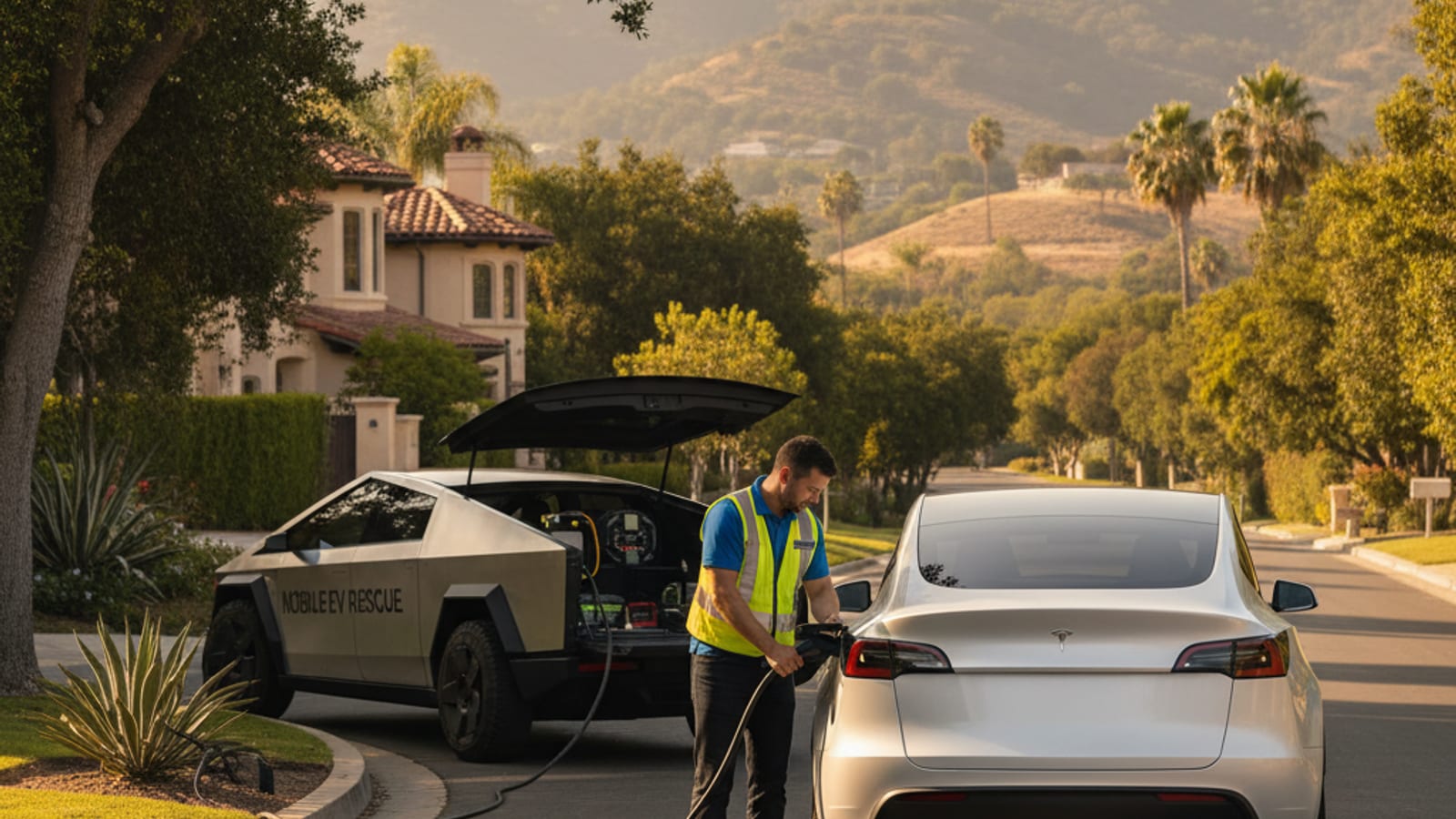
Coral Gables is its own city
People type Miami when they mean the Gables. That’s the usual mix-up. Coral Gables is one of 34 municipalities in Miami-Dade County. It’s not a neighborhood of the City of Miami. It sits southwest of that city. South Miami is the small neighbor on US-1. Pinecrest and Palmetto Bay continue south on the bay side. Coconut Grove sits east, and Westchester sits west.
The Gables is leafy, flat, and mostly single-family. EV adoption runs high, and most owners charge at home. The call mix is road strandings and long errands. It’s not the apartment-tower problem you get on the beach. For this city’s hub, use EV charging in Coral Gables.
The University of Miami is in Coral Gables
Writers keep putting the campus in Miami, and that’s wrong. The main campus is in Coral Gables. Students, staff, and campus visitors park on university-area streets and in campus garages. Those stays run long, and the AC runs while the car sits. Range in this city is heat, not hills. Miami-Dade’s highest natural point is the Atlantic Coastal Ridge, about 23 to 24 feet. The tree canopy is pretty. It doesn’t cancel air conditioning.
A Hurricanes football game is a different pin. Those games are at Hard Rock Stadium in Miami Gardens. Don’t aim a campus rescue at a stadium parking lot. Don’t aim a stadium stall at a Coral Gables street. They’re in different cities.
FIU is a different campus too. Florida International University’s main Modesto Maidique Campus sits in the Sweetwater and Tamiami area. Nova Southeastern’s main campus is in Davie. If your pin says university, name which one.
Campus streets versus a Gables driveway
On campus, you don’t control a home plug. You’re in a visitor space or on a university-area street. In Coral Gables Riviera, Cocoplum, or Gables by the Sea, you probably planned to charge overnight on FPL. When that plan fails, you’re in a driveway. The operator still comes to the car. They still quote you before they start. You still pay them direct.
Home chargers and the errand that used the buffer
Most Gables households charge at home. That’s the local pattern. It doesn’t mean every panel can take a Level 2 install. About 62.4% of Coral Gables housing was built before 1980, per Census ACS 2019-2023. Older panels are common in that stock. A home charger isn’t always a simple add-on. FPL serves this city. Homestead’s municipal utility does not. FPL EVolution Home is the residential Level 2 install-and-maintain program. Confirm current terms on FPL’s site. This page doesn’t publish program prices.
FPL also has a residential Time-of-Use rate for home charging. Use the name only, with no rates here. Ask FPL for the current schedule. Charge Pro MIA doesn’t set electric rates. We don’t install chargers, and we don’t own parts. If you need a panel upgrade, that’s an electrician. For the neighboring install-versus-rescue split, see home EV charger in Kendall and South Miami.
The Gables stall is often a planning miss. You left with a buffer. Miracle Mile parking ran long. You added Fairchild Tropical Botanic Garden. You added the Biltmore Hotel. Heat and AC used the rest. You were a home-charger household that morning. Now you need range where you sit.
FPL EVolution is also the utility’s public charging brand. We’re not listing stations. The federal station API didn’t resolve for this research. Confirm plugs in your car’s app. Don’t treat an old map pin as live.
Long dwell at Merrick Park and Miracle Mile
The southwest pattern is the long-dwell errand. The Shops at Merrick Park hold cars for hours. So does Miracle Mile in downtown Gables. So does the university. The Venetian Pool and Fairchild add the same sit time. Long stays are how a 12V drains. They’re also how a pack you meant to fill at home never covers the drive back.
Downtown Gables is slow and stop-and-go. Coral Way and LeJeune Road feed that core. Bird Road runs east-west. Miracle Mile is the commercial walk. None of these streets tax range with grade. They’re flat. What they tax is time with climate control on. NWS Miami normals for 1991 to 2020 put July and August average highs at 91F. A normal year sees about 64 days at or above 90F.
If the car is silent when you walk back, don’t assume the floor pack is empty. A 12-volt battery keeps the computers alive while you shop. South Florida heat ages that battery. Battery University notes that about every 15F rise halves lead-acid life. It ages about twice as fast at 93F versus 77F. About four times as fast at 111F. Heat damage doesn’t reverse. A car that sat at Merrick Park can look dead and still have traction energy.
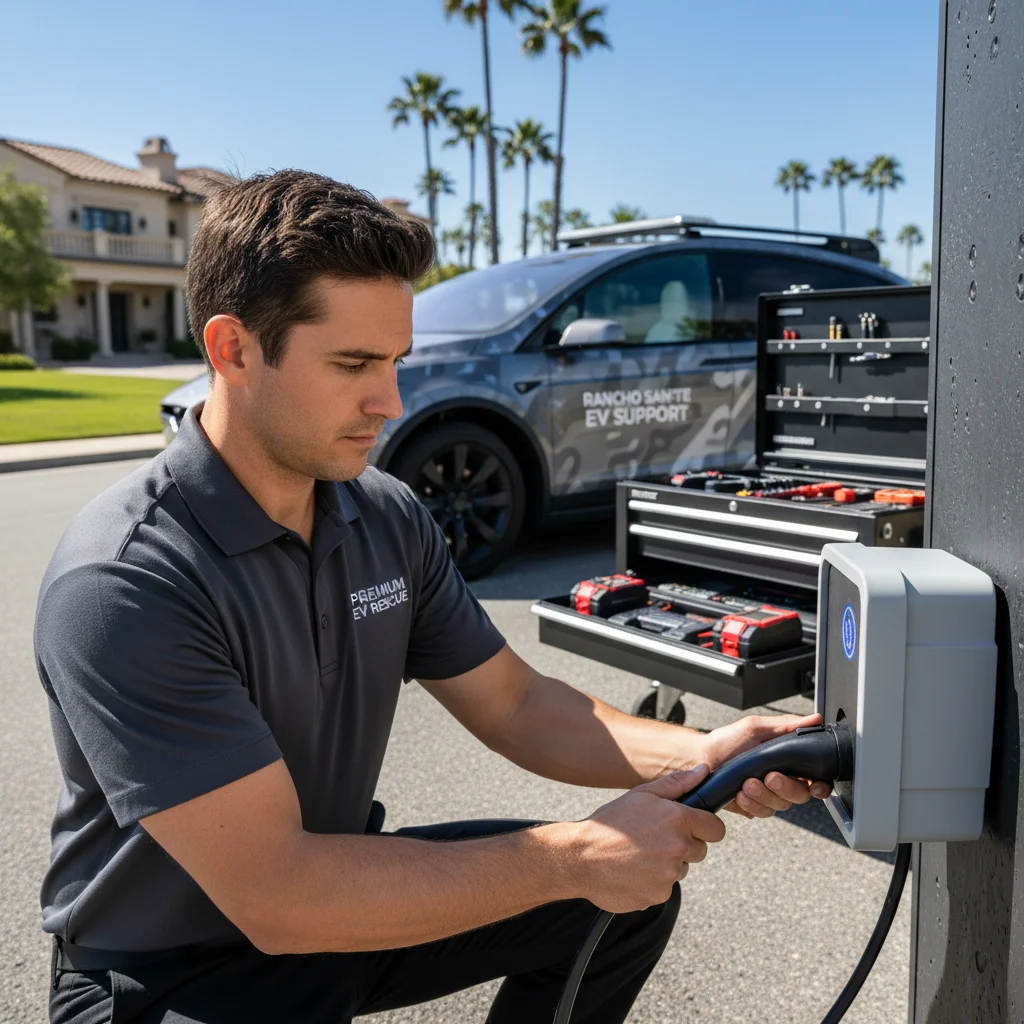
US-1, Old Cutler, and the expressway edges
When the stall is on the move, the corridors matter. US-1, South Dixie Highway, is the main north-south. The Metrorail busway runs beside it. Old Cutler Road is the bay side, through the Old Cutler area and toward Pinecrest. LeJeune Road, Coral Way, and Bird Road are the in-town grid. SR-836 access is the Dolphin Expressway tie. The Greater Miami Expressway Agency now runs SR-836, SR-874, and SR-878. Those are the Dolphin, the Don Shula Expressway, and the Snapper Creek Expressway. They used to be MDX roads. GMX took them over in 2023. They’re all-electronic. SunPass or toll-by-plate. No cash.
If you’re disabled on a high-speed corridor, Florida Statute 316.194 is the rule. Get the car off the main-traveled part when you can. Leave room for passing traffic. Keep a clear view from 200 feet each way. A genuinely disabled vehicle that cannot practicably be moved is exempt under 316.194(2). That’s not permission to sit in a travel lane if you can roll to a shoulder.
Florida’s Road Ranger Service Patrol is free on the highways they cover. Dial *FHP (*347). District 6 covers Miami-Dade. District 6 patrols I-95 and 95 Express. It also covers I-195, I-395, I-75, and 75 Express. The Palmetto, SR-826, is on that list too. They jump-start vehicles and do minor repairs. They can change a tire. They also tow a disabled car from the travel lanes to a safer spot. Published Road Ranger material doesn’t mention EV charging. A Level 2 top-up is not what they bring. A 12V jump or a move off the travel lane still is. Don’t wait in a live lane for a mobile charge.
Florida 511 at FL511.com is FDOT’s traffic feed, in English and Spanish. Use it if US-1 or the Palmetto is stacked. Charge Pro MIA doesn’t promise an arrival window. The operator who takes the job tells you what they can do.
No express-lane operator here publishes a disabled-vehicle free-tow just for its lanes. Road Rangers still patrol those corridors. Don’t invent a special GMX or Turnpike EV tow. If you’re in a travel lane, *FHP is the first call. A mobile charge comes after you’re out of traffic.
Heat is the range story, not the trees
Coral Gables is flat and tree-shaded. Range here is about heat and air conditioning. It’s never about grade. Recurrent Auto studied about 30,000 EVs. That fleet work finds about 5% range loss at 90F. The loss is about 17 to 18% at 100F. Cooling a hot cabin can take 3 to 5 kW at first, then about 1 kW to hold. AAA’s 2019 SAE-standard test found about a 17% range drop at 95F with the AC on. Those figures are not Tesla-branded. They’re fleet and lab tests.
Summer afternoons bring thunderstorms, roughly 2 p.m. to 6 p.m. King tides run mainly September through November. Palmetto Bay’s bayfront and Old Cutler edge flood on those tides. If the car has been through saltwater floodwater, stop. NHTSA warns that residual salt in a flooded lithium pack can short days later. A flood-exposed EV should not be driven or charged until it’s inspected. It should not sit within 50 feet of a structure. That’s official safety guidance, not a scare line.
FPL tells EV owners to keep the pack between 50 and 80% through hurricane season. That season runs June 1 to November 30. Unplug during the storm. Don’t charge or drive a flood-exposed EV until it’s inspected. Confirm that guidance on FPL’s EV storm page before you rely on it.
When the car will not wake
A silent EV is often the 12V, not the pack. The 12V runs lights, locks, and the computers that close the high-voltage contactors. If that battery is dead, the car is a locked box. This is the classic stall after campus, Merrick Park, or a week away.
The operators we connect you with jump or replace a dead 12V on site. They handle Tesla and every major EV brand. For Tesla-specific 12V steps, see Tesla 12V battery jump. For a silent Tesla on the Miami side of the line, see Tesla roadside help in Miami. The Gables call is the same hardware. The address is not Miami.
Don’t keep jumping a 12V that dies again the next morning. Heat here ages lead-acid packs. Replacement is often the real fix. Charge Pro MIA doesn’t sell parts. The operator on scene quotes that work before they start. You pay them direct.
What a mobile charge actually is
If the pack is the problem, you need energy in the car. The operators we match you with bring a 240V Level 2 source to the vehicle. They use a native NACS plug. For non-Tesla EVs they bring a CCS or J1772 adapter. Typical charging time adds about 10 to 20 miles of range in 15 to 30 minutes. That’s charging time. It’s not an arrival time.
That bump is usually enough to get you home to a Gables driveway. It can also reach a public plug you already trust. This page doesn’t name stations or distances. The AFDC station map could not be verified for this write-up. Confirm live plugs in your car’s app before you roll.
Read mobile EV charging for the service shape. Read EV roadside assistance for the broader rescue menu. Charge Pro MIA doesn’t own trucks. We don’t employ technicians. We don’t set prices. The operator quotes you before starting and bills you directly.
The pros we connect you with are licensed and insured. The brand is not. We refer. We don’t perform the work.
Charge on site, or a tow off private property
A tow is the wrong first move if a charge or a 12V jump will wake the car. Incorrect EV towing can damage motors and the pack. Many EVs need a flatbed. If you can charge in place, do that.
Private property is a separate risk. Florida Statute 715.07 governs tows from private lots. A tow operator must stop and return the vehicle if you appear before it’s fully removed. You then pay no more than one-half the posted tow rate. We’re not publishing that dollar figure. Ask the yard. The property needs a proper tow-away sign at each access. That sign must be posted at least 24 hours ahead, with listed exceptions. In a county over 500,000 people, the car must be stored within a 10-mile radius. Both Miami-Dade and Broward qualify. Release within one hour of request is in the statute. Miami-Dade caps non-consent rates under Code Section 30-476. Don’t treat an old screenshot as the current cap. Confirm with Miami-Dade Consumer Protection.
Campus garages and mall garages are private property. Merrick Park and university lots are not a highway shoulder. If a wrecker is already hooking up, 715.07 is the statute to know. A mobile charge only helps if the car is still there.
Neighbors you actually drive through
A Gables day rarely stays inside city limits. South Miami is the walkable neighbor on US-1. It wraps around the Shops at Sunset Place and the South Miami Metrorail station. Pinecrest is the large-lot neighbor on Old Cutler and US-1. Palmetto Bay continues that bay side. Kendall is not a city. It’s a census-designated place. It holds Dadeland Mall, the Dadeland Metrorail stations, and Baptist Hospital of Miami. Those are long-dwell garages too. The Falls is another Kendall-area errand that runs long.
Kendale Lakes and The Hammocks are also CDPs, not cities. Don’t pin a city hall on them. Your trip west of the Gables may end in that suburban grid. The stall is still a Miami-Dade roadside job. We serve Coral Gables and the rest of the cities in the county.
What to do in the first minutes
Stay out of traffic first. On US-1 or an expressway, that means the shoulder or a side street, not a live lane. Call *FHP if you’re in a travel lane District 6 patrols. Hazards on. People out of the car only if it’s safer.
Then decide pack versus 12V. Screens dead, doors dead, app silent: think 12V. Car awake but range at zero: think a mobile charge. A public plug that will not start is a third case. Try another stall before you assume the car is the fault. This write-up can’t list local plugs. Use the in-car map.
If you’re on a Gables residential street, you’re already in a safer place to wait. Call the referral line. Tell the operator the city is Coral Gables, not Miami. Mention campus, Miracle Mile, Cocoplum, or Old Cutler so they route correctly. They quote before they start. You accept or you don’t.
A stuck charge door is a different job from an empty pack. Don’t yank the handle and assume you need a tow. If the car is awake and the cable will not release, say that. The operator still quotes before they touch the port.
How Charge Pro MIA fits this city
We’re a South Florida referral line at chargepromia.com. We match stranded EV drivers with independent local mobile rescue operators. We hold no trade license for the work. We publish no business hours and no arrival clock. We own no trucks, no yard, and no parts inventory. The operator on the other end of the match does the job.
That job is a 240V charge at the car, a 12V jump, or a 12V replacement on site. Tesla, Rivian, Lucid, and Porsche are in scope. So are Mercedes, Hyundai, Ford, Chevy, and the other major EV brands. Native NACS, plus CCS or J1772 adapters.
For Coral Gables EV roadside help on campus streets and home chargers, call (786) 963-2995. That’s the number to reach the line. It’s not a promise that someone is already around the corner.
Frequently asked questions
What if my EV hits empty near the University of Miami?
Call for a mobile Level 2 charge at the car. The campus is in Coral Gables, not the City of Miami. Say that when you describe the pin. An operator brings a 240V source to the car. Typical charging time adds 10 to 20 miles in 15 to 30 minutes. That’s plug time, not drive-over time. If the car is silent, ask for a 12V check first.
Can someone jump a Tesla 12V in a Gables driveway?
Yes. The operators we connect you with jump or replace a dead 12V on site. That includes Tesla and other brands. A driveway in Riviera or a street by Miracle Mile is a normal pin. The operator quotes before they start and bills you directly. Recurring 12V death after a jump usually means replacement, not another jump.
Do you only help Teslas in Coral Gables?
No. The match covers Tesla and every major EV brand. Operators bring a native NACS plug and CCS or J1772 adapters for everyone else. Charge Pro MIA still doesn’t perform the work. We connect you with the local pro who does.