An empty EV in Homestead needs a mobile charge or a 12V jump. This is the last mainland town before US-1 continues toward the Keys. It’s also the last stop before the park road on SR-9336. EV roadside assistance here is an independent operator at the car. They quote you before they start, then bill you directly. Charge Pro MIA only matches you with that operator. We don’t own trucks, and we don’t do the work.
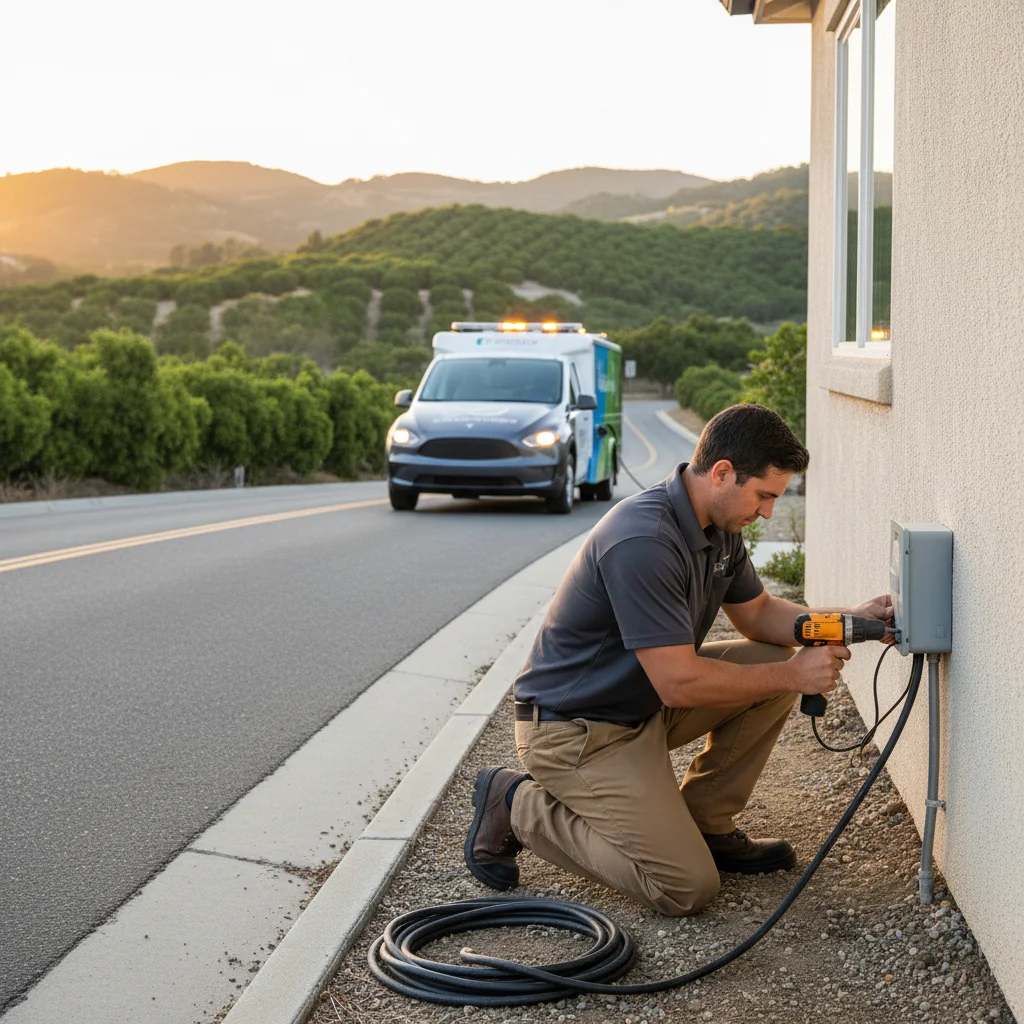
Homestead as the last mainland top-up
Homestead sits at the south end of Miami-Dade County. Florida’s Turnpike reaches its southern terminus here. US-1 is still mainland highway through town. South of here, that road keeps going toward Key Largo. That’s Monroe County, and it’s outside our service area. If you’re bound for the Keys, top up in town first. Don’t start that southbound run on a thin pack.
The main Everglades National Park entrance is on SR-9336. That park road is a dead-end. If you stall on it, you’re not looping back through town. Our note on a dead EV on the Homestead park road covers that pin. Biscayne National Park headquarters is in Homestead too. Those visits look short on a map. Cabin AC still eats range while you idle.
Krome Avenue is SR-997 on the west side. Campbell Drive cuts across the local grid. Downtown Homestead, Keys Gate, and the SW 137th Ave corridor all feed those roads. Miami-Dade’s highest natural ground is the Atlantic Coastal Ridge. That’s about 23 to 24 feet. Range here is heat and air conditioning, never terrain.
Florida City is the next municipality on US-1. Drivers who already rolled past Homestead should read out-of-charge help in Florida City. Leisure City and Princeton sit north of town. They’re census-designated places, not cities with their own halls. The operator still comes to the pin you drop.
Two utilities on one city map
Almost all of Miami-Dade runs on Florida Power and Light. Homestead is the confirmed exception. Parts of the city are on Homestead Public Services Energy, the municipal utility. Other parts are still FPL. Don’t assume your block is FPL.
Confirm your provider on the city’s HPS Energy electric services page at homesteadfl.gov. We couldn’t pull a street-by-street boundary from the city’s PDF map. Your bill is the authority.
Census ACS 2019-2023 puts about 24.5 percent of Homestead housing before 1980. Older panels and apartments are still where a home charger often can’t go in. Newer pockets around Keys Gate and the Speedway area are a different build. FPL publishes EVolution Home for its own residential customers. We found no EV-specific program on HPS Energy’s pages. That’s what the site showed on 2026-09-18, not proof that none exists. Ask HPS Energy if you’re on city power.
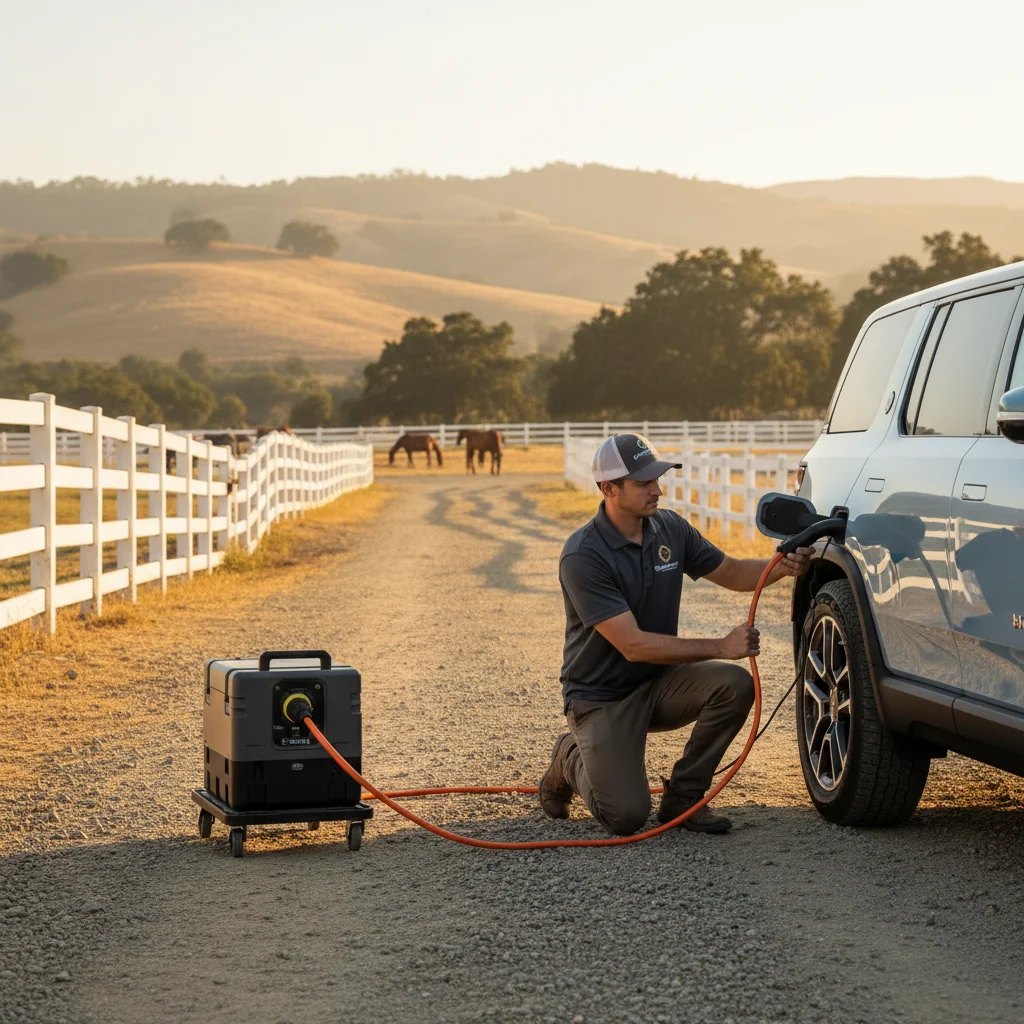
If the wall plug is down tonight, you still need miles. Mobile EV charging is an operator bringing 240-volt Level 2 power to the car. They bring a native NACS plug, plus CCS or J1772 adapters. A typical session adds 10 to 20 miles. That takes 15 to 30 minutes of charging. That clock is plug time only. It’s never an arrival time.
Heat is the drain, and Andrew still defines the place
Homestead is flat and hurricane-exposed. You won’t climb away your range. You’ll cook the cabin instead. NWS Miami 1991-2020 normals put July and August average highs at 91F. A normal year has about 64 days at or above 90F.
Recurrent Auto studied about 30,000 EVs. It found about 5 percent range loss at 90F. The same study found about 17 to 18 percent at 100F. Cooling a 95-degree cabin can take 3 to 5 kW at first. Holding that cool takes about 1 kW. AAA’s 2019 SAE test found about 17 percent range loss at 95F with AC on. A grocery run on Campbell Drive still spends pack on the compressor. A southbound departure on a thin pack spends more.
Hurricane Andrew made landfall here in 1992. Season runs June 1 through November 30. FPL tells EV customers to keep the pack between 50 and 80 percent in season. It also tells them to unplug during the storm. If your meter is HPS Energy, ask that utility. Don’t follow FPL’s page by default.
NHTSA warns that salt left in a flooded lithium pack can short later. Fires can start days or weeks after the water recedes. About 36 EVs flooded in Hurricane Ian later caught fire. Don’t drive or charge a flood-exposed EV until it’s inspected. Keep it at least 50 feet from a structure.
Speedway exit traffic and the Turnpike end
Homestead-Miami Speedway hosts NASCAR championship weekend. When the stands empty, US-1 and the Turnpike take that wave. Homestead Air Reserve Base sits on the east side. The Seminole Theatre still anchors downtown. We couldn’t verify a station-by-station charging list from the sources we had. If you already had a charger in mind, tell the operator. Their job is adding enough miles to get you there.
Florida’s Turnpike Enterprise operates the Turnpike and the Homestead Extension. Both are all-electronic, with SunPass or toll-by-plate and no cash lane. If you stall on the Extension, get out of the travel lane first. Empty on the Homestead Extension is the shoulder playbook.
A charge, a 12V jump, or getting off the lane
A silent EV isn’t always an empty pack. The 12-volt battery runs the computers that wake the car. Heat here ages that small battery fast. Battery University notes that every rise of about 15F halves lead-acid life. A Speedway day or downtown errands can leave you locked out with a full pack. That’s a jump or a 12-volt swap on site.
Out-of-charge recovery is the other case. The traction pack is actually empty. The operator plugs in and adds enough miles for the charger you planned. We don’t name a nearest station. We couldn’t verify that inventory. You pick the destination. The operator quotes the work before they start.
Florida Statute 316.194 is the disabled-vehicle rule on a highway outside a municipality. Leave the main-traveled part when you can. Keep room for passing traffic, and a view of 200 feet each way. A car that can’t practicably move off the road is exempt. Inside Homestead, city streets still want you out of live lanes.
Road Rangers are FDOT’s free highway patrol. District 6 covers Miami-Dade. Dial *FHP, or *347, from your phone. They jump-start cars, change flats, and handle minor repairs. They also tow a disabled vehicle from the travel lanes to the nearest safe spot. Their published materials don’t mention EV charging. They can still clear a live lane and jump a 12-volt. A Level 2 charge is what the mobile operator brings after you’re safe.
A tow moves the car, and it doesn’t put miles on the pack. The Level 2 top-up is the on-site option.
The pros we connect you with are licensed and insured. Call (786) 963-2995 when you need a match. We connect Homestead drivers with a local operator who quotes before starting. There’s no arrival promise from us, and no price from us. You hear both from the person who does the work.