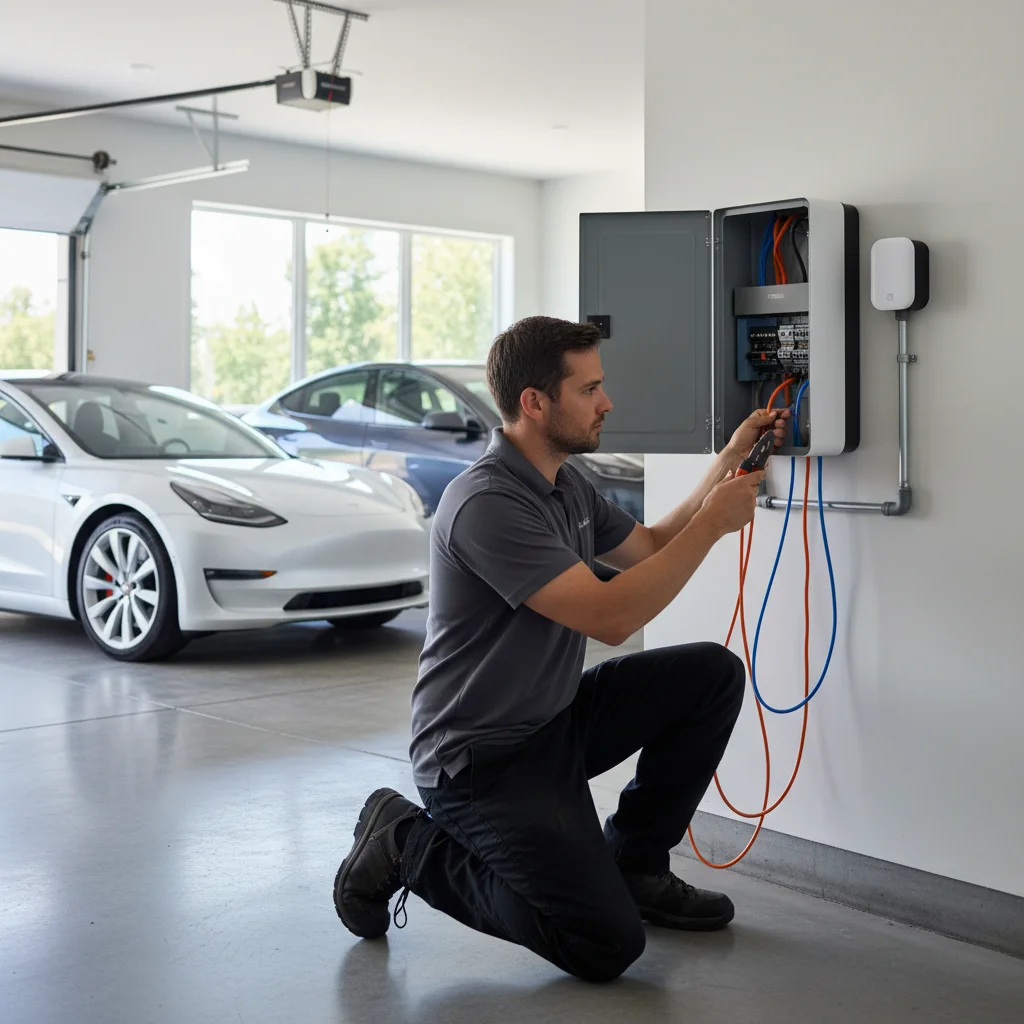
You walk back to a Tesla that sat all week at Miami International. The app is blank, and the handles stay flush. After a week in the Dolphin Garage or the Flamingo Garage, the car looks dead. Park 6 long-term parking does the same thing. That silence is usually a cooked 12V. The traction pack under the floor can still hold miles. The small battery that wakes the car is the one that failed. The same stall shows up after a quiet week in an unplugged condo garage. In older housing in Miami Springs and North Miami, a home charger is often not installable. The car just sits in the heat.
Why the 12V dies first in this heat
South Florida is flat. Range here isn’t a hill problem. The highest natural point in Miami-Dade is the Atlantic Coastal Ridge at roughly 23 to 24 feet. Broward’s Pine Island Ridge is about 29 feet. Heat, air conditioning, and dwell do the work.
NWS Miami 1991-2020 normals put July and August highs at 91F. A normal year sees about 64 days at or above 90F. That air sits in concrete airport garages and closed condo stalls.
A lead-acid 12V ages about twice as fast at 93F as it does at 77F. Every roughly 15F rise halves its life. At 111F it ages about four times as fast. Heat damage doesn’t reverse, and Battery University publishes that curve. It matches what owners see after MIA parking or a cruise week.
The traction pack under the floor is a different system. It can still hold miles while the small 12V is empty. The 12V wakes the computers, the door handles, the lights, and the latch motors. When it fails, the car looks totally dead. That’s the story after a week in long-term parking. It’s also the story after a car sits unplugged in a hot stall.
Ibis Garage lists ChargePoint ports. Park 6 has charging on site. Those plugs don’t save a 12V that already drained keeping systems alive. You can read the parking version of this failure in our guide to a Tesla 12V failure after parking. Miami Springs sits against the airport belt, so a lot of those calls start there. See EV roadside help in Miami Springs if that’s your lot.
Cruise parking works the same way. Cars sit in PortMiami’s northside garages or the southside ones through a whole itinerary. The 12V keeps modules alive the entire time. You come back to a silent cabin, not an empty pack. MIA lists motorist help for garage parking at (305) 876-7536 if you need the garage desk first.
Prove you’re jumping the right battery
Tesla runs two electrical systems. The high-voltage pack moves the car. No consumer jumper can jump that pack. The 12V is the wake-up battery. If you want the model-by-model layout first, start with whether Teslas have a 12V.
Use this check before you open a bumper cover.
- Black screen, dead app, and a key card that does nothing: treat it as 12V.
- Locks and unlocks, then shows a low-range warning: that’s the traction pack, not a jump job.
- Dim exterior lights or flickering cabin lights: 12V again.
Slow boots, random alerts, and a car that wakes itself at night are early Tesla 12V failure symptoms. A jump can wake the car tonight. Plan a replacement soon if those signs were already there.
A jump doesn’t refill the 12V the way a long drive fills a gas car’s battery. Tesla’s DC-DC converter charges the 12V from the traction pack once the car is on or plugged in. After a successful jump, plug in or drive so that converter can work. Parking it dark again leaves you in the same stall.
Don’t use another Tesla as a donor. Tesla tells owners not to pull 12V from a second Tesla. You can damage the donor car’s electronics.
Model 3 and Model Y: bumper posts first
These two share a jump path. The 12V sits under the frunk floor. Tesla also gives you posts behind the front tow-eye cover. That’s the useful path when the frunk is sealed.
On the driver’s side of the front bumper, look for a small rectangular cover. Pry it from the notch with your fingers or a flat plastic tool. Inside you should see a red positive post and a nearby chassis ground. That pair wakes a Model 3 or Model Y when the frunk latch has no power.
If the frunk is already open, you can go straight to the battery. Lift the carpet and the foam pad. The positive terminal has a red cover, and the negative is black. Those terminals accept clamps. They don’t help you if the lid is still locked.
Model S and Model X: posts change with the refresh
On older Model S cars before the 2021 refresh, the 12V lives under the frunk floor. Many Model X cars use that same layout. Lift the mat, pull the foam, and find the marked terminals.
On refreshed Model S and Model X cars from 2021 on, Tesla moved the jump posts. Look for a red positive post behind a small cover on the driver’s side of the frunk. It sits near the firewall. The chassis ground is on that same side.
If you’re not sure which cabin you have, use the VIN year on Tesla’s support site. You can also open the owner’s manual on your phone. Wrong posts waste time. They can also mark up the wrong hardware.
The clamp sequence
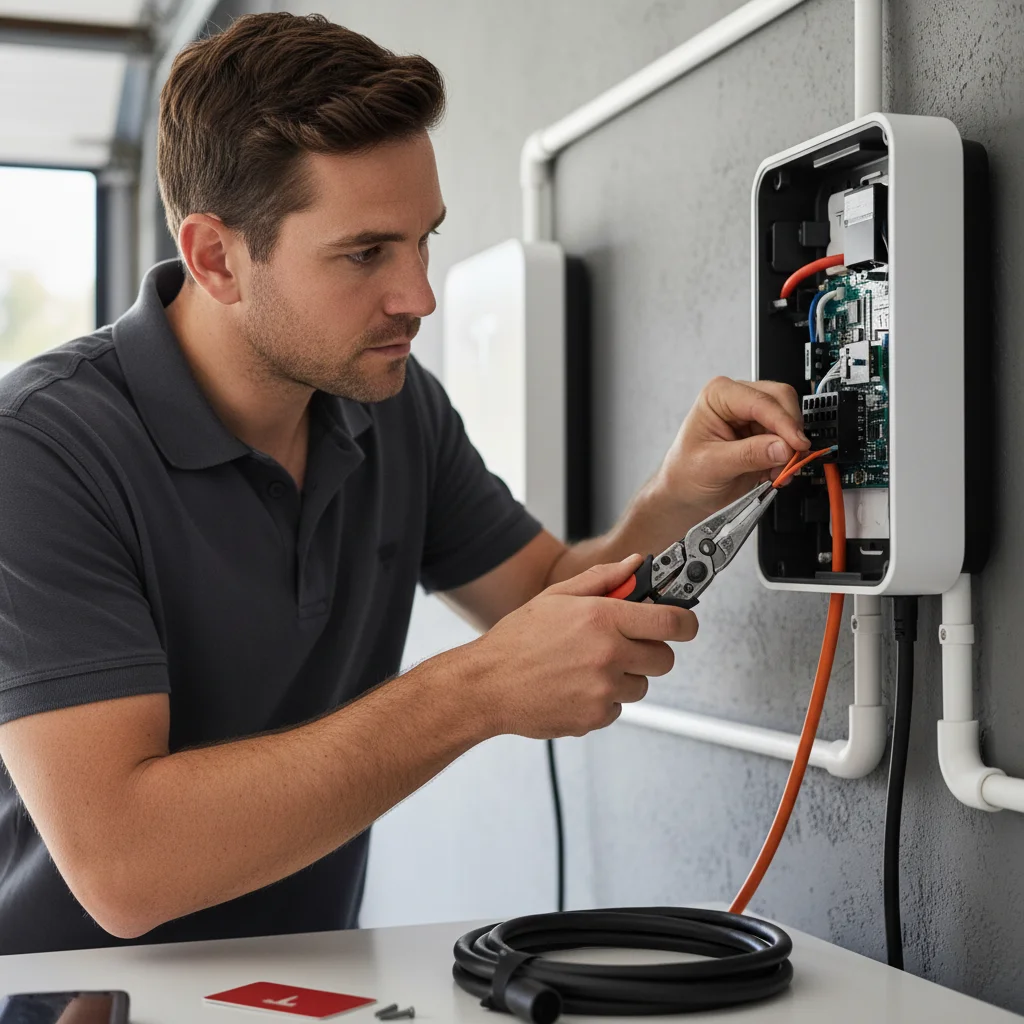
A portable lithium jump pack is the clean tool. You don’t need a running gas car. You also avoid the voltage spikes that come from an idling engine. Pick a pack meant for a 12V automotive battery. Keep the Tesla key card in your pocket so you can authenticate once the car wakes.
- Set the pack on stable ground and confirm it has charge.
- Open the tow-eye cover on a Model 3 or Y. On a Model S or X, reach the frunk posts instead.
- Clamp red to the red post first. Seat it firmly so it doesn’t arc.
- Clamp black to an unpainted chassis ground. On the tow-eye opening, that ground is right there. In a frunk, prefer a bare metal bracket when you can see one.
- Switch the pack on if it has a switch. Give the body computer a short pause to see voltage.
- Tap the key card or the door handle. The screen should start to wake.
- Once the car is up, pull black first, then red.
- Plug in or drive so the DC-DC converter can refill the 12V.
If the car is dead and you can’t get a door open, use the steps in Tesla battery dead and locked out.
When the frunk will not lift
A dead 12V means the frunk latch motor has no power. On Model 3 and Model Y, the bumper posts solve that. Start there, and don’t force the lid.
Model S and Model X often hide the posts inside the frunk. You need the manual release first. Tesla puts pull loops in the front wheel wells, behind liner flaps. On many Model S cars the loop is yellow or orange on the driver’s side. You may need two pulls. One releases the primary latch. The next releases the secondary. Model X uses the same wheel-well idea, with a colored loop behind the liner.
Loop locations have moved across model years. If what you see doesn’t match, search your year in Tesla’s support docs. Don’t yank a cable that feels stuck. A snapped release is a shop job, not a parking-lot fix.
If you’re on a limited-access road, Florida Statute 316.194 says to leave the main-traveled part when you can. Leave room for passing traffic. Keep a clear view from 200 feet each way when you can. A genuinely disabled vehicle is exempt when it can’t be moved. On I-95, I-195, I-395, I-75, or the Palmetto, Florida’s Road Ranger Service Patrol can jump-start a vehicle. Crews can also move it from a travel lane to a safer spot. Dial *FHP on your phone, which is *347. Road Ranger pages don’t talk about EV charging. A 12V jump or a short tow off the lane is still in their published list.
When to stop and get a pro on the 12V
Stop DIY if the bumper cover is blocked or damaged and you can’t reach the posts. Stop if you jumped the car and it dies again in minutes. That’s a 12V that needs diagnosis, and often a replacement, not a second clamp session. Stop if you’re not sure which metal you’re clipping onto. A wrong clamp on a Tesla can hurt the body computer.
Heat-soaked packs after MIA parking fail again if the battery is already aged out. A week in a closed condo garage does the same thing. North Miami’s housing stock is about 82.7% pre-1980. Miami Springs is about 89.5%. Hialeah is about 60.1%. Hollywood is about 74.7%. In stock that old, a home charger is often not installable. The car sits dark between trips. That dwell is what finishes a weak 12V.
Newer tracts look different. Doral’s stock is about 5.5% pre-1980. Weston’s is about 7.0%. Home charging is common there. The failure mode is still heat after a parked week at MIA, not a missing wall plug.
If you need someone on site, the Tesla 12V battery jump page is the service the operators we connect you with handle. They bring the right posts and the right pack. They quote you before they start. Charge Pro MIA doesn’t own trucks and doesn’t do the work. We match you with an independent local operator. The operator bills you directly.
Call (786) 963-2995 when the car won’t wake and you want that match. Tell the operator whether you’re in an airport garage, a condo stall, or on a shoulder. Say whether the frunk is sealed.