You’re empty on the Dolphin Expressway, in the airport traffic between MIA and downtown. Get fully onto the right shoulder before you touch the phone. Put the hazards on and keep every tire out of the travel lanes. After that, you can sort a dead 12V from an empty pack.
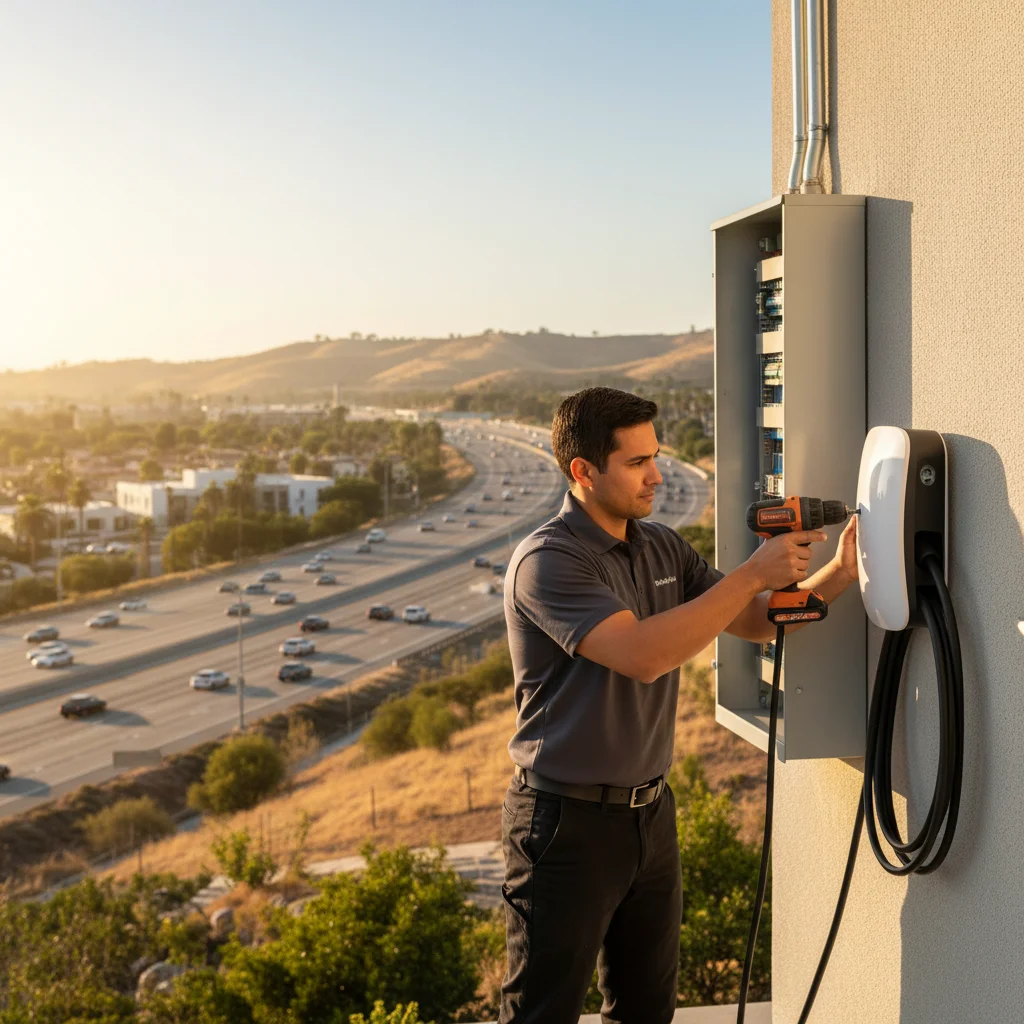
The Dolphin is an airport connector, not a hill climb
The Dolphin is SR-836, run by the Greater Miami Expressway Agency since 2023. It used to sit with the old Miami-Dade Expressway roads. You’ll still see that MDX name on older maps. GMX also runs SR-112, SR-874, SR-878, and SR-924. All of those roads are all-electronic, using SunPass or toll-by-plate. The booths are gone, and none of them takes cash.
Eastbound, this road feeds downtown Miami and the core of the city. Westbound, it feeds MIA and the airport cities. Miami Springs sits against the airport terminals on the north side. Doral sits in the warehouse and hotel grid west of the runways. Dolphin Mall sits near Doral on the west side of this belt. FIU’s Modesto Maidique Campus sits in the Sweetwater and Tamiami area, just off this east-west run. A dead car here is in that mix, not on a quiet back road.
SR-112 is the Airport Expressway, also under GMX. If you stalled on 112 instead of 836, say so. Dispatch can’t see the difference from near MIA alone. I-195 and I-395 feed the downtown edge of the same trip. The Palmetto is SR-826, and FDOT District 6 lists it. The Dolphin is GMX, and that list doesn’t name it. Don’t mix the two when you tell anyone where you are.
South Florida is flat, and that fact should change how you read your range. There’s no grade penalty on range anywhere in Miami-Dade or Broward. The highest natural point in Miami-Dade is the Atlantic Coastal Ridge. That ridge sits at roughly 23 to 24 feet. Broward’s high point is Pine Island Ridge at about 29 feet. That matters on the Dolphin because people blame the road. The road isn’t climbing on this corridor. Heat, air conditioning, and stop-and-go are what cut the buffer.
The City of Miami is one of 34 municipalities in the county. Downtown sits inside the City of Miami proper. The airport belt isn’t the same government. Don’t wait for a city crew that doesn’t cover the shoulder you’re on. County and state highway rules apply while you’re still on SR-836.
FPL serves essentially all of Miami-Dade on this corridor. Homestead is the confirmed municipal-utility exception, and this corridor isn’t Homestead. FPL EVolution is the utility’s public charging brand. None of that is a truck on the shoulder.
Heat, AC, and the MIA crawl
NWS Miami normals for 1991 to 2020 put the July and August average high at 91F. A normal year sees about 64 days at or above 90F. That’s the climate sitting on your pack while you idle toward Brickell.
Recurrent Auto’s fleet study of about 30,000 EVs finds about 5% range loss at 90F. It finds about 17 to 18% loss at 100F. It can take 3 to 5 kW to cool a 95-degree cabin down. It takes about 1 kW to hold it cool after that. AAA’s 2019 SAE-standard test found about a 17% range drop at 95F. That test ran with the AC on.
Summer afternoon thunderstorms are near-daily, roughly 2pm to 6pm. That’s also when airport traffic stacks on SR-836. If you left a garage with a thin buffer, AC and the crawl can finish the pack. You might still be between the terminals and downtown when it does.
Don’t guess how far a public charger sits from your pin. Station-level inventory wasn’t verified for this page. The AFDC station API host didn’t resolve when this research was pulled on September 18, 2026. You may use a site you already know. This page won’t invent one. MIA’s Ibis Garage lists ChargePoint EV ports across its levels. The new Park 6 long-term garage opened in summer 2026 and has EV charging on site. Those are garage facts, not a freeway shoulder fix.
People heading downtown may be aiming at Brightline’s MiamiCentral station. That’s in the City of Miami, not Miami Beach. Miami Beach is a separate city, reached only by causeway. This road doesn’t take you over the water.
The airport stall that looks like an empty pack
A lot of Dolphin trouble starts in a garage, not on the expressway. You parked in the Dolphin Garage at the North Terminal. Or you used the Flamingo Garage at the Central Terminal. You may have used Ibis, Park 6, or the Park and Ride at 1350 NW 45 Ave. You come back from a trip and the car won’t wake.
That’s often the 12-volt battery. It drained keeping systems alive in the heat. It isn’t always an empty high-voltage pack. Almost nobody in that moment knows the difference. Every roughly 15F rise in temperature halves the life of a lead-acid battery. It ages about twice as fast at 93F versus 77F. It ages about four times as fast at 111F. Heat damage can’t be reversed. That’s why so many EVs won’t wake after sitting at MIA.
If the screens are dark and the handles don’t work, start with the 12V. Our note on Tesla 12V failure after parking walks that split. A jump or an on-site 12V replacement is a different job from a Level 2 top-up. Tell the operator which one you’re looking at before anyone rolls.
The same 12V drain shows up after a long sit, then a merge back onto this road. The car can look totally dead in the garage. It can also fail when you try to merge onto SR-836 with a weak 12V. Say how long it sat, and whether it drove at all after you returned.
What Florida law wants while you’re disabled
Florida Statute 316.194 covers stopping, standing, or parking on a highway outside a municipality. Leave the vehicle off the main-traveled part where that’s practicable. Leave room for passing traffic. Keep a clear view from 200 feet each way. Statute 316.194(2) exempts a genuinely disabled vehicle that can’t practicably be moved off the road. An empty EV is disabled. Sitting in a live lane while you hunt a plug isn’t a plan.
Florida Statute 316.1945 lists places where stopping is prohibited. Don’t debate a travel lane. Get as far right as the pavement allows.
If a wrecker later hooks you from private property, Florida Statute 715.07 is the rule set. A tow operator must stop and return the vehicle if you appear before it’s fully removed. You then pay no more than one-half the posted tow rate. Confirm that posted figure at the scene. This page won’t invent it. In a county of 500,000 or more, the towed vehicle must be stored within a 10-mile radius. Both Miami-Dade and Broward qualify under that rule. The operator must release it within one hour of request.
Miami-Dade County Code Section 30-476 sets maximum nonconsent towing and storage rates. That ordinance has been in effect since October 16, 2022. Confirm the current posted numbers with the yard. This page won’t publish a dollar cap. Those figures go stale.
Florida’s an all-party consent state. Statute 934.03(2)(d) says interception is lawful only when all parties have given prior consent. If a recorded-line notice plays when you call, that’s why.
Get out of the travel lane before you diagnose the car
Turn the hazards on while you’re still rolling if the car will let you. Ease to the right and put every tire on the shoulder. Don’t stop in an express lane because the remaining percent hit zero.
GMX doesn’t publish a disabled-vehicle or free-tow provision specific to its express lanes. Don’t wait on a hidden policy that we couldn’t find. Report the stall and get right. Then call for the help you actually need.
Exit from the passenger side if you’re on the right shoulder. The driver door puts you between the car and live traffic. Stay behind the right rear corner. Don’t walk the pavement toward an exit. Airport traffic on this road is fast and close.
Stay with the vehicle, because a car fully on the right is easier to find. It’s also easier for a mobile operator to spot. Walking the shoulder toward MIA or toward downtown is a worse plan.
Dial *FHP (*347) from your mobile phone. Florida Highway Patrol takes disabled-motorist reports on that short code. The Road Ranger Service Patrol is Florida’s free highway service patrol, run by FDOT. Rangers jump-start vehicles, make minor repairs, change flats, and tow a disabled vehicle from the travel lanes to the nearest safe location, free of charge.
No Road Ranger material we read on September 18, 2026 mentions electric vehicles or EV charging. Don’t read that silence as a ban on help. A dead EV can still need a 12V jump. It can still need a move off the travel lane. Both of those are things they do. A Level 2 charge isn’t something they provide. Independent operators fill that charging job.
Florida 511 at FL511.com is FDOT’s official traffic and travel information system. It runs in English and Spanish. Check it if you can still use your phone. A stall is worse when the Dolphin is already stacked.
What a mobile operator can do on this shoulder
Charge Pro MIA is a referral line. We match stranded EV drivers with independent local mobile rescue operators. We don’t own trucks, employ technicians, or set prices. We don’t promise when someone will arrive. The pros we connect you with are licensed and insured. The operator quotes you before starting, then bills you directly.
What those operators do on the shoulder is simple. They bring a 240V Level 2 source to the car. They use a native NACS plug, plus a CCS or J1772 adapter for non-Tesla EVs. They typically add 10 to 20 miles of range in 15 to 30 minutes of charging. That’s charging time, not a clock on the drive over. They can also jump or replace a dead 12V on site. They handle Tesla and every major EV brand.
If the pack is empty, that’s out-of-charge recovery. If you need the truck to come to you, that’s mobile EV charging. A flatbed is the messy option. Use it when the car can’t take a charge or can’t sit safely. Our longer freeway walkthrough covers the statewide rule. See what Florida law says to do when your EV dies on the freeway. City context for the east end sits on the Miami page.
Ten to twenty miles is a get-off-the-shoulder buffer. It isn’t a full commute. Plan the next plug once you’re out of live traffic.
What to tell the operator so the right rig shows up
Give the road, the direction, and the last thing you passed. SR-836 eastbound, past the airport, right shoulder, is usable. Dolphin westbound, toward Doral, is usable. A mile marker or a phone pin beats a vague near-MIA description. Near MIA is half the corridor.
Year, make, model, color, and connector type if you know it. Tesla NACS is straightforward. CCS and J1772 are fine if you say them out loud. Don’t make the operator guess a Hyundai port from a Tesla photo.
Say whether the car still wakes. A car at a few percent that’s still in drive is a charge job. A silent car with dark screens may be a 12V job. Those are different tools on the truck.
Say if you’re blocking a lane, sitting in an express lane, or fully on the shoulder. Say if rain is already on you. Storms here are short and hard in the afternoon.
The operator quotes before work starts. Confirm that quote before anyone plugs in. We don’t set the number, and this page won’t guess it.
After you can roll again
Once you have enough range to leave the shoulder, pick a place you already trust. Home charging, a garage you use, or a site already in your app beats another gamble. FPL EVolution sites exist around the metro. This page still won’t rank them by distance from SR-836.
If this started after a week in airport parking, budget a 12V test. The high-voltage pack can still be fine. Miami heat is why that small battery keeps dying.
If a wrecker already has the car, ask where it’s going. Miami-Dade storage rules sit in Statute 715.07 and County Code 30-476. Confirm hours and the posted rate at the yard. Don’t pay a number you heard in a blog.
Kaseya Center is the current name of the Heat arena downtown. Don’t call it the American Airlines Arena or FTX Arena. Brickell is a neighborhood of the City of Miami, not a separate city. If you limp off and die on a downtown street, the same split applies: charge, 12V, or tow.
Westchester and Tamiami are census-designated places, not cities. Sweetwater is a city. Doral is a city. Use those names when they match where you actually are.
Frequently asked questions
What should I do first if my EV dies on the Dolphin Expressway?
Get fully onto the right shoulder and turn the hazards on. Exit from the passenger side if you’re on the right. Stay with the car. Dial *FHP (*347) to report a disabled vehicle. Then call a mobile operator if you need a Level 2 charge or a 12V jump. Florida Statute 316.194 wants you off the main-traveled part where that’s practicable.
Can a Road Ranger charge my EV on SR-836?
Road Ranger material we read doesn’t mention EV charging. Rangers do jump-starts, minor repairs, flats, fuel, water, and a free tow from the travel lanes to the nearest safe location. A 12V jump may still be in that toolkit. A 240V Level 2 top-up isn’t in that toolkit. Independent operators in our network bring that Level 2 source to the shoulder. They quote you before they start any charge.
If I just got back from a trip at MIA, is the pack empty?
Often it isn’t the high-voltage pack. Long-term parking at the Dolphin, Flamingo, Ibis, Park 6, or the Park and Ride at 1350 NW 45 Ave is hard on the 12V. Heat ages that battery fast in this climate. The car can look totally dead while the high-voltage pack still has range. Tell the operator the screens are dark and the car sat. That’s a different call than an empty pack on eastbound SR-836 in afternoon traffic.
If you need a local operator on this shoulder, call (786) 963-2995. We’ll connect you with an independent pro who quotes before any work starts.