A Kia Niro EV sits silent on an older North Miami-Dade street. That’s usually the 12V battery, not an empty traction pack. A lot of these compact crossovers live on public plugs. Census ACS figures put 82.7 percent of North Miami housing before 1980. That stock often can’t take a home Level 2 install. The car charges at an FPL EVolution stall, or on a street session, then sits in heat. Morning comes and the dash is dark. The pack can still be fine.
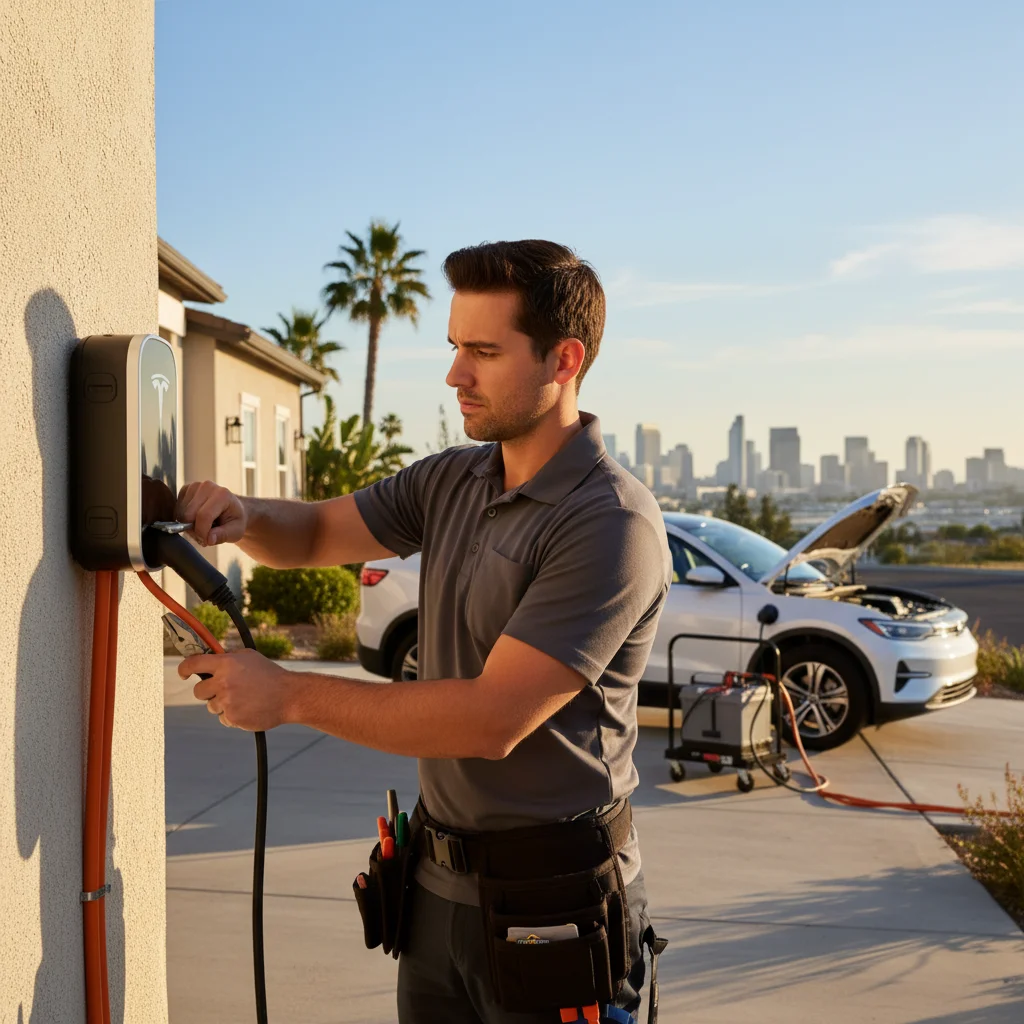
Why a Niro EV goes quiet in this housing
The 2019 to 2022 Niro EV and the 2023 to 2025 redesign use the same split. A lithium traction pack turns the wheels. A small 12V battery runs locks, the cluster, the alarm, and the wake relay. If that 12V is down, the car ignores the start button. It also won’t handshake with a charge cable. You can have 80 percent in the pack and still look stranded.
North Miami, North Miami Beach, and the grid toward Miami Gardens lean on street parking. Hialeah’s older stock, about 60.1 percent pre-1980, has the same pattern. Golden Glades and West Little River sit in that same older band. Census figures put them at 83.6 and 82.0 percent pre-1980. Compact crossovers fit those lots. They don’t bring a garage circuit with them.
Heat finishes the job. NWS Miami 1991-2020 normals put July and August average highs at 91F. A normal year sees about 64 days at or above 90F. Battery University says every roughly 15F rise halves lead-acid life. Aging runs about twice as fast at 93F as at 77F. Heat damage doesn’t reverse. A Niro that sat a long weekend can refuse to wake even after a recent charge.
Hills aren’t the story. Miami-Dade’s highest natural point is the Atlantic Coastal Ridge at about 23 to 24 feet. Broward’s Pine Island Ridge is about 29 feet. Range here is heat, air conditioning, and time parked. Recurrent Auto’s study of about 30,000 EVs finds about 5 percent range loss at 90F and about 17 to 18 percent at 100F. AAA’s 2019 SAE test found about a 17 percent drop at 95F with the AC on. That drains the pack on a long errand. The 12V dies from sitting, not from a grade.
Tell a dead 12V from an empty pack
These two failures feel the same from the seat. They aren’t.
A dead 12V looks like this. The cluster stays black. The start button won’t do a thing. You hear no relay and no chime. The fob is slow, or it doesn’t unlock. Hazards may not fire. The car sat for days with no drive.
An empty pack looks like this. The dash wakes. You get a low-battery or turtle warning. Doors still work. Lights still work. You can open the infotainment. The car drove normally until range ran out.
If the dash is black, start with the 12V. If the dash is on and begging for a charge, you need energy into the CCS port. Jump cables won’t fill the traction pack.
Airport parking makes this mix-up worse. Leave a Niro in MIA’s Dolphin, Flamingo, Ibis, or Park 6 garage for a week. The 12V is what usually dies. Modules stay alive. Heat speeds the drain. MIA’s page says the Ibis Garage holds ChargePoint EV ports across its levels. Park 6 has EV charging on site. Even so, a car that sat can still wake with a dead 12V. PortMiami’s published parking pages list no EV charging at the cruise garages. Same 12V pattern after a sailing.
What happens when an EV 12V battery dies walks the sequence across brands.
Checks to run before you call a wrecker
Stay with the car if you’re in a private lot. Florida Statute 715.07 lets a tow operator hook a vehicle that looks abandoned. If you show up before it’s fully removed, they must stop and return it. You pay no more than half the posted rate. Miami-Dade Code Section 30-476 sets the county’s maximum nonconsent rates. Don’t guess the dollars. Read the posted schedule. Storage in this county must sit within a 10-mile radius. Release should happen within an hour of your request.
Then run the car, not the lot.
Swap the fob coin cell if the car ignores the key. It’s a CR2032. You can also use the physical key. If the doors still don’t talk, the 12V is next.
Press start with your foot on the brake. Silence is a 12V clue. A click and a chime mean the 12V still has some life.
Pop the hood. The 12V sits on the driver’s side, near the firewall, under a plastic cover. The 2023+ Niro keeps that general spot. Look for white crust or a loose clamp. Corroded terminals can fake a dead battery. Clean and snug them if you can reach them.
Don’t blame the public stall yet. A Niro with a dead 12V won’t talk to a cable. That looks like a charger fault. It isn’t. The car can’t complete the handshake.
If you’ve jumped this car three mornings in a row, stop. That’s a failing 12V, a parasitic draw, or a bad Battery Saver relay. Those need a Kia shop and a scan tool. Another jump only buys hours.
How to jump a Niro EV at the posts
Kia gives you jump posts in the engine bay. Don’t clamp the 12V terminals. Open the red positive cover for the plus. Use a chassis ground for the minus.
Park a donor car or a jump pack so the leads reach. Red to the Niro’s positive post. Other red to the donor positive. Black to the donor negative. Last black to unpainted metal on the Niro, not the battery negative. That last clamp cuts spark risk near the battery.
Wait two or three minutes. Press start. If Ready comes up, pull cables in reverse. Black first, then red. Keep the car in Ready. Drive twenty to thirty minutes so the DC-DC converter can refill the 12V. Don’t shut down in the next driveway and expect it to wake.
Skip a diesel-truck booster. The Niro’s 12V is small. A standard 12V jump pack is enough.
For the same method on other EVs, see how to jump start an electric car.
Don’t stand in the engine bay with cables on I-95 or the Palmetto Expressway (SR-826). Florida Statute 316.194 says leave the vehicle off the main-traveled part where you can. A truly disabled car that can’t be moved is exempt under 316.194(2). Hazards on. Exit on the safe side. FDOT’s Road Ranger Service Patrol can jump a 12V. They can also tow you off the travel lanes to a safe spot. Dial *FHP (*347). Their published materials don’t mention EV charging. A Level 2 top-up is a separate request.
The Battery Save toggle on newer Niro EVs
The 2023 to 2025 Niro EV has a 12V Battery Save setting. It tells the DC-DC converter to keep the 12V topped up more firmly. That happens while the pack charges, or while the car sits plugged in. Open Settings, then Vehicle, then 12V Battery Save, and turn it on.
Kia added that toggle after early Niro EV owners saw repeat drains. It won’t save a battery that’s already failing. It can stretch a borderline one if you leave the car for more than a week without a drive.
If Battery Save is on and the 12V still dies in a few days, you’re past a menu fix. Replace the battery or find the module that’s drawing power.
Where this stall actually happens
Older North Miami streets produce the sit-and-die pattern. No home Level 2. Overnight heat. Morning black dash. That’s a jump.
The empty-pack stall is the errand that ran long in 91F air. Recurrent Auto notes it can take 3 to 5 kW to cool a 95-degree cabin, then about 1 kW to hold it. Those first minutes of AC are the expensive ones. You arrive at a stall in turtle mode with a live dash. You need CCS energy, not a jump.
Hard Rock Stadium in Miami Gardens adds a long-park version. Dolphins, Hurricanes, the Miami Open, and F1 all mean hours in a hot lot. The 2026 FIFA World Cup uses the neutral name Miami Stadium. Some drivers return to a dead 12V. Some return with less pack than they planned. Read the dash before you ask for a flatbed.
On I-95 through this corridor, get off the travel lane when you can. Road Rangers patrol I-95, 95 Express, I-195, I-395, I-75, 75 Express, and SR-826. They can move you. They don’t bring a Level 2 source. Florida 511 at FL511.com shows corridor traffic in English and Spanish.
Don’t hunt a charger map from the shoulder. Sort 12V versus pack first. Then pick a jump, a mobile charge, or a move to a safe spot.
What rescue looks like for a Niro EV
Charge Pro MIA is a referral line. It matches stranded drivers with independent local operators. It doesn’t own trucks, employ techs, or set prices. The operator quotes you before work starts and bills you directly.
A dead 12V is a jump, or an on-site 12V replacement if that’s what you need. An empty pack needs a 240V Level 2 source at the CCS port. Operators bring a CCS or J1772 adapter for non-Tesla EVs. Operators typically add 10 to 20 miles of range in 15 to 30 minutes of charging. That’s charge time. It isn’t an arrival window.
Ten to twenty miles is usually enough to get you moving again on these older streets. It isn’t a full fill. You’re buying movement.
Non-Tesla EV rescue is the path for a Niro. How non-Tesla rescue works in South Florida covers what the truck brings.
A brand roadside plan that only sends a wrecker is the slow path for this car. A live pack and a dead 12V don’t need a hook. An empty pack often doesn’t either, if an operator can reach the CCS port where you sit.
When a jump won’t wake it
A high-voltage interlock fault can keep Ready off after the cluster wakes. That’s a scan tool and a dealer.
A bad 12V Battery Saver relay drains the auxiliary battery again in days. Morning jumps are a symptom.
Wiggly, crusted terminals can mimic a dead battery. If a wiggle starts the car, clean the posts and load-test the battery.
Flood is a different problem. NHTSA warns residual salt in a flooded lithium pack can short days or weeks later. About 36 EVs flooded by Hurricane Ian in 2022 later caught fire. Don’t drive or charge a flood-exposed Niro until it’s inspected. Don’t park it within 50 feet of a structure. King tides hit low coastal streets mainly September through November. That’s water, not a 12V.
FPL tells EV owners to keep the pack between 50 and 80 percent through hurricane season. Unplug during the storm. Skip charging a flood-exposed car. The season runs June 1 to November 30.
Frequently asked questions
Why is my Kia Niro EV dead after I just charged it?
The traction pack and the 12V are separate systems. A charge session doesn’t always keep the 12V healthy, especially after a sit in heat. A black dash after a charge is the 12V. Jump the under-hood posts. Then drive so the DC-DC converter can refill it.
Where do the jumper cables go on a Niro EV?
Use the marked engine-bay jump posts, not the 12V terminals. Red to the positive post under the red cover. Black to unpainted chassis metal. Wait a few minutes, press start, then disconnect the negative first. Keep Ready on and drive.
If the pack is empty, who brings a charge to a Niro?
Charge Pro MIA connects you with a local operator who can feed the CCS port from a 240V Level 2 source. Typical add is 10 to 20 miles after 15 to 30 minutes of charging. The operator quotes before starting. Coverage for this pocket starts on the North Miami page.
If the checks above don’t wake the car, call (786) 963-2995 with your location and that it’s a Kia Niro EV. The operator who takes the job quotes you before they start.