A breaker that trips every time you plug in is not random. Your EV charger keeps tripping the breaker for a circuit reason. The run is overloaded, shared, or seeing a ground fault. In older Miami-Dade houses the panel often cannot hold a Level 2 load. Much of Hollywood has that same limit. A one-time trip after a storm can be moisture. A trip on every session is the wiring talking.
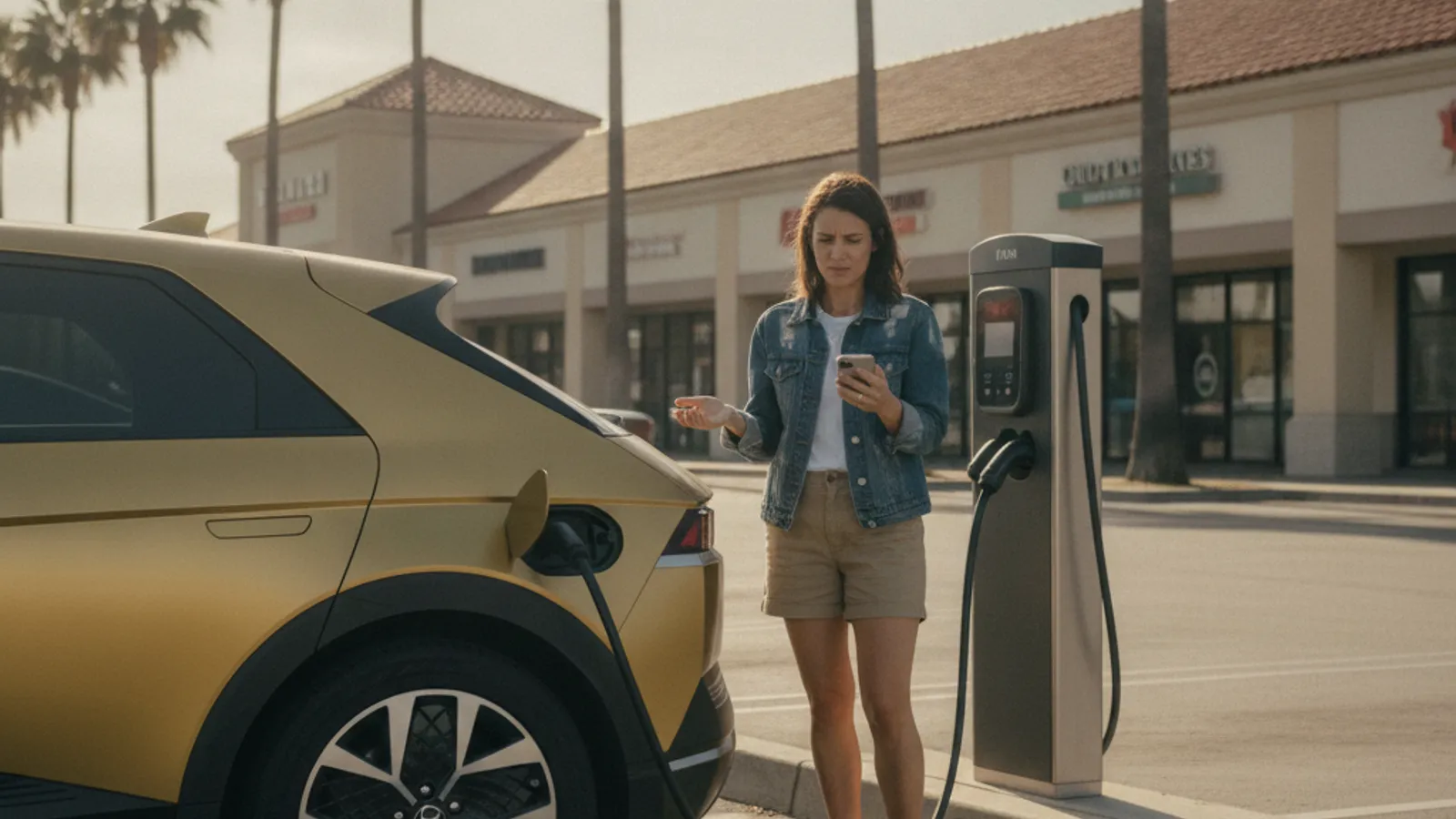
This referral line doesn’t touch your panel
Charge Pro MIA matches stranded EV drivers with independent local operators. We’re a referral line, not an electrical shop. We don’t hold a trade license, and we don’t own trucks or yards. We don’t pull permits or add circuits. A licensed electrician owns the panel and the new run. The wall unit is that electrician’s job too. Operators we connect you with can still feed the car. They bring a 240V Level 2 source to the driveway. They typically add 10 to 20 miles of range. That usually takes 15 to 30 minutes of charging. That window is charging time, never an arrival time.
Why older Miami-Dade and Hollywood homes trip first
Level 2 charging is a long, steady draw. A dryer cycles on and off, and a wall charger stays on for hours. Census ACS 2019-2023 housing data shows how old the stock is. North Miami is 82.7% pre-1980, and Miami Springs is 89.5%. Hollywood is a Broward city, and 74.7% pre-1980. Hialeah is 60.1% pre-1980. Golden Glades and West Little River both sit over 80% pre-1980. Those houses were wired for lights, window units, and laundry. They were not wired for a charger that runs until morning.
Florida had about 450,400 registered EVs in 2025. That figure comes from DOE AFDC registration data. Many of those cars now sit in older houses. Newer inland tracts look different on paper. Doral is only 5.5% pre-1980, and Weston is 7.0%. Parkland is 1.7% pre-1980. Spare panel space is more common there, but it still isn’t a guarantee. An electrician has to read the actual panel.
If you live in Hollywood or North Miami, start with house age. Don’t start with the charger brand. Hollywood sits in Broward, not Miami-Dade. The older coastal streets still share the same limit. There’s little spare capacity for a continuous Level 2 load.
Match the trip to the cause
The breaker opens the second you plug in
Treat that as a fault pattern, not an overload. Moisture, a damaged EVSE, or a ground issue can dump it. Reset once if the box looks dry, and stop if it trips again. Repeated resets hide a problem that can get worse.
It holds, then pops after a stretch of charging
That timing points at overload. The circuit ran until heat and current stacked up. Shared garage runs fail when the charger is the biggest load. This is the usual story on a pre-1980 panel. The charger is doing what it was built to do. The circuit was not built for that duty.
It only trips when something else is running
Write down whatever else was on that circuit. A freezer or shop vac on the same breaker can push it over. The charger alone might have been fine, but the combined draw isn’t. A dedicated circuit is electrician work. Charge Pro MIA doesn’t run that circuit.
It only happens after rain or a king tide
Summer afternoon thunderstorms here run roughly 2pm to 6pm. King tides hit Hollywood’s low coastal streets from September through November. Each tide lasts about three hours. Water inside a receptacle is a real ground-fault trip. Let the outlet and the connector dry, and don’t keep testing a wet plug.
A garage outlet isn’t automatically an EV circuit
A 240-volt looking receptacle can still share a breaker. Lights or a workbench may sit on the same run. That layout was common in older Miami-Dade garages. Hollywood houses with an old dryer outlet show it too. The plug shape isn’t a capacity rating. Your electrician confirms the breaker size and the run. Don’t size that from a blog. If you’re unsure about the plug itself, read 240-volt charging: your home plug versus a mobile rescue.
Two ground-fault devices can fight
Most Level 2 EVSE units already watch for ground faults. The receptacle may also sit behind a GFCI device. Then two protection devices share one path. The EVSE sends a small test current to confirm a ground. That tiny current can trip the extra GFCI. Nothing has to be shorted for that to happen. Electricians often hardwire the station to end the nuisance trip. Ask yours what fits this panel. This page isn’t a code citation.
Heat, salt, and the outdoor cover
NWS Miami 1991-2020 normals put July and August highs around 91F. Heat and humidity work on outdoor covers all summer. Salt air on Hollywood’s coastal streets makes corrosion worse. Green or white crust on the blades is a stop. Don’t force a corroded connector. That trip is the breaker protecting the circuit.
When the charger, not the house, is at fault
Sometimes the wall unit or portable cable is the problem. Try a different EVSE only on a dry outlet. If the second unit holds, the first unit is the suspect. If every charger pops the same breaker, the house is the suspect. One brief swap is enough. A stack of resets isn’t a test.
Stay out of the panel
Reset the breaker once. Look at the outlet and the cable end. Note standing water, a missing cover, or a second appliance, then stop. Don’t remove the deadfront. Don’t tape the breaker on. If the car sat all night with no charge, that’s a different pattern. See You plugged in overnight and the car still didn’t charge.
Get range without using the house circuit
A new dedicated run follows the electrician’s calendar, not yours. FPL serves essentially all of Miami-Dade and all of Broward. Homestead is the confirmed exception. Parts of that city sit on Homestead Public Services Energy. Other parts sit on FPL. Confirm your utility at homesteadfl.gov. FPL EVolution Home is the residential Level 2 install-and-maintain program. Ask FPL for current terms. Don’t treat the program name as a fee. HPS Energy’s pages showed no matching EV program on 2026-09-18. That’s an observed absence on the site, not proof none exists.
While the house waits, mobile EV charging is how you move the car. An independent operator brings the 240V source to the driveway. Your house wiring stays out of it. If you’re choosing between a panel project and a visit, read Panel upgrade for a home charger, or call a mobile plug. Home charger failed: who installs, and what you do tonight covers the same split when the wall unit is dead.
Frequently asked questions
Is it unsafe to keep resetting a breaker that trips on the charger?
The breaker is opening to protect the circuit. Overload, moisture, and ground faults all count as real conditions. If it trips more than once, leave it off. Call a licensed electrician before you try again.
Can a damaged charging cable trip the breaker on a good circuit?
It can. An internal fault in the EVSE or cable can dump a correctly sized run. Try a different charger only if the outlet is dry. If the second unit holds, replace the first. If both trip, the wiring needs the electrician.
Does Charge Pro MIA install or repair home EV chargers?
No. Charge Pro MIA is a referral line. We don’t wire panels, install chargers, or pull permits. For the circuit, you need a licensed electrician. For a driveway charge in the meantime, call (786) 963-2995. We’ll connect you with a local operator.