If your EV is running low on battery, cut the air conditioning first. Then start toward a charger you already know. South Florida is flat. Heat and cabin cooling eat the miles here, not hills. That percentage on the dash is usable charge. It isn’t a dare to keep driving.
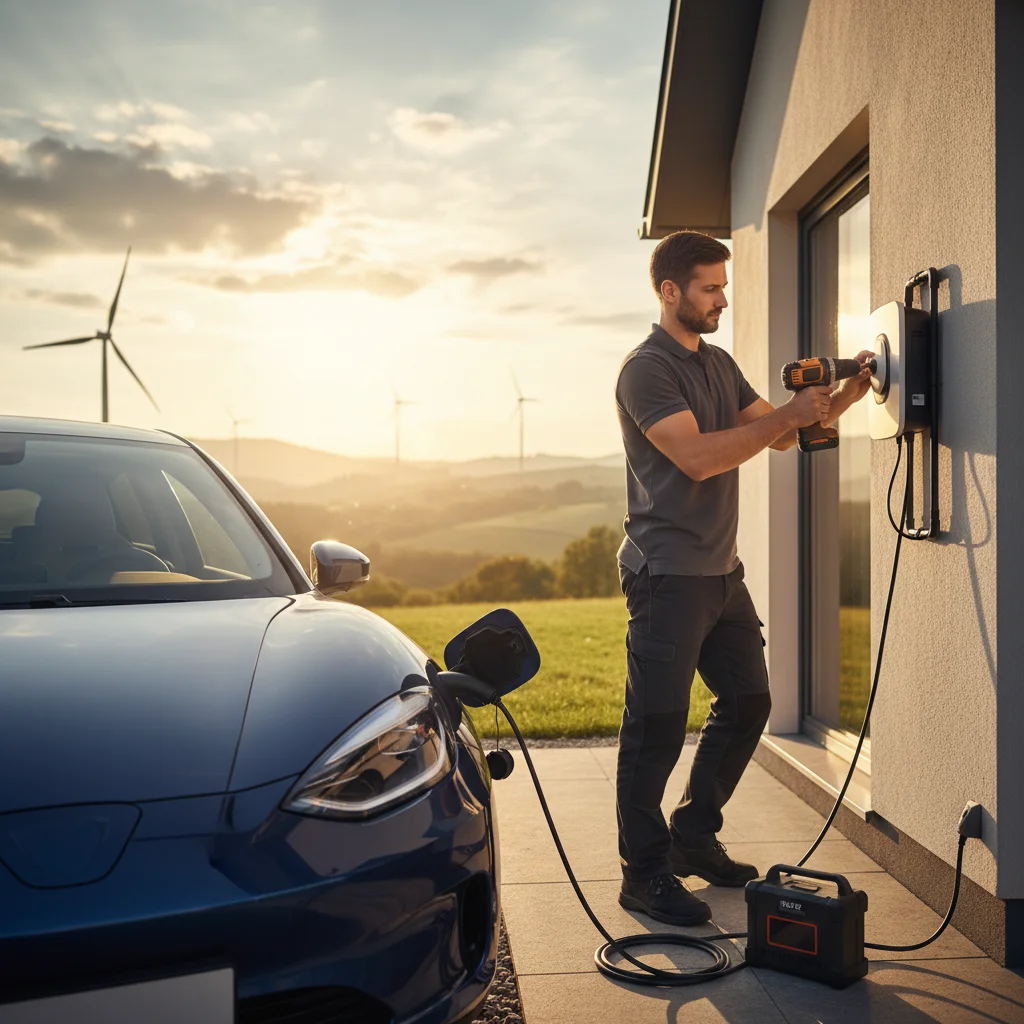
Heat and A/C eat the miles, not the ridges
There’s no grade penalty on range in Miami-Dade or Broward. Miami-Dade’s high point is the Atlantic Coastal Ridge, about 23 to 24 feet. Broward’s high point is Pine Island Ridge, about 29 feet. Range here is heat, air conditioning, and time spent sitting.
NWS Miami’s 1991-2020 normals put July and August highs at 91F. A normal year sees about 64 days at or above 90F. Recurrent Auto studied about 30,000 EVs. It found about 5% range loss at 90F. At 100F, the loss was about 17 to 18%. Cooling a 95-degree cabin can take 3 to 5 kW. Holding it cool takes about 1 kW. The first minutes of A/C are the expensive ones. AAA’s 2019 SAE-standard test ran at 95F with the A/C on. Range dropped about 17%.
A Brickell errand in August is a different low-battery than a cool January morning. The pack didn’t shrink overnight. The cooling load did. Summer storms, roughly 2pm to 6pm, add dwell. You sit, and the compressor keeps running. Miles disappear while you’re still in the same lane. Tesla day-to-day range in this heat is its own problem. See how long a Tesla charge lasts in South Florida heat.
Trust the warning, not leftover-mile folklore
The dash percent is usable state of charge. Manufacturers keep a hidden buffer below displayed 0%. That buffer protects cells from a damaging empty. How large it is depends on the car and the software. We can’t confirm a mile count for “10% left” on your model. Don’t spend miles you haven’t measured in this heat.
When the car says charge is very low, power limiting usually follows. Tesla shows a turtle icon and calls the state very low charge. Acceleration gets soft. Some climate and comfort features drop out. Other brands use their own names. They cut power in their own way. Check Tesla’s support pages for your model. For everyone else, read the owner’s low-charge section. Don’t test the last displayed percent on I-95, the Palmetto, or a causeway.
If the car is silent and the doors won’t wake, you may not be empty. A week in long-term parking at Miami International often kills the 12-volt, not the pack. MIA’s Dolphin, Flamingo, Ibis, and Park 6 garages are where that call starts. Ibis and Park 6 list EV charging on the airport’s own pages. Confirm those stalls in an app before you count on them. Heat ages lead-acid 12-volt packs fast. Every roughly 15F rise in temperature halves their life. A jump or on-site 12V swap is the usual fix. A flatbed for an “empty pack” often misses the actual fault.
Cut loads in this order while you can still roll
Do the climate first. Then speed. Then the extras.
Turn the A/C off, or drop it to vent-only if you can stand it. That first cooldown already cost energy. Don’t keep asking the compressor for another blast. Recirculate if you leave a little cooling on. Fresh-air mode makes the system work harder in 91F air.
Ease off the speed where traffic lets you. Stay legal, and stay in the right lane. That’s true on I-95, Florida’s Turnpike, and the Homestead Extension. It’s true on GMX roads like the Dolphin (SR-836) and the Airport Expressway (SR-112). A steadier right-lane pace is kinder to what’s left. Don’t crawl in a travel lane. That’s a hazard.
Then dump the extras. Heated seats and steering wheels. Bright screens. Rear entertainment. Heavy driver-assist suites. None of them matches A/C here, but they add up. Dim the display. Pause the stream.
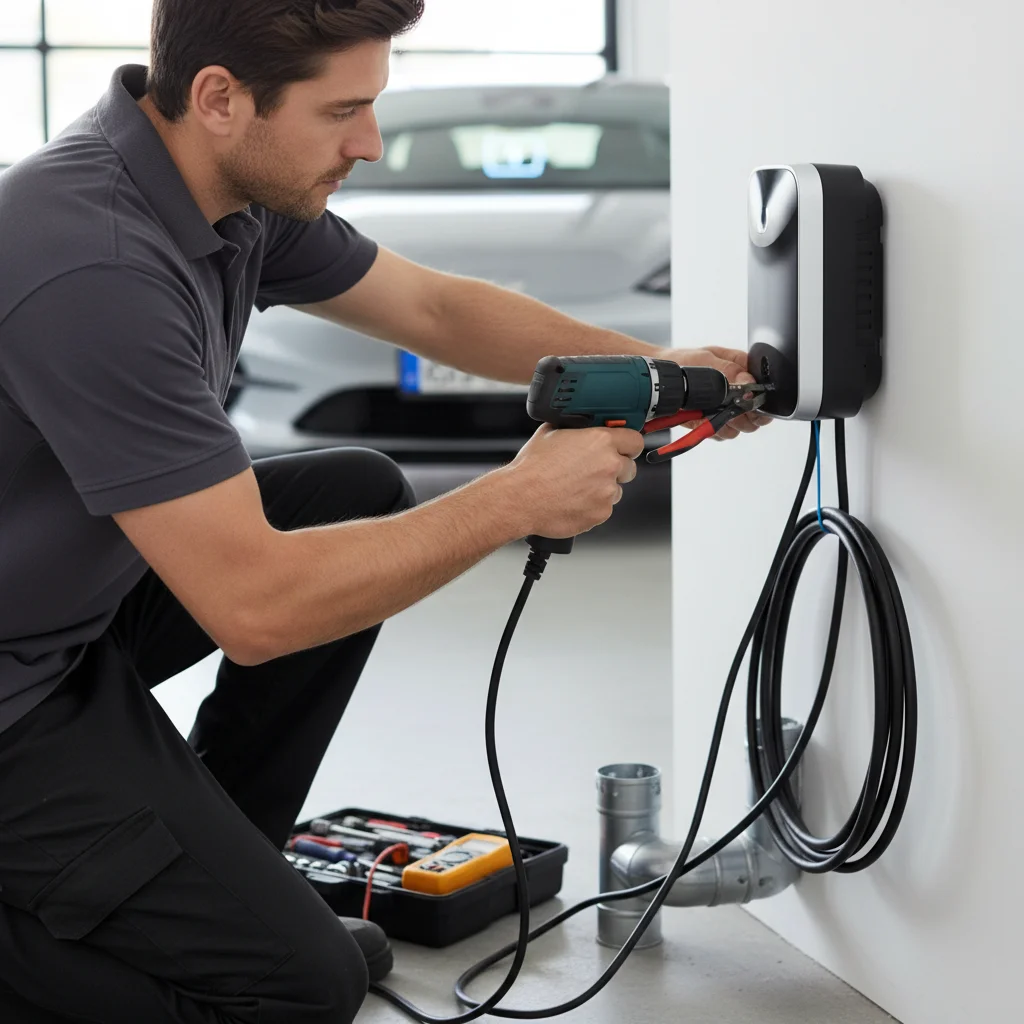
Don’t hunt for a “better” charger while the number keeps falling. Open the in-car map first. Tesla routing is built around Superchargers. Other brands pull their own networks. If that map looks stale, use the charging apps that help when range is already thin. PlugShare check-ins tell you whether a stall worked today. FPL EVolution is the utility’s public charging brand across most of Miami-Dade and Broward. Homestead is the confirmed electric exception. Some streets there sit on HPS Energy. Others sit on FPL. Confirm your stall in the app. A pin is not proof that a plug is free and working.
You don’t need a full charge. You need enough range to stop making emergency choices. Tesla low-battery alerts have their own sequence. Walk through what to do before a Tesla hits zero.
Your next move depends on where you actually are
South Florida isn’t one driving problem.
Causeways toward Miami Beach, Surfside, or Key Biscayne don’t offer a random side street. Miami Beach is its own city, reached only by causeway. South Beach is a neighborhood of that city, not a separate town. Get to the island or back to the mainland while the car still rolls.
On I-95, I-595, or the Palmetto (SR-826), get off the travel lanes. Same on the Homestead Extension and the Sawgrass. Florida Statute 316.194 says leave the vehicle off the main-traveled part where you can. A genuinely disabled car is exempt if it can’t be moved. Put your hazards on before you step out. Get out of the travel lane if the car will still roll. Dial *FHP (*347) for Florida Highway Patrol and the Road Ranger Service Patrol. Road Rangers jump-start vehicles and do minor repairs. They change flats. They tow a disabled car from the travel lanes to the nearest safe spot. That patrol is free. Their published materials don’t mention EV charging. They can still move you off a live lane or jump a 12V. They don’t bring a 240V Level 2 source. That’s the job of a mobile operator. What Florida law says on a dead freeway EV walks the shoulder steps.
Road Rangers cover the Miami-Dade and Broward interstate corridors FDOT assigns to Districts 6 and 4. Florida 511 (FL511.com) is FDOT’s traffic feed, in English and Spanish.
Toll roads here are all-electronic. The Turnpike, Homestead Extension, and Sawgrass take SunPass or toll-by-plate. So do 95 Express and 595 Express. GMX’s Dolphin, Airport Expressway, Don Shula (SR-874), Snapper Creek (SR-878), and Gratigny (SR-924) work the same way. None of them take cash. Don’t sit in an express lane waiting for a booth.
After a Heat night at Kaseya Center, look for a stall that actually works. Same after a Marlins game at loanDepot park. Same after Aventura Mall or Dadeland Mall. A working public stall still beats leftover-mile math. If the car is dark, think 12V first. Hard Rock Stadium in Miami Gardens is the same after a long sit. Dolphins, Hurricanes, Miami Open, and F1 weekends all do it.
In older neighborhoods, many homes never got a wall connector. North Miami housing is 82.7% pre-1980. Miami Springs is 89.5%. Hollywood is 74.7%. Hialeah is 60.1%. Drivers there live on public plugs and errands. Doral, Weston, and Parkland have much newer stock. A low reading there is more often a missed overnight charge. Either way, running thin through Kendall or The Hammocks is the same physics. Those are census-designated places, not cities. Heat, A/C, and dwell still win.
Stop while the car still rolls
If you can’t reach a charger you’re sure is working, park now. Keep control while the car still rolls. Use a lot, a wide shoulder with a view, or a gas-station apron. Get off the travel lane. Don’t quit in a through lane on I-95 in Fort Lauderdale. Don’t quit on the Palmetto. That’s a crash problem, not a range problem.
Private lots can tow. Florida Statute 715.07 sets the non-consent rules, including Miami-Dade Code Section 30-476 and Broward Code Section 20-176.22. Confirm the posted rate on site.
Once you’re parked and the pack is too empty to risk another mile, stop guessing. Out-of-charge recovery is the call. Mobile EV charging is the call for a 240V Level 2 top-up at the car. The pros we connect you with bring a native NACS plug. They carry CCS or J1772 adapters for non-Tesla EVs. They typically add 10 to 20 miles of range in 15 to 30 minutes of charging. That’s plug time, not an arrival promise. The operator quotes you before starting and bills you directly. Charge Pro MIA matches you with that local pro. We don’t own the truck. We don’t set the price.
If the dash is dark, ask for a 12V jump on site. A replacement on site beats a flatbed guess.
Hurricane season runs June 1 through November 30. FPL’s storm guidance says keep the pack between 50 and 80% through hurricane season. Unplug during the storm. Don’t charge or drive a flood-exposed EV until it’s inspected.
If you’re already parked and the number is toast
Call (786) 963-2995. We’ll connect you with an independent local operator. Service covers South Florida. The pro on the other end sets the price and the plan.