A dead EV on Key Biscayne can’t limp back to the mainland. The Rickenbacker Causeway is the only road on or off. It runs through a toll plaza, then you’re on the island. You can’t coast to Miami, Brickell, or Coral Gables. If the pack is too low to recross, you need range brought to the car. If the car won’t wake at all, you likely need a 12-volt jump instead.
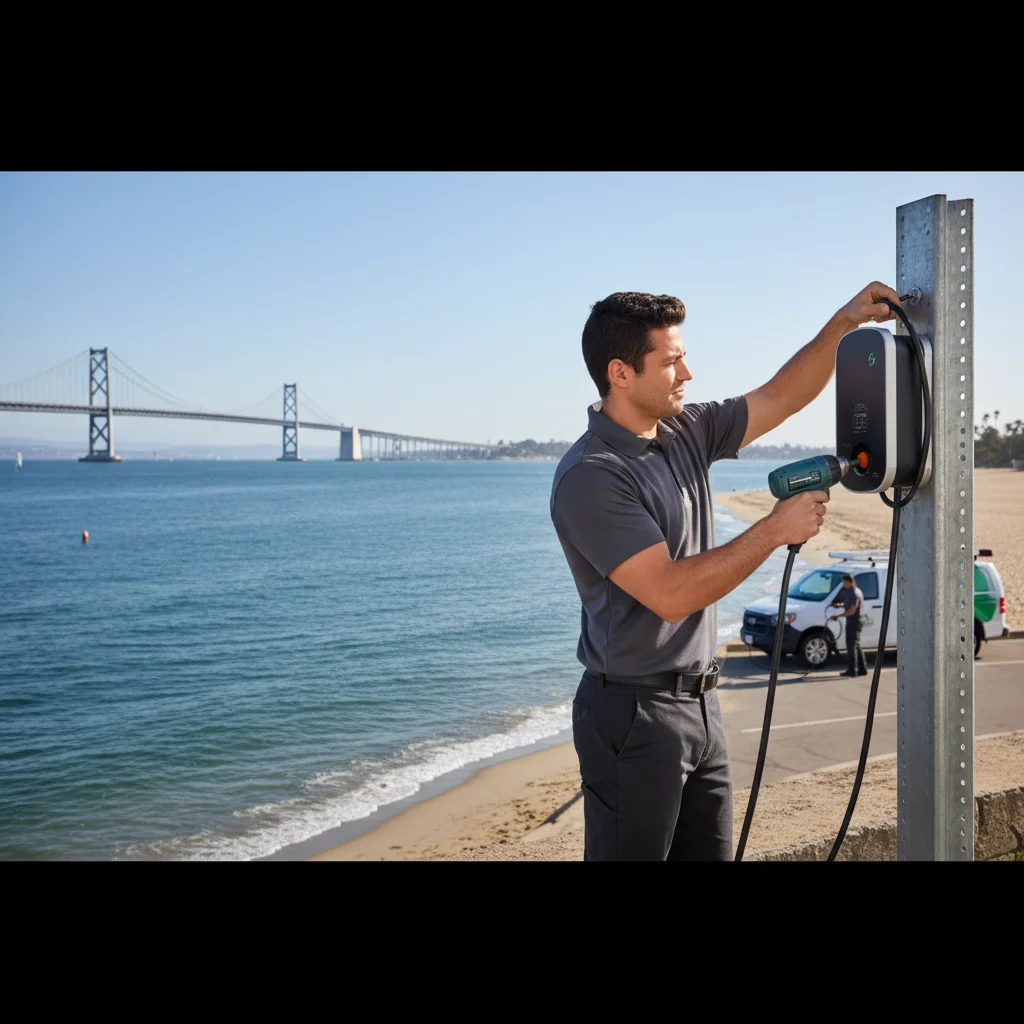
The causeway is the trap, not the skyline
The Village of Key Biscayne covers 1.247 square miles in Miami-Dade County. ACS 2019-2023 puts the population at 14,560. The ZIP is 33149, and Florida Power and Light is the utility. Miami, Miami Beach, Coral Gables, and Brickell sit close across the water. None of them give you a second exit.
Crandon Blvd is the spine after you clear the causeway. It runs past Crandon Park, through the Village center, and south toward Cape Florida. Harbor Drive and Ocean Drive feed the neighborhood streets. Bill Baggs Cape Florida State Park and its lighthouse sit at the far tip. That park road is a dead end.
Most owners here charge at home, so the usual call is the road and the bridge. A car that arrives thin still can’t recross on hope. Census figures also show 56.7% of housing was built before 1980. Older panels can make a wall unit hard to add. Ask your electrician and FPL what your house can support. Don’t treat a driveway plug as a given. Island notes live on the Key Biscayne page.
If you stall on the Rickenbacker Causeway
Hazards go on first. Stay in the car with your seatbelt on. Don’t step into a live lane to flag anyone.
Florida Statute 316.194 says to leave the main-traveled part of a highway when that’s practicable. A genuinely disabled car that can’t be moved is exempt. Use that exemption to stay put and stay visible. Don’t treat it as a reason to walk the deck.
If you’re in moving traffic, dial *FHP (*347). Florida Highway Patrol takes disabled-motorist reports on that short code. Florida 511 at FL511.com shows backups in English and Spanish. Get the car out of the travel lane when you can.
FDOT’s Road Ranger Service Patrol is free on the District 6 freeways it publishes. Those routes are I-95, 95 Express, I-195, I-395, I-75, 75 Express, and SR-826, the Palmetto. The lists we read don’t name the Rickenbacker Causeway. Road Ranger pages also don’t mention EV charging. Crews still jump a 12-volt. They can also tow a disabled vehicle off a travel lane to a safer spot. They don’t bring a Level 2 charge. Once you’re clear of live traffic, out-of-charge recovery is the on-island move.
An operator needs a pull-off, a lot, or a village street with room to work. They quote before they start, and they bill you directly. Nobody can promise when a truck will clear the toll plaza. Miami Beach is the other causeway trap in this metro. That version is in EV roadside help on Miami Beach.
Empty pack, or a 12-volt that went quiet
Two failures look identical from the sidewalk. The traction pack can be at zero. Or the 12-volt can be dead while the pack still holds energy. Salt-laden humid air is hard on a 12-volt. A car that sat a week on Harbor Drive or Ocean Drive may not wake.
Heat speeds that up. Battery University notes that every roughly 15°F rise halves lead-acid life versus 77°F. NWS Miami’s 1991-2020 normals put July and August average highs at 91°F. A 12-volt ages here even when you barely drive.
Dark screens and a stuck port point to the 12-volt first. The freeway stall guide walks through that split. Operators can jump or replace a dead 12-volt on site. They handle Tesla and every major EV brand.
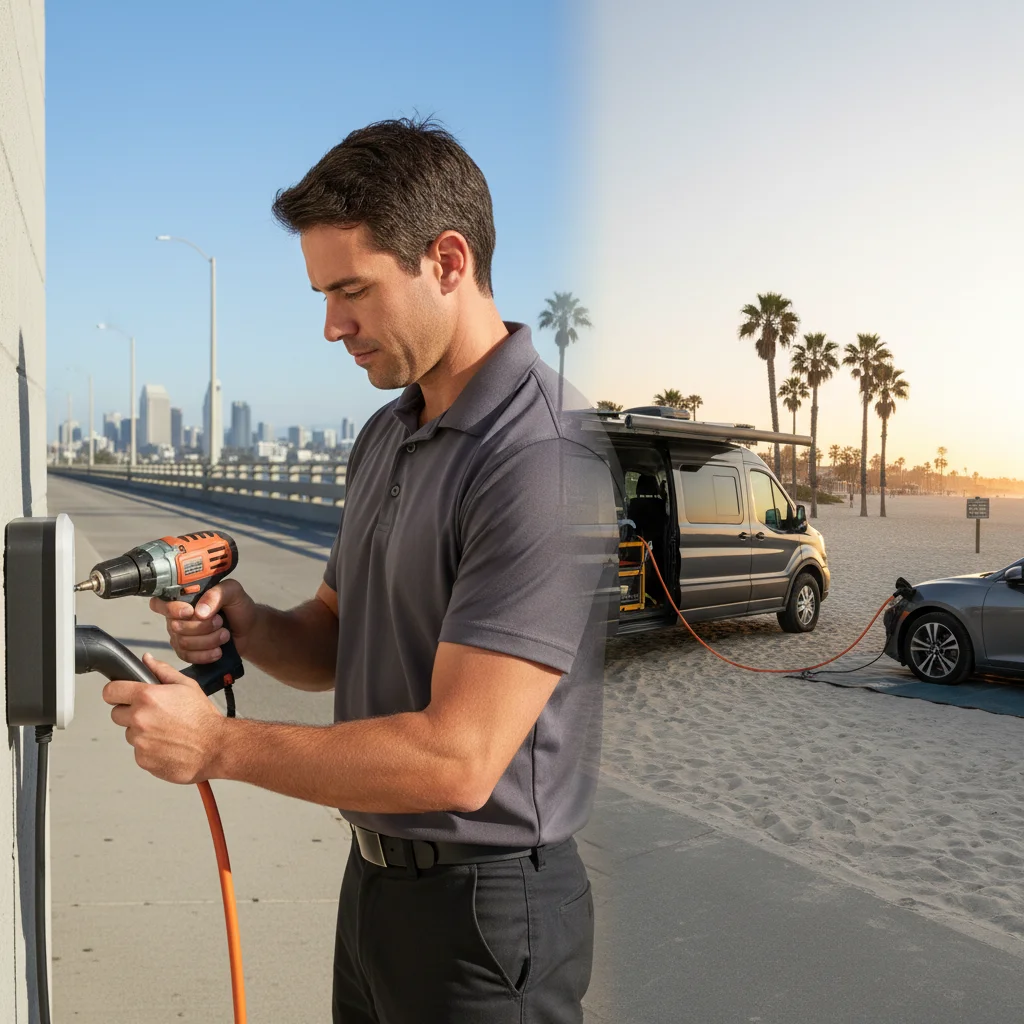
Village streets, Crandon Park, and the lighthouse run
Inside the Village, the usual miss is a thin arrival plus air conditioning. You crossed the causeway, kept the cabin cold, then added Crandon Park or the lighthouse. Flat ground doesn’t save that budget. There’s no hill penalty anywhere in Miami-Dade. The county’s highest natural point is the Atlantic Coastal Ridge at roughly 23 to 24 feet. Range here is heat, AC, and time sitting still.
Recurrent Auto studied about 30,000 EVs. They found about 5% range loss at 90°F, and about 17 to 18% at 100°F. Cooling a hot cabin can take 3 to 5 kW at first. Holding that cool takes about 1 kW. AAA’s 2019 SAE-standard test found about a 17% range drop at 95°F with AC on. Summer thunderstorms stack on that load, roughly 2 p.m. to 6 p.m.
Stay with the car in a Crandon Park or Bill Baggs lot if you can. Don’t push for the mainland on a guess. EV roadside assistance can add range where you sit. Then you recross on purpose.
Heat, tides, and a Zone A island
Key Biscayne sits in Miami-Dade Storm Surge Planning Zone A, the highest surge tier. Hurricane season runs June 1 through November 30. FPL tells EV owners to keep the pack between 50 and 80% through the season. Unplug during the storm. Don’t charge or drive a flood-exposed EV until it’s inspected. NHTSA warns residual salt in a flooded lithium pack can short days later. About 36 EVs flooded by Hurricane Ian in 2022 later caught fire. If tidewater reached the car, don’t plug in.
King tides and sunny-day flooding run mainly September through November, about three hours each. Low-lying streets flood on those tides and on heavy rain. Water in the port is a stop. Dry it and follow the car’s own steps before you force a charge.
FPL EVolution is the utility’s public charging brand. FPL EVolution Home is the residential Level 2 install-and-maintain program. FPL also offers a residential time-of-use rate for home charging. We didn’t find a Key Biscayne-only rule on those pages. Confirm current details with FPL before you plan around them.
What the operator brings to the island
Charge Pro MIA is a referral line. We match stranded drivers with independent local mobile rescue operators. We don’t own trucks, employ technicians, or set prices. We don’t do the work.
The operator who takes the job brings a 240V Level 2 source to the car. Teslas get a native NACS plug. Other EVs use a CCS or J1772 adapter. A typical stop adds 10 to 20 miles of range in 15 to 30 minutes of charging. That window is charge time, never an arrival time. For the gear itself, see what a mobile EV rescue van carries.
If the 12-volt is the fault, they can jump it or replace it on site. If the car won’t accept a charge, say so up front.
Charge here, or tow back over the water
A mobile charge is usually the cleaner island move when the car will still take power. A tow means a flatbed over the causeway and a ride to a shop. Miami-Dade caps nonconsent tow and storage rates under County Code Section 30-476. We couldn’t load the current dollar schedule. Check Miami-Dade Consumer Protection for the posted cap before you sign.
Florida Statute 715.07 covers tows from private property. If you appear before the car is fully removed, the operator must stop and return it. You’d pay no more than one-half the posted tow rate. The lot needs a proper tow-away sign, with listed exceptions. Storage in a county this size must sit within a 10-mile radius. Release should come within one hour of request. Those are state rules, not a quote from us.
If a fault code blocks charging, a tow to a dealer is the honest path. Charge on site or tow walks through that choice when the car is silent.
Call from the island, not after you guess
Call when the pack can’t recross. Call when the car won’t wake on Harbor Drive. Call from a Crandon Park or Cape Florida lot if you can’t roll. We serve Key Biscayne and the rest of South Florida. The operator you’re matched with quotes before they start.
Call (786) 963-2995 and we’ll connect you with a local operator.