The Hyundai Ioniq 5 battery size is 58.0 kWh on the Standard Range pack and 77.4 kWh on the Long Range pack. Those are gross figures. You actually drive on about 54 kWh and 74 kWh of usable energy. In Miami-Dade and Broward, that energy goes to heat and AC, not climbs. The two counties are basically flat. Miami-Dade’s Atlantic Coastal Ridge tops out around 23 to 24 feet. Broward’s Pine Island Ridge is about 29 feet. There’s no grade penalty on range here. The tax is the climate.
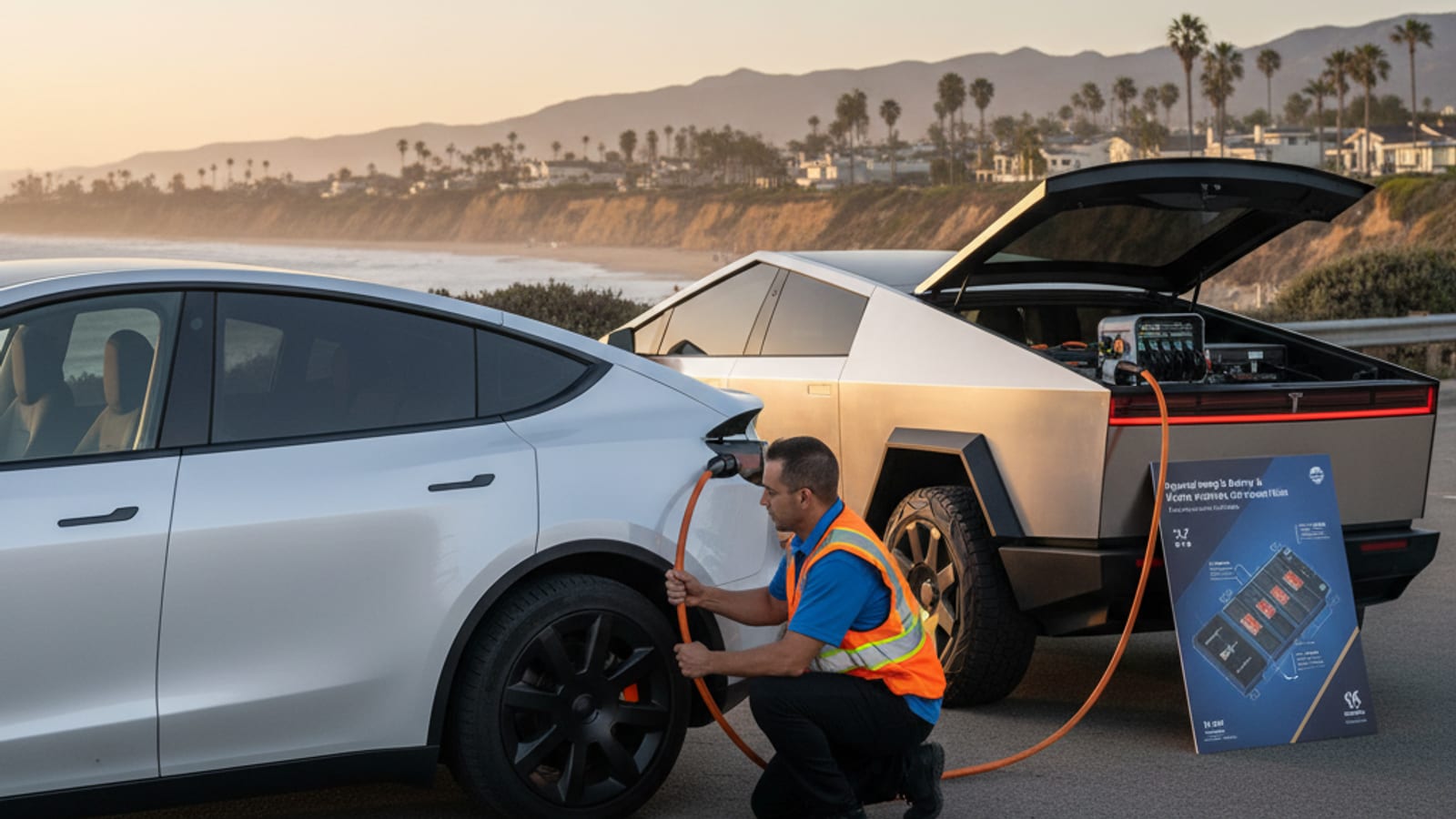
What those kWh numbers buy you on flat ground
Kilowatt-hours are the size of the tank. EPA miles are a lab estimate of how far that tank goes. Your dash won’t match the window sticker on a July afternoon in Hialeah. It also won’t match it in traffic at Hard Rock Stadium. The pack size still matters. A 77.4 kWh Long Range car has more buffer when AC runs hard. A 58 kWh Standard Range car has less room on a hot errand.
Florida had about 450,400 registered EVs in 2025. That figure comes from DOE AFDC vehicle-registration data. It’s a state total, not a county count. You’ll see Ioniq 5s in Brickell garages, along Kendall Drive, and in Weston. Kendall is a census-designated place, not a city. The car doesn’t care. The housing and the heat do.
If you only keep one local fact, keep this one. Hills aren’t your range problem. NWS Miami’s 1991-2020 normals put the July and August average high at 91F. A normal year sees about 64 days at or above 90F. The 2009 record hit 121 of those days. That’s the weather this pack lives in.
The City of Miami is one of 34 municipalities in Miami-Dade County. Most of what people call Miami isn’t the city. It’s unincorporated county or another city. Hollywood, Florida, is in Broward. Miami Beach is a separate city, reached only by causeway.
Standard Range versus Long Range
Hyundai sold the Ioniq 5 with two main packs in the early US years. Later years can differ. Confirm your year on the window sticker or the battery screen. You can also check Hyundai’s current spec page. This research pass didn’t independently pull a later-year factory sheet.
The 58 kWh pack
The Standard Range Ioniq 5 uses a 58.0 kWh gross pack. Usable energy is commonly cited around 54.0 kWh. Hyundai holds a buffer at both ends to protect the cells. That’s why 0% on the dash isn’t a truly empty pack. 100% isn’t a truly full one either. This pack is usually paired with a single rear motor. EPA estimated range on the common 2022-2024 RWD Standard Range is 220 miles. Treat that as a cool, mixed-cycle lab number. It isn’t a 91F, AC-on commuting number.
Overnight charging in Doral or Parkland makes 220 EPA miles cover many short trips. Doral’s housing stock is new. Only 5.5% of it predates 1980. Parkland is even newer, at 1.7% pre-1980. A 240-volt wall circuit is a realistic project in those places. North Miami is the other end of that spectrum. 82.7% of its housing is pre-1980. Miami Springs is 89.5%. Many of those buildings won’t get a dedicated EV circuit. The smaller pack then lives on public cords and workplace outlets.
The 77.4 kWh pack
The Long Range Ioniq 5 uses a 77.4 kWh gross pack on 2022-2024 cars. Usable energy is commonly cited around 74.0 kWh. That extra 20 kWh of gross energy is the difference on a hot day. It’s often the difference between getting home and not. Rear-drive Long Range cars were EPA-rated around 303 miles in those years. All-wheel-drive Long Range cars were around 260 miles. AWD adds a second motor and more power. It also spends more energy. On flat South Florida roads you don’t need AWD for hills. You may still want it when summer storms flood a lane. Just know it costs range.
The Long Range car helps on the Homestead Extension and the Sawgrass. It also helps on US-41 toward Shark Valley. Not because this page can call those roads empty of plugs. It can’t. The AFDC station API didn’t resolve in research. No site list, port count, or distance-to-charger figure is safe to print. You want the larger pack because dwell and heat add up on exposed pavement. Hialeah is 95.2% Hispanic or Latino. A lot of Ioniq 5 households there share parking and public cords. The bigger pack is extra useful when a garage plug isn’t a given.
Specs at a glance
These figures are for the common 2022-2024 Ioniq 5 trims. Confirm your own year.
| Pack | Gross | Usable (typical) | Drivetrain | EPA range |
|---|---|---|---|---|
| Standard Range | 58.0 kWh | ~54.0 kWh | RWD | 220 miles |
| Long Range | 77.4 kWh | ~74.0 kWh | RWD | 303 miles |
| Long Range | 77.4 kWh | ~74.0 kWh | AWD | 260 miles |
Hyundai also published a 10.9 kW Level 2 onboard AC rating on those cars. Peak DC was listed up to 239 kW. Confirm both numbers on Hyundai’s spec sheet for your year. Heat and a weak stall will slow the curve you actually get.
Gross capacity, usable capacity, and the buffer
Gross capacity is the energy the cells can hold. Usable capacity is what the car will let you spend. The gap is a software fence. It keeps you out of the most stressful top and bottom of the cells. That’s why people quote 54 kWh and 74 kWh on the Ioniq 5. They don’t quote 58.0 and 77.4 as daily range energy. The dash percentage tracks the usable window. Plan trips on the percentage you see. Don’t plan on napkin math from the gross number. A 10% reserve on a Long Range car is still a useful cushion here. On a Standard Range car, 10% is a short, hot hop. Leave more margin when the cabin’s been baking in a lot. That matters after a Marlins game at loanDepot park. It matters after a Heat night at Kaseya Center. Kaseya Center is the current name of the downtown arena. Don’t call it the American Airlines Arena or the FTX Arena.
Heat is the range story here
South Florida doesn’t freeze. You won’t see the winter range collapse that northern owners talk about. You’ll see a summer tax instead. Recurrent Auto studied about 30,000 EVs. They found about 5% range loss at 90F. They found about 17 to 18% at 100F. The mechanism is the cabin, not just the cells. Cooling a 95-degree cabin can take 3 to 5 kW at first. Holding it cool is closer to 1 kW. The expensive minutes are the first ones after you sit down. That’s a closed-up car in a sunbaked lot. AAA’s 2019 SAE-standard test found about a 17% range drop at 95F. That test ran with the AC on. That lines up with a Miami August afternoon. NWS normals put those months at a 91F average high. Plenty of days run hotter than that. Don’t blame the Ioniq 5’s chemistry for a local climate effect. Any lithium pack in this heat pays the same kind of tax. Preconditioning while you’re still plugged in helps. It cools the cabin and the pack on wall power, not on stored kWh. Use it before you leave a garage in Coral Gables. Use it before you leave a lot near Kaseya Center. Coral Gables is where the University of Miami’s main campus actually sits. It isn’t in the City of Miami. See How to care for an EV battery in South Florida heat for local pack care.
AC, dwell, and the trips that surprise people
A Hialeah-to-downtown run can look easy on the EPA sticker. Afternoon thunderstorms here run roughly 2pm to 6pm in summer. The AC stays on. Range falls while the car barely moves.
Hard Rock Stadium in Miami Gardens stacks cars for the Dolphins and Hurricanes. It also hosts the Miami Open and the F1 Miami Grand Prix. loanDepot park in Little Havana does the same stack on Marlins nights. You aren’t climbing a mountain. You’re idling in heat with the compressor running.
King tides run mainly September through November. They last about three hours each. They flood low streets in Miami Beach, Fort Lauderdale’s Las Olas Isles, and Hollywood. Keep a larger reserve on those weeks. A detour around flooded blocks spends energy you didn’t budget. Beach-side notes sit on the Miami Beach charging page.
Hurricane season is June 1 to November 30. FPL tells EV owners to keep the pack between 50 and 80% in season. Unplug during the storm. Don’t charge or drive a flood-exposed EV until it’s inspected. NHTSA warns that residual salt in a flooded lithium pack can short later. Fires have started days to weeks after saltwater exposure. About 36 EVs flooded by Hurricane Ian in 2022 later caught fire. If surge water reached the car, it’s an inspection problem, not a kWh problem.
Evacuation routes north are I-95, Florida’s Turnpike, and I-75. If you’re holding 20% when an order comes, you’re late. The Long Range pack gives more room to sit in FPL’s 50 to 80% window.
Where you plug in overnight changes how big the pack feels
Florida Power and Light serves essentially all of Miami-Dade and all of Broward. The confirmed exception is Homestead. Parts of Homestead sit on Homestead Public Services Energy. Other parts sit on FPL. Confirm your utility on the City of Homestead HPS Energy page. The exact street boundary sits on a city map that wasn’t machine-readable in this research. No EV-specific program turned up on HPS Energy’s pages. That’s an observed absence, not proof that none exists.
FPL’s public charging brand is FPL EVolution. FPL EVolution Home is the residential Level 2 install-and-maintain program. FPL also publishes a residential Time-of-Use rate that some home chargers use. This page doesn’t print rate numbers. Those figures go stale. Ask FPL for the current TOU hours and price.
Newest tracts in Weston, Doral, and Parkland often have room for a 240-volt circuit. Weston is 7.0% pre-1980 housing. Older condos in Hollywood, Lauderhill, and Hialeah often don’t have that option. Hollywood is 74.7% pre-1980. Lauderhill is 67.3%. Hialeah is 60.1%. If you can’t plug in at home, the Long Range pack isn’t a luxury. It’s how you survive a missed public session.
FIU’s Modesto Maidique Campus sits in the Sweetwater and Tamiami area. Nova Southeastern’s main campus is in Davie, not Miami. Campus days mix short hops with long dwell. The AC runs while you wait for a space. Budget for that, not for elevation. Weston sits on the inland side before Alligator Alley. The tower driver in Brickell hunts a shared post. The Weston driver may have a wall circuit and a hot westbound run.
Long, hot pavement: Turnpike, Alley, Tamiami, I-95
You don’t need a mountain to empty a pack. You need time, speed, and a running compressor.
Florida’s Turnpike Enterprise runs the Turnpike, the Homestead Extension, and the Sawgrass Expressway. The Greater Miami Expressway Agency now runs the old MDX roads. Those include the Airport Expressway, the Dolphin, the Don Shula, Snapper Creek, and the Gratigny. 95 Express and 595 Express are FDOT roads. All of those facilities are all-electronic. You use SunPass or toll-by-plate. None of them takes cash. This page doesn’t print toll amounts.
If you stall on a limited-access road, Florida Statute 316.194 is the rule. Get the car off the main-traveled part where you can. Leave room for passing traffic. Keep a clear view from 200 feet each way. A genuinely disabled vehicle that can’t be moved is exempt under 316.194(2). Dial *FHP (*347) for Florida Highway Patrol and for Road Rangers.
The Road Ranger Service Patrol is FDOT’s free highway service. Rangers jump-start vehicles, fix minor problems, change flats, and provide gas, diesel, and water. They also tow a disabled car from the travel lanes to the nearest safe spot. District 6 covers Miami-Dade’s I-95, 95 Express, I-195, and I-395. It also covers I-75, 75 Express, and SR-826, the Palmetto. District 4 covers Broward’s I-95 from the county line north. Road Ranger materials don’t mention EV charging. They’ll still jump a 12-volt battery. They’ll still move you off a travel lane. A Level 2 top-up isn’t on their published list. That’s the job a mobile rescue operator does.
Alligator Alley is I-75 west from the developed edge. Heat and speed do the damage. Read Empty on Alligator Alley: what to do when the towns fall away first. Tamiami Trail toward Shark Valley is a similar exposed run. Everglades National Park has three separate, non-connecting entrances. The main gate is on SR-9336 in Homestead. Shark Valley is on US-41. The Gulf Coast gate is out of this service area. A car that dies down the Homestead park road is on a dead-end. There are no services on that road.
None of that is a claim about missing chargers. It’s a claim about heat, distance, and what happens if the car stops. Deerfield Beach and Parkland sit on the Palm Beach line. Don’t let a trip plan drift north of that line. Naples and the Gulf coast sit at the far end of the Alley. They aren’t the service area either. The Keys are Monroe County. Florida City is the last Miami-Dade stop before that Keys stretch.
How the Ioniq 5 actually takes energy
The Ioniq 5 uses an 800-volt architecture. That’s why its DC curve can be steep on a compatible station. Most early US cars use a CCS port. Some later cars may use a different inlet. Look at the port door on your car. A 120-volt household outlet is a trickle on a 58 or 77 kWh pack. It won’t rebuild a work week overnight. A 240-volt Level 2 circuit is the realistic home pattern. The car’s onboard AC rating is up to 10.9 kW. Time-to-full depends on starting percentage and how hard the pack is cooling itself. Use the car’s own time estimate. See How long does a Hyundai Ioniq 5 take to charge on the road?.
Hyundai’s published peak DC rate on those early cars is up to 239 kW. Their 10% to 80% claim is about 18 minutes. That assumes the station and the pack cooperate. A hot pack, a shared cabinet, or a slower stall won’t match that. Confirm the peak figure on Hyundai’s spec sheet for your year. A CCS Ioniq 5 needs a NACS adapter for Tesla Superchargers that accept other brands. Operators Charge Pro MIA connects you with bring a native NACS plug. They also bring a CCS or J1772 adapter. That’s for a mobile 240-volt top-up, not a Supercharger session. This page doesn’t list public sites. Station-level inventory couldn’t be verified. Use your charging apps, FPL EVolution’s locator, and the car’s nav. If a public post fails, treat it as a failed post. Don’t treat it as proof the next one is close.
The 12-volt battery is not the traction pack
People call about a dead Ioniq 5 after a week at Miami International Airport. Often the high-voltage pack is fine. The 12-volt battery died. It kept computers alive in the heat while the car sat. MIA’s public garages include the Dolphin Garage at the North Terminal. They also include the Flamingo Garage at the Central Terminal. The Ibis Garage and new Park 6 long-term garage are on that list. Park 6 opened in summer 2026 and has EV charging on site. The airport page says Ibis holds ChargePoint ports across its levels. This page doesn’t publish a port count. Confirm cruise-parking hardware with PortMiami before you leave a car for a week. A long sit is often a 12-volt story, not an empty pack.
Heat ages lead-acid 12-volt batteries fast. Battery University notes that every roughly 15F rise halves lead-acid life. Aging is about twice as fast at 93F versus 77F. It’s about four times as fast at 111F. The damage doesn’t reverse. If the Ioniq 5 won’t wake or unlock, start with the 12-volt. Walk through Hyundai Ioniq 5 won’t start? Check the 12V before the pack. A 12-volt failure can look exactly like an empty traction pack. The dash is dark. The port won’t release. The app won’t connect. That’s a jump or a 12-volt replacement on site, not a DC fill.
When the traction pack actually hits empty
If the high-voltage pack is the problem, you need energy in the CCS port. Or you need a tow done the right way. A mobile operator brings a 240-volt Level 2 source to the car. On a typical session they add about 10 to 20 miles of range. That takes 15 to 30 minutes of charging. That’s charging time. It isn’t a promise about when someone arrives. The operator quotes you before work starts and bills you directly. Charge Pro MIA doesn’t own trucks, employ technicians, or set prices. It’s a referral line. It matches stranded drivers with independent local operators. That top-up is usually enough to reach a DC stall or a home plug. It’s the point of mobile EV charging for a CCS car. Ioniq 5 drivers can start on non-Tesla EV rescue.
Florida 511 at FL511.com is FDOT’s traffic system in English and Spanish. Use it if a crash or flood is eating the range you had left.
Keep the pack in a window that survives this climate
For daily driving, many owners hold roughly 20% to 80%. That’s a habit, not a law. Charge to 100% when you truly need the miles. Don’t sit at 100% in a hot garage for days. Use scheduled departure so the cabin cools on wall power. Check tire pressures. Underinflation wastes energy on flat roads just as it does on hills. Smooth speed on I-95 beats repeated full-throttle passes between Palmetto ramps. The Ioniq 5’s regenerative braking still helps in this metro. You aren’t recovering mountain descents. You’re recovering Brickell stop-and-go and 95 Express slowdowns. i-Pedal is useful in that traffic. It won’t offset a 91F cabin pull by itself. If you live in Weston, plan the return with heat in mind. The EPA sticker assumed a different day than the one you’re driving.
If you need a charge brought to the car
Call Charge Pro MIA at (786) 963-2995 when the Ioniq 5 is stuck. Call when a public cord isn’t an option. An independent operator will quote the job before they start. They bring 240-volt Level 2 and a CCS adapter for this car. They can jump the 12-volt if that’s the real problem. They don’t speak for Hyundai. They don’t promise a clock time. They get you enough range to move.
Frequently asked questions
What is the Hyundai Ioniq 5 battery size?
Early US Ioniq 5s use a 58.0 kWh or 77.4 kWh pack. Usable energy is about 54 kWh and 74 kWh. Later model years can differ. Read your window sticker or Hyundai’s spec sheet for your year.
Does heat cut Ioniq 5 range more than terrain here?
Yes. Miami-Dade and Broward are flat. Highest natural ground is about 24 feet in Miami-Dade. It’s about 29 feet in Broward. Recurrent Auto found about 5% range loss at 90F. Loss was about 17 to 18% at 100F. AAA’s 2019 test found about 17% loss at 95F with AC on. That’s the local tax.
What should I do if the pack hits empty?
Get off the travel lane if you can. Dial *FHP (*347) on a limited-access road. Road Rangers can jump a 12-volt and tow you to a safe spot. For a Level 2 top-up, a local operator has to bring the 240-volt source. Charge Pro MIA is the referral line that matches you with one.