The CCS handle on a Ford Mustang Mach-E can stay locked after a coastal overnight. The pack can still show full. Salt air and king-tide spray attack the port on beach streets. Miami Beach, Surfside, and Hollywood see that mix all summer. A weak 12-volt battery is the other common cause. A Mach-E charge port stuck on the car’s latch frees from the frunk strap. If the strap moves and the cable still won’t slide, stop. The station may be holding the handle. The hook inside the port may be jammed.
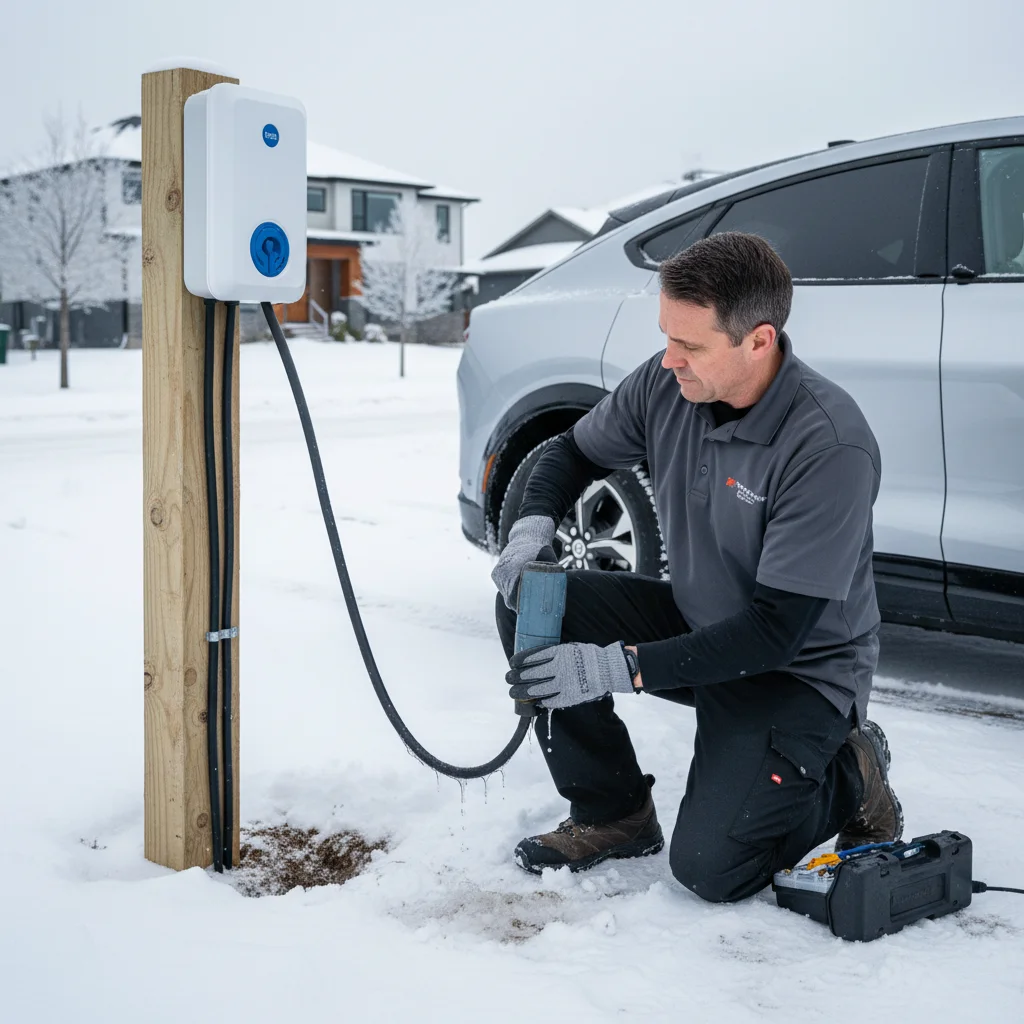
Salt air and heat lock this latch on the coast
The Mach-E uses two electric systems at the port. A motorized door swings open on command. An electronic latch then clamps the CCS connector while you charge. Both draw from the 12-volt auxiliary battery. When that battery is tired, the solenoid never gets enough power to let go. The big pack can read full. The handle still won’t move.
Coastal blocks put that hardware in salt every night. King tides run mainly September through November. Each pulse lasts about three hours. They hit Miami Beach, the Las Olas Isles in Fort Lauderdale, and Hollywood’s low streets. Spray sits in the inlet after the water drops. If the port already has standing water, stop. Read water in the charge port after a king tide. Don’t keep commanding the latch while it’s wet.
Heat finishes the job. NWS Miami’s 1991-2020 normals put the July and August average high at 91F. A normal year sees about 64 days at or above 90F. Every roughly 15F rise in temperature halves the life of a lead-acid 12-volt battery. It ages about twice as fast at 93F as it does at 77F. Heat damage can’t be reversed. A Mach-E that sat in a beach garage can look charged and still refuse to unlatch.
Many owners here also plug away from the driveway. Hollywood’s housing is 74.7% pre-1980. North Miami is 82.7% pre-1980. A home Level 2 often isn’t practical in those buildings. Overnight sessions move to condo pedestals, workplace posts, and public cabinets. More shared plugs mean more sessions that don’t close cleanly.
Who’s still holding the cable
Treat this as three locks, not one frozen part.
The charge door is only the flap. It opens from the fob, FordPass, or the door switch. If the door won’t swing, you’re not at the cable yet.
The CCS latch lives inside the port. It should release when the session ends. A weak 12-volt battery can leave it clamped. So can a Body Control Module that never closed the session. Corrosion on the hook can do the same.
The station can keep its own software lock. Your screen may say complete. The handle still won’t come out. That’s the post, not Ford. Don’t yank it. You can bend pins or crack the housing.
The general tree is in what to do when the charging cable won’t unlatch. The Mach-E-specific piece is the frunk strap. Don’t borrow another brand’s interior release and hope it maps.
Checks that take two minutes
End the session on the car first. Use FordPass or the center screen. Wait until the charge light shows idle or complete. Press the button on the CCS handle. Pull straight back. Don’t twist.
If you’re on a public post, close the session there too. Some cabinets keep the connector locked until you tap the screen or the network app. The car can be finished. The post isn’t.
Scan for 12-volt clues. Dim cabin lights. A slow-booting screen. Handles that hesitate. Those point at the auxiliary battery, not an empty pack. A Mach-E that won’t wake at all is a different problem. Walk Ford Mustang Mach-E won’t start: check the 12V first before you fight the port.
If the car is silent, jump the 12-volt first. There’s an auxiliary positive point under the hood. It sits behind a small plastic cover near the driver-side strut tower. Ground to a clean body bolt. That’s a 12-volt jump. It isn’t a pack charge.
How to use the frunk release
Ford hid a mechanical override in the front trunk. Use it when the frunk will open, or right after a 12-volt jump.
Pop the frunk from FordPass or the interior hood release. Look to the driver’s side of the frunk floor, toward the back wall. You’re hunting a bright orange loop. Some years are yellow. It’s about the size of a large zip-tie loop. A cable runs from that loop to the charge-port latch.
Pull once, firmly, and hold. Don’t jerk. You should hear a light click at the port. Walk back, press the handle button, and slide the connector out. The strap bypasses the solenoid. It doesn’t fix a weak 12-volt battery. It doesn’t clear a software hang. If those caused the lock, the next session can seize again.
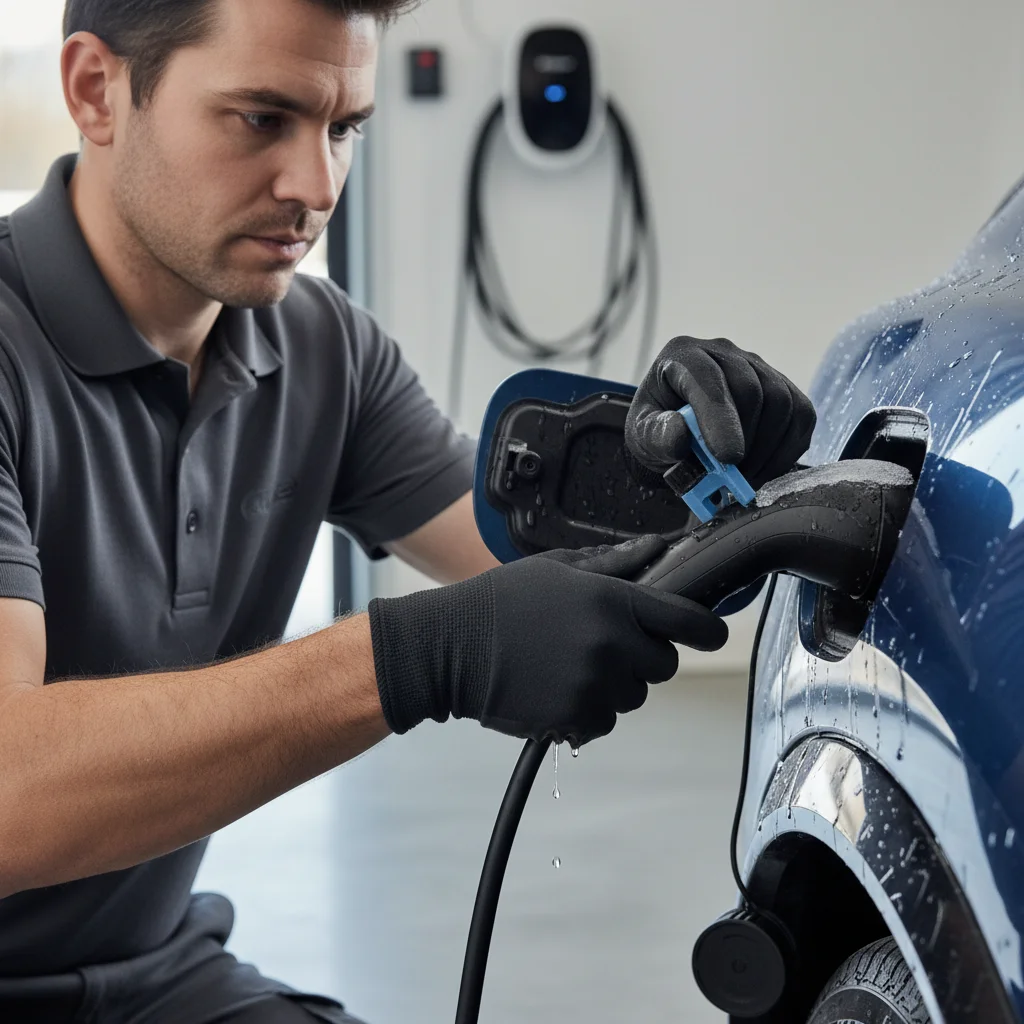
If the strap travels with almost no resistance, stop. The cable to the hook may be slack or disconnected. If it has firm resistance and the handle still won’t move, stop working the car. The station may still be holding the connector.
Electrical miss versus a jammed hook
An electrical miss is the coastal pattern. The solenoid got a release command and couldn’t fire. Low 12-volt voltage is one common cause. A control-module glitch is the other. The port light may blink. FordPass may show a charging error. The strap is built for this case. You’re moving the latch by hand, without waiting on the solenoid.
A mechanical jam is less common and harder. Salt and grit can bind the hook. A bent catch won’t open even with the cable pulled. The strap may feel slack. The connector stays put. You won’t sort that in a garage aisle. The port needs a Ford technician. An on-site operator can jump the 12-volt. Once the cable is free, they can add range. A seized hook still belongs in a shop.
Feel the strap. Firm resistance usually means the cable is intact. That points to an electrical miss. A limp strap plus a frozen handle usually means hardware. Don’t keep pulling a limp strap. You’ll only add slack.
Independent operators in the Charge Pro MIA network cover Ford. They cover the rest of the CCS set too. The brand doesn’t send its own techs. The non-Tesla EV rescue page is the match for this call. The operator quotes you before work starts and bills you directly.
When the public cabinet won’t release
Confirm the Mach-E shows the session ended. Then work the station.
Close the session on the unit’s screen or in its app. If you walked off at a full pack, the post may still think you’re active.
Read the station ID on the cabinet. Call the number printed on the unit. Ask them to unlock that ID remotely. We couldn’t confirm hold times from the network pages we could read. Stay with the car while you wait. Don’t leave a locked CCS handle in a tow-away garage.
Don’t wait for a random reboot. Some posts drop every connector after they lose power. That’s luck, not a plan.
Don’t force the handle. A cracked housing or bent pins can park the car. The port may need a dealer repair. We couldn’t confirm a current Ford parts price. Ask a Ford store for today’s figure if you need one.
FPL EVolution cabinets, condo pedestals, and workplace posts all run their own software. The label on the unit is the authority.
If you’re on a shoulder or in a tow-away garage
If you’re in a travel lane, get off it if you can. Florida Statute 316.194 says to leave the main-traveled part where practicable. Dial *FHP (*347) for Florida Highway Patrol and the Road Ranger Service Patrol. Road Rangers jump-start vehicles. They also tow a disabled car off the travel lanes. That move to the nearest safe spot is free of charge. FDOT District 6 covers Miami-Dade. District 4 covers Broward. Their published materials don’t mention EV charging. They can still jump a 12-volt. A Level 2 top-up isn’t their job.
Private garages can still tow a car that’s stuck to a post. Confirm the lot’s posted rules before you walk away.
Causeway islands add a second trap. Miami Beach is its own city, reached only by causeway. A stuck cable in a Miami Beach garage can pin you there. You may not be able to roll toward the mainland. Hollywood’s low coastal streets have the same salt. If the car is already dead in that grid, read stalled on Hollywood’s low coastal streets. Fort Lauderdale’s beach-tower pattern is in EV roadside assistance in Fort Lauderdale.
When you need an operator at the bumper
Start with the frunk strap and the network unlock. Call for someone on site when you can’t open the frunk. Call if the strap is broken or slack. Call if the connector housing is damaged. Call if the station won’t release and you can’t stay.
Charge Pro MIA is a referral line. It matches stranded EV drivers with independent local mobile rescue operators. It doesn’t hold a trade license. It doesn’t own trucks or equipment. It doesn’t employ technicians. It doesn’t set prices or promise an arrival time. The operator quotes you before starting and bills you directly.
For a CCS Mach-E, those operators bring a 240-volt Level 2 source. They use a CCS or J1772 adapter. They typically add 10 to 20 miles of range in 15 to 30 minutes of charging time. They can also jump or replace a dead 12-volt battery on site. Charging time isn’t an arrival time. Nobody on this line should promise one.
Call (786) 963-2995 and we’ll connect you with a local operator.