A public EV charger not working is usually the stall, the app, or the card, not an empty pack. You’re already in the lot. The kiosk is red, frozen, or “connected” with no power flowing. South Florida heat, not hills, is what spends the miles you still have. NWS Miami 1991-2020 normals put July and August highs around 91F. A normal year sees about 64 days at or above 90F. Recurrent Auto’s study of about 30,000 EVs found about 5% range loss at 90F and about 17 to 18% at 100F. AAA’s 2019 SAE test found about a 17% drop at 95F with the AC on. A failed public plug plus a hop across town is how a small stall problem becomes a stop on I-95, the Palmetto, or a Miami Beach causeway.
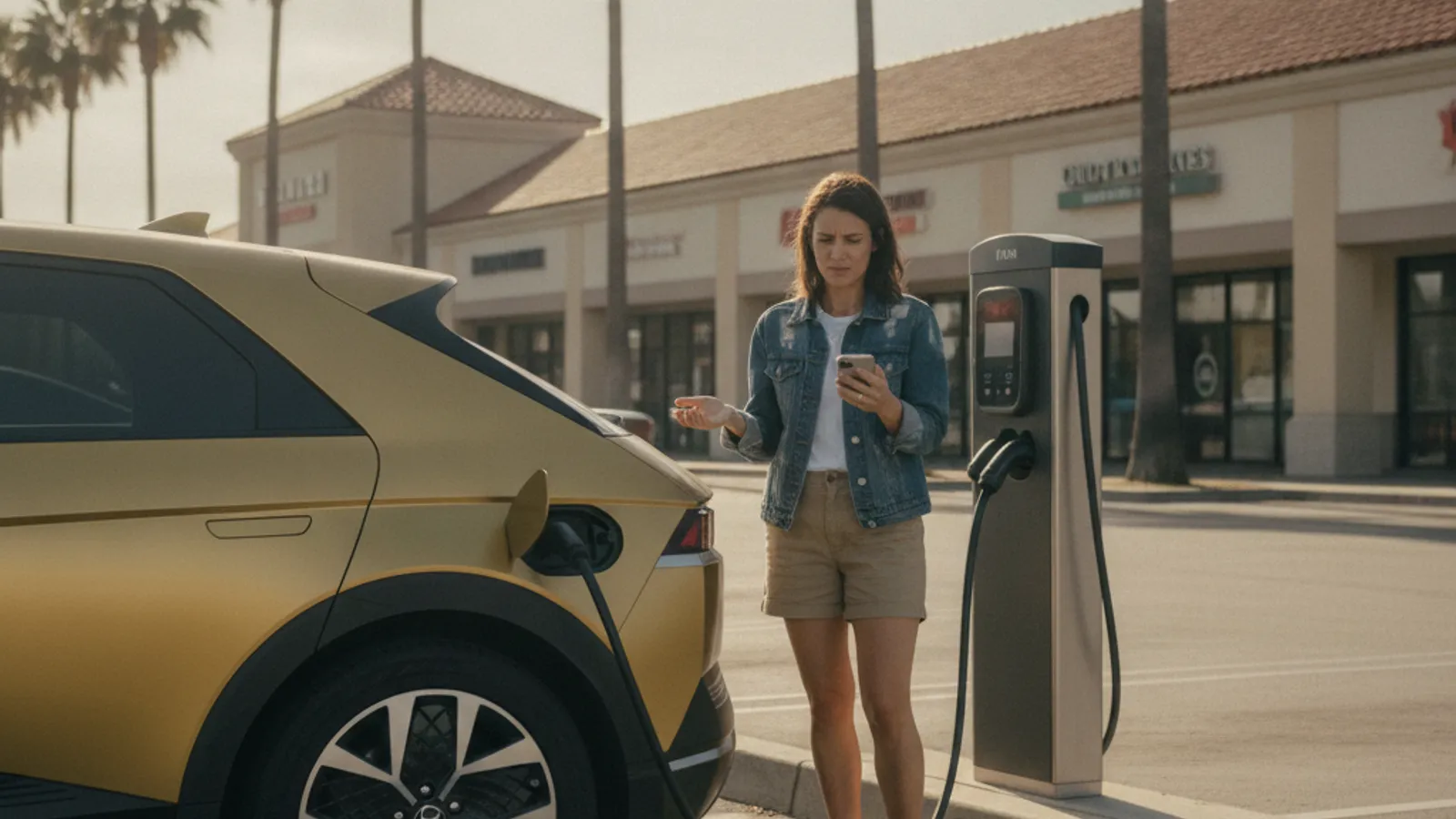
Treat the stall as broken only after a short check
Don’t start driving on a rumor. Work the plug you’re standing at first.
Unplug all the way. Look at the connector. Debris, bent pins, or a half-seat will kill a session. Push it in until it latches.
If two stalls share a cabinet, one error light doesn’t mean the site is dead. Slide one space over and try that handle. Shared power cabinets drop one stall while the neighbor still runs.
Restart from your phone, not by tapping the kiosk. ChargePoint, EVgo, and Electrify America sessions often fail in the handshake between the app and the charger. Force-close the app. Open it again. Start the session from the phone. A “connected, not charging” screen is often software wearing a hardware costume. Our notes on a public charger that says connected but never charges walk that case.
Then check payment. An expired plan or a declined card looks identical to a dead rectifier. Try the RFID fob if you carry one. Switch cards in the app. If the network’s own stall map already shows red, stop arguing with the screen.
Give that sequence a few minutes. If nothing starts, stop troubleshooting. Remaining range is the asset. Time at a dead kiosk isn’t.
Why public networks drop sessions more than Superchargers
Tesla builds, owns, and services Superchargers as one system. ChargePoint, EVgo, and Electrify America often split the job. A property owner buys the hardware. The network runs software and billing. When a cable dies, two companies can each wait on the other. That’s a maintenance queue, not a mystery.
The cable itself takes abuse. Dozens of drivers a day yank the same handle, drop it on hot asphalt, and sometimes jam it into the wrong port. King tides from September through November flood low coastal streets in Miami Beach, Hollywood, and Fort Lauderdale’s Las Olas Isles. Salt air and standing water are hard on contacts. If the port looks wet after a sunny-day flood, don’t force a session. Dry it and read what to do when water is in the charge port. Summer storms stack up from about 2pm to 6pm. An outdoor session can die mid-charge when lightning or a soaked handle interrupts the handshake.
A DC fast stall also needs a live path to a billing server. If that path drops, a mechanically fine charger won’t start. That’s why the app restart comes before a cross-town move.
FPL’s public charging brand is FPL EVolution. Don’t treat the name as a map. Station-by-station inventories couldn’t be confirmed from the federal station API on the day this was researched, so this page won’t pretend to list working sites. Use a live app. Believe recent driver reports more than a stale in-car pin.
The 12V can fake a charger failure
This mix-up is common after a trip. Miami International’s Dolphin, Flamingo, and Ibis garages, plus the new Park 6 long-term garage, are where cars sit for a week. Ibis lists ChargePoint ports across its levels. Park 6 lists EV charging on site. After a cruise week at PortMiami or Port Everglades, plenty of drivers walk back to a silent car and blame the last public plug they used.
Heat is what actually did it. Every roughly 15F rise halves lead-acid 12V life. A battery ages about twice as fast at 93F and four times as fast at 111F versus 77F, and that damage doesn’t reverse. The 12-volt pack keeps modules awake while you’re gone. The high-voltage pack can still hold miles. The car just won’t wake. That’s a jump or an on-site 12V swap, not another DC stall.
If the dash is dark, the handles are dead, and the charge port won’t open, stop feeding the public kiosk. You’re not in a charging fight. You’re in a 12V fight.
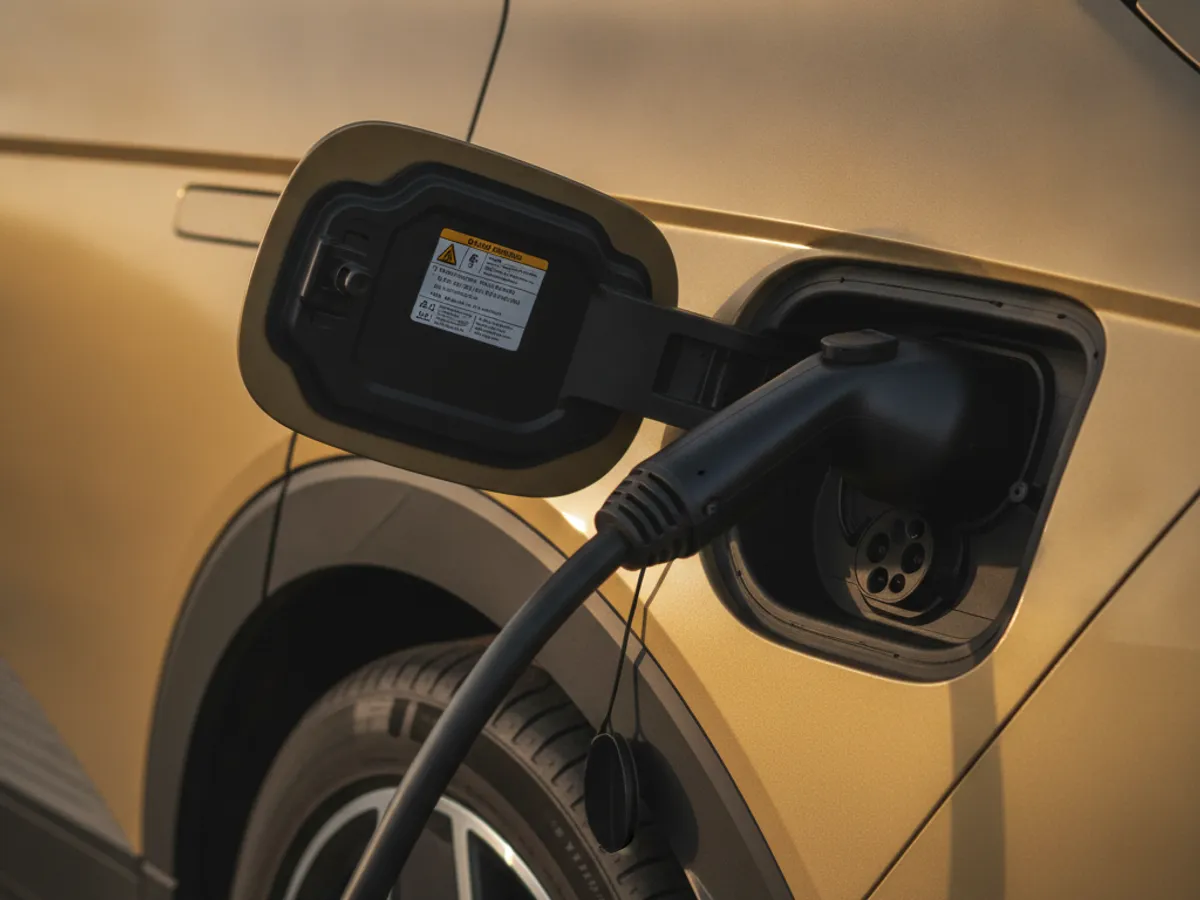
Chasing a second site on thin range is the expensive mistake
South Florida is flat. Miami-Dade’s Atlantic Coastal Ridge sits around 23 to 24 feet. Broward’s Pine Island Ridge is about 29 feet. There’s no grade penalty anywhere in the two counties. Range here is heat, air conditioning, and dwell. The first minutes of AC are the expensive ones. Recurrent Auto notes it can take 3 to 5 kW to cool a 95-degree cabin, then about 1 kW to hold it.
If you still have a comfortable buffer, sitting in the lot and checking charging apps while range is already thin is smarter than rolling. PlugShare and the network apps show recent stall reports. Your car’s map often lags. Confirm a session is actually starting somewhere before you spend miles to learn it isn’t.
If you’re already low, don’t spend the rest of the pack on a maybe. Traffic on I-95, I-595, the Palmetto (SR-826), the Dolphin (SR-836), or the Homestead Extension will eat the cushion your estimate assumed. Express lanes on 95 Express and 595 Express are all-electronic. They take SunPass or toll-by-plate, not cash. None of those operators publishes a disabled-vehicle free-tow unique to the express lanes. FDOT’s Road Rangers do patrol those corridors. That’s the real highway help, not a made-up express-lane policy.
Once you’re over a causeway into Miami Beach, Surfside, or Key Biscayne, a U-turn costs range you may not have. Don’t spend a thin pack proving a second pin is green. Our guide on what to do before you’re stranded on a low pack is for stretching what you have, not for proving a second kiosk.
Condo and older-stock neighborhoods lean harder on public plugs. North Miami’s housing is 82.7% pre-1980. Miami Springs is 89.5%. Hollywood is 74.7%. Hialeah is 60.1%. A home Level 2 often isn’t installable there. Doral, Weston, and Parkland skew new, so more driveways have a wall box. If you live in a Sunny Isles Beach or Miami Beach tower, a failed garage pedestal isn’t a small inconvenience. It can be the only plug you had tonight. Campus visitors to the University of Miami in Coral Gables, FIU near Sweetwater, or Nova Southeastern in Davie hit the same trap: a garage pedestal that never starts, with a class or a shift already on the clock.
Road Rangers will move you. They won’t fill the pack.
Florida’s Road Ranger Service Patrol is free on the state system. Crews jump-start vehicles, do minor repairs, change flats, offer gas, diesel, and water, and tow a disabled vehicle from the travel lanes to the nearest safe spot. Dial *FHP (*347). District 6 covers Miami-Dade on I-95, 95 Express, I-195, I-395, I-75, 75 Express, and SR-826. District 4 covers Broward’s I-95 from the Miami-Dade line north, plus portions of I-595 and I-75.
Road Ranger materials never mention electric vehicles or EV charging. A dead EV still needs a 12V jump or a tow off the travel lane, and they do both. A Level 2 charge isn’t in that toolkit. That’s what independent mobile EV charging operators bring to the stall.
If you die on the main-traveled part of a highway outside a municipality, Florida Statute 316.194 says to leave the car off the travel way where practicable. Leave room to pass. Keep a clear view from 200 feet each way. 316.194(2) exempts a genuinely disabled vehicle that can’t practicably be moved. Florida 511 at FL511.com is FDOT’s traffic feed, in English and Spanish. Use it before you roll toward a jam you can’t afford.
Waiting in a mall or garage lot is a different legal problem. Florida Statute 715.07 governs private-property tows. If you appear before the car is fully removed, the operator must stop and return it on payment of no more than half the posted tow rate. The vehicle must be stored within a 10-mile radius in a county of 500,000 or more. Both Miami-Dade and Broward qualify. Miami-Dade caps non-consent rates under Code Section 30-476. Broward does the same under Code Section 20-176.22. Confirm the posted rate on the lot’s sign and with county consumer protection. Don’t sit for hours at a dead stall in a tow-away garage without watching the signage, especially around Aventura Mall, Dadeland Mall, Brickell City Centre, Sawgrass Mills, or Hard Rock Stadium event parking.
When the backup is a truck, not another kiosk
Call for a mobile 240V top-up instead of another public hunt when any of this is true.
You’ve already burned the easy checks: cable, neighbor stall, app restart, payment. Range is low enough that a wrong turn costs the rest of the pack. You have a flight out of MIA, a shift, or a pickup you can’t miss. You’re in an unfamiliar garage after dark and don’t want to keep moving the car.
Charge Pro MIA is a referral line. It matches you with an independent local operator. The brand doesn’t own trucks, employ technicians, or set prices. The operator quotes you before work starts and bills you directly. What they bring is a 240V Level 2 source to the car, a native NACS plug, and a CCS or J1772 adapter for non-Tesla EVs. Typical charging time adds about 10 to 20 miles of range in 15 to 30 minutes. That’s charger time, not a promise of when someone arrives.
Tesla, Rivian, Ford, Hyundai, Kia, and the rest of the major EV brands are in scope. If the car is silent, the same operator can often jump a Tesla 12V on site or handle a non-Tesla EV rescue instead of a flatbed.
You can stay in the stall that failed. You can stay in your driveway. You don’t have to spend the last bar proving FPL EVolution, ChargePoint, or a Supercharger pin is green.
Call before zero, not after the shoulder
A dead public charger isn’t your fault. It also isn’t a reason to empty the pack on I-75, the Sawgrass, or a causeway into Miami Beach. If the short check failed and you still need miles, call (786) 963-2995. We’ll connect you with a local operator who can quote a 240V top-up where you sit.
Frequently asked questions
Why won’t a public EV charger start a session?
Most sessions fail on the connector seat, the app handshake, payment, or one bad stall sharing a cabinet. Re-seat the handle. Restart the app. Try the stall next to you. If the network map already shows the unit down, leave the kiosk alone and protect your remaining range.
Is it the charger, my car, or the 12V?
If the car charges at home or at another public site, the stall or the network is the usual culprit. A true vehicle charging fault tends to throw a message on your dash, not only on the kiosk. If the car won’t wake, unlock, or open the port after sitting in heat, think 12V first, especially after MIA or cruise parking.
Should I keep looking for another public plug?
Only if you still have range to spend and a live app says a session is starting, not just that a pin exists. Station lists go stale. This page won’t guess a backup site. If the pack is already thin, a mobile 240V top-up where you’re parked beats a maybe across the county.