A Tesla’s high-voltage pack is built to last the life of the car. In South Florida, heat and long sits usually take the 12-volt first.
This search is three clocks, not one
People who ask how long Tesla batteries last are mixing jobs. One job is today’s range with the air on. One is how many years the floor pack still holds a useful charge. One is the 12-volt that dies after a week in a garage.
The pack under the floor stores the miles you drive. The 12-volt runs locks, the screen, and the contactors that wake the pack. A silent Tesla after a week at Miami International Airport is almost never a worn pack. It’s a 12-volt that spent the week keeping systems alive. See Tesla battery dead: is it the 12V or the high-voltage pack.
Tesla doesn’t publish one year count for every Model 3, Y, S, and X. We won’t invent a mileage cutoff on this page. What we can talk about here is heat, sitting, and how you charge.
Heat does the wearing, not the hills
South Florida is flat, with no mountain penalty on the pack. Miami-Dade’s high point is the Atlantic Coastal Ridge, at roughly 23 to 24 feet. Broward’s high point is Pine Island Ridge, at about 29 feet. Range here is heat, air conditioning, and dwell.
NWS Miami’s 1991-2020 normals put July and August average highs at 91F. A normal year sees about 64 days at or above 90F. That’s a long summer for lithium cells, parked or moving.
We’re not hanging a published range-loss percent on this page. For a hot trip, read How long does a Tesla charge last in South Florida heat?. This piece is about years of pack life, not one run on I-95.
Sitting in this heat is its own wear
A pack that sits warm ages differently from one parked in a moderate window. A cruise week in MIA’s Dolphin, Flamingo, or Ibis garage is the classic stall. The 12-volt often won’t wake the car. The main pack is usually still holding charge. The Ibis Garage has ChargePoint ports across its levels. Tesla 12V failure after parking is written for that moment.
PortMiami’s cruise garages and Lot E are the same week-long sit. Hard Rock Stadium in Miami Gardens does the same sit after a Dolphins or Hurricanes game.
Coastal condo decks in Miami Beach, Surfside, and Sunny Isles Beach add heat from above. King tides run mainly September through November. They last about three hours and flood low streets in Miami Beach, Hollywood, and Fort Lauderdale’s Las Olas Isles. If saltwater reaches a pack, stop. NHTSA warns residual salt can short a lithium battery days or weeks later. A flood-exposed EV shouldn’t be driven or charged until it’s inspected. It shouldn’t sit within 50 feet of a structure.
Inland parking in Hialeah, Doral, Kendall, and Weston still sees that 91F summer.
Home plugs, public plugs, and heat cycles
Frequent DC fast charging adds more heat cycles than a slow overnight plug. Making it your only habit, day after day, is harder on the cells.
Tesla’s daily guidance is to keep most cars off a constant 100% sit. A moderate window is easier on the chemistry than the top or the bottom. Letting a car sit near empty for weeks is the other stress.
Who can plug in at home depends on the house. North Miami’s housing is 82.7% pre-1980, and Miami Springs is 89.5%. Hollywood is 74.7% pre-1980, and Hialeah is 60.1%. Those streets often can’t take a Level 2 install. Newer stock is different: Doral 5.5%, Parkland 1.7%, Weston 7.0% pre-1980.
Florida Power and Light serves essentially all of Miami-Dade and all of Broward. FPL EVolution Home is the utility’s residential Level 2 program. If you rely on public plugs, mix in slower charging when you can. How to care for an EV battery in South Florida heat is the habit list.
What you can actually read in the car
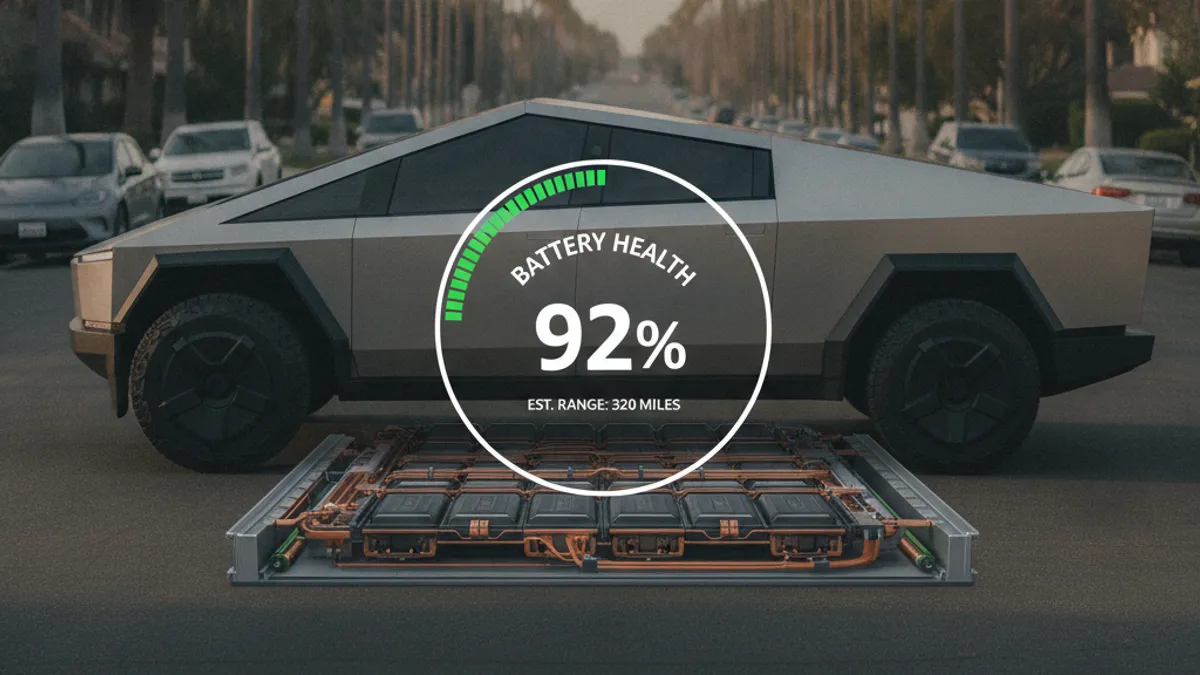
Tesla doesn’t show a phone-style battery health percentage. Compare current max range in settings with the original rated range. A modest gap after years in this heat is ordinary aging. A sudden, large drop is a fault. That’s a service visit, not a roadside guess.
Hurricane season runs June 1 through November 30. FPL’s storm guidance is to keep the pack between 50 and 80%. Unplug during the storm, and don’t charge or drive a flood-exposed EV until it’s inspected. That same window is a decent daily sit range in this heat.
Mileage is the wrong first question on a used Tesla
People ask about miles, but sit time in this heat is the better tell. Ask if it lived on a Hialeah driveway or in a Coral Gables garage. Ask how often it Supercharged, and what max range it shows now.
Tesla’s pack warranty follows the in-service date, not the day you buy it. We’re not reprinting year or mile caps on this page. Tesla battery warranty: what it covers when heat wears the pack carries the published terms. When does a Tesla need a new pack, not a 12V? walks through that call.
A lead-acid 12-volt ages about twice as fast at 93F as at 77F. They age about four times as fast at 111F. Every roughly 15F rise halves their life, and heat damage doesn’t reverse. That’s why so many Teslas won’t wake after airport parking here.
If the car won’t wake
Charge Pro MIA is a referral line. We match stranded drivers with independent local operators. We don’t own trucks, and we don’t do the work. The operator quotes you before starting and bills you directly.
Operators bring a 240V Level 2 source to the car. They use a native NACS plug, or a CCS or J1772 adapter. They typically add 10 to 20 miles of range in 15 to 30 minutes of charging. That’s charging time, never an arrival time. They can also jump or replace a dead 12-volt on site. If the car is silent with a charged pack, start with Tesla 12V battery jump.
If you’re stranded and the car won’t wake, call (786) 963-2995. Tell the operator whether the app still shows a charged pack. That one detail decides a jump versus a top-up.
Frequently asked questions
Does South Florida heat kill a Tesla pack?
Heat is the wear factor here, not hills. The pack is still built to last the car. What fails first in this climate is almost always the 12-volt.
Why does a Tesla die after airport parking with range still showing?
The 12-volt kept locks and computers alive in a hot garage. The floor pack can still hold charge. A jump or a 12-volt swap is the usual path, not a new pack.
Can Supercharging alone ruin the main battery?
Occasional Supercharging is normal. Using it as the only charge, every day, adds more heat cycles than a home plug. Mix slower charging when you have the choice.