Your EV charging stopped at a random percentage after a hot plug. Forty-one percent on Tuesday. Sixty-seven on Thursday. In this metro it’s usually a heat-soaked pack, or a public stall that aborted. Either one can leave you short of home.
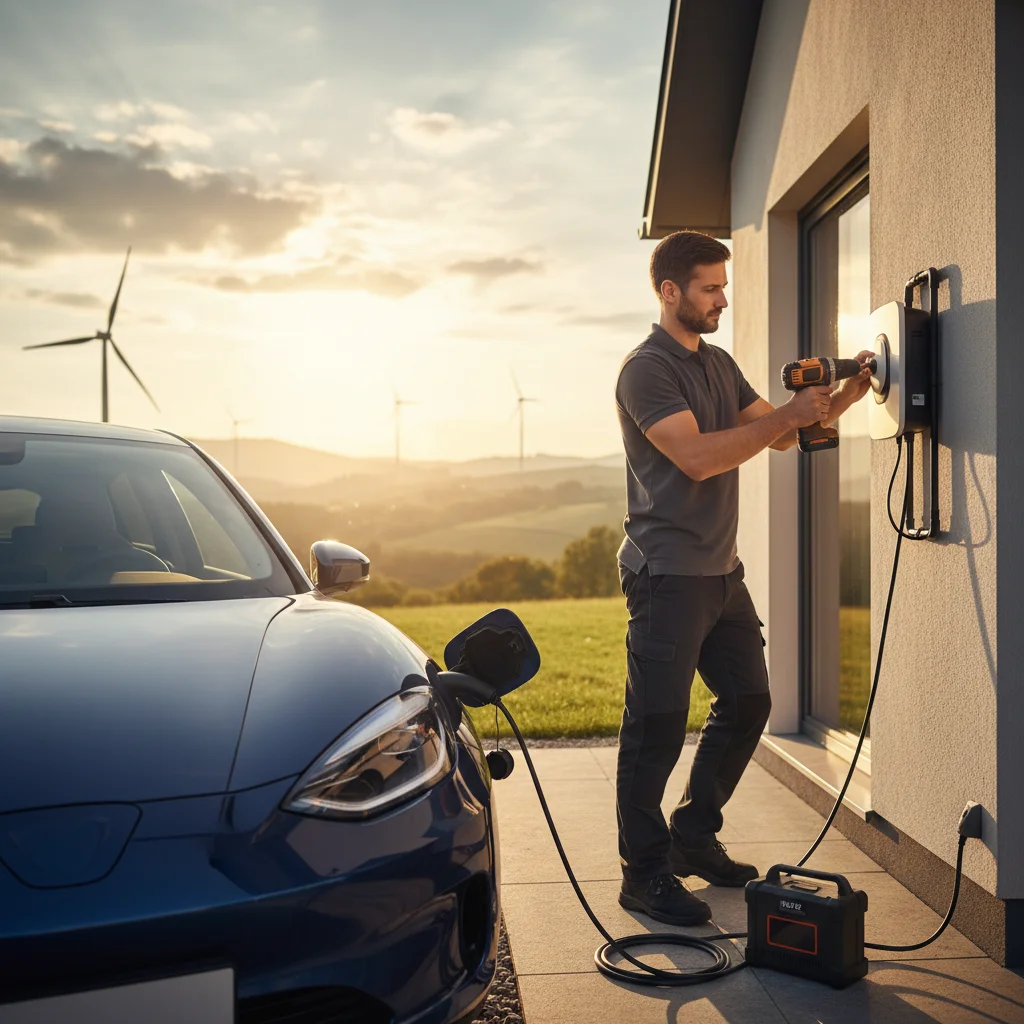
A matching number is a setting, not a glitch
Check the app or the center screen first. Most EVs let you cap daily charging in the 70 to 90 percent band. Owners do that to spare the pack through years of heat. If the session always dies on that same number, you already set it. Random stops don’t repeat. They don’t match a slider you left alone.
Heat and a public stall can fake the same symptom
From the driver’s seat the percent just freezes. The handle still looks locked. You counted on more miles than you now have.
The battery management system watches pack temperature. It doesn’t watch the number you stare at. Charging makes more heat on top of a hot cabin. When the pack climbs past the system’s safe band, the car slows the current first. If the cells keep climbing, the session can pause until they cool. You land at 38 percent one day and 72 the next. That’s because the tripwire is temperature.
A public pedestal can quit for reasons that have nothing to do with your car. Shared cabinets split power with the stall next to you. Hardware derates when the cabinet itself is hot. Summer thunderstorms run about 2pm to 6pm here. A session that looked healthy at noon can die in that window. That’s the stall. It isn’t your charge limit.
This climate loads the pack before you ever plug in
South Florida’s flat. The highest natural ground in Miami-Dade is the Atlantic Coastal Ridge, about 23 to 24 feet. In Broward it’s Pine Island Ridge, about 29 feet. Range here isn’t a hill story. It’s heat, air conditioning, and how long the car sits.
NWS Miami 1991 to 2020 normals put the July and August average high at 91F. A normal year brings about 64 days at or above 90F. Recurrent Auto studied about 30,000 EVs. That work found about 5 percent range loss at 90F, and about 17 to 18 percent at 100F.
So the pack’s already busy before you reach a plug. A run on I-95, the Palmetto, the Dolphin, or Florida’s Turnpike leaves the cells warm. Then you park in sun at Aventura Mall or Dadeland Mall in Kendall. Dolphin Mall near Doral and Hard Rock Stadium in Miami Gardens do the same. Plug in right away and the stop looks random. The car’s still following one thermal rule.
Who can wait in a driveway, and who can’t
Housing stock decides whether you can finish later. Parkland, Weston, and Doral are mostly new. A home Level 2 plug is common there. You can let the pack cool in the driveway and resume. North Miami is 82.7 percent pre-1980. Hollywood is 74.7 percent. Hialeah is 60.1 percent. A wall charger often isn’t installable in that stock. Those drivers live on public plugs. When a session aborts, there’s no garage to save the night.
Florida Power and Light serves essentially all of Miami-Dade and all of Broward. Homestead’s the confirmed exception, with Homestead Public Services Energy on some streets. Confirm your utility on the city’s HPS Energy page. FPL EVolution is the public charging brand. FPL EVolution Home is the residential Level 2 program. Confirm current terms with FPL. Don’t treat a condo board as a yes.
Towers in Miami Beach, Sunny Isles Beach, and Aventura add a shared-garage problem. You may wait on a pedestal you don’t control. A session that dies at 50 percent can leave you on the island side of a causeway.
Miami International’s Ibis Garage holds ChargePoint ports across its levels. Park 6, opened summer 2026, has EV charging on site. A car that sat a week at MIA often won’t wake because the 12-volt drained. That’s a full pack and an empty 12V, not a mid-session abort.
How to read the pattern
If it always stops on the same number, check the charge limit first. If it stops after a hot drive, wait before you plug in. If it only fails on blazing afternoons, heat plus dwell is the likely mix. If only DC fast stalls cut out, try a slower Level 2 session. If it won’t restart at all, treat it as a fault, not a pause.
A related stall is a plug that says connected and never starts. Walk that in public charger that’s connected but not charging. A dead-looking pedestal is in what to do when a public EV charger isn’t working.
Change the conditions, then decide if you still need help
Patience beats extra troubleshooting when heat is the cause. Let the car sit after a hard drive before a DC fast session. Shade or a garage helps at 91F. Early morning charging often completes when a mid-afternoon session won’t. That’s not a promise. It’s how thermal limits behave.
Watch the 12-volt battery too. Every roughly 15F rise halves the life of a lead-acid 12V. It ages about twice as fast at 93F versus 77F. Heat damage doesn’t reverse. A weak 12V can drop the charging computer mid-session. That looks random. It isn’t a pack-temperature pause. See what happens when an EV 12V dies. See also how to care for an EV battery in South Florida heat.
If the session dies on a cool morning in shade, temperature is a weaker explanation. Then you may have a real BMS fault, a tired onboard charger, or that weak 12V. Get it checked. Don’t keep forcing fast sessions.
When the abort leaves you short of home
A partial charge can still cover a short hop. It may not cover the Palmetto, a causeway, or the run toward Homestead. On I-95, I-595, or SR-826, get off the travel lane if you can. Florida Statute 316.194 lets a truly disabled vehicle stay put when it can’t move. Road Rangers can jump a 12V or tow you to a safer spot. Dial *FHP (*347). Their pages don’t mention EV charging. The operators we connect you with bring a Level 2 top-up to the car.
Charge Pro MIA’s a referral line. We match you with independent local mobile rescue operators. We don’t own trucks. We don’t employ technicians. We don’t set prices. The operator quotes you before starting and bills you directly. They bring a 240V Level 2 source to the car. That’s a native NACS plug, plus CCS or J1772 adapters for non-Tesla EVs. It typically adds 10 to 20 miles of range in 15 to 30 minutes of charging. That’s charging time, never an arrival time. They can also jump or replace a dead 12V on site.
If you’re already low, read what to do when your EV is running low before the pack hits zero. For a truck that comes to you, start with mobile EV charging.
Call (786) 963-2995 if a stopped session left you without enough miles. The operator on the other end quotes the job before any work starts.
Frequently asked questions
Why does EV charging stop at a different percentage each time?
The battery management system is watching temperature, not a fixed percent. A hot drive, a 91F day, and a derating stall all change the stop point. That’s why it looks random.
Does an early heat stop damage the pack?
No. The system’s protecting the cells. Finishing after a cool-down is safer than forcing a full charge while it’s hot.
Could a random stop mean the car is actually broken?
Yes, if it happens on cool mornings, in shade, after an easy drive. Then look at the 12V and a shop diagnosis. A one-off abort after a hot I-95 run is usually thermal or the stall.